August World Food Price Rise Shows Uneven Pressure Across Staples
The latest monthly benchmark for internationally traded food commodities rose in August 2026, with the FAO Food Price Index averaging 133.3 points. That was 1.9% above the revised July reading and 2.5% higher than a year earlier, the Food and Agriculture Organization reported on 4 September. The movement was broad, though the scale varied sharply across foods.

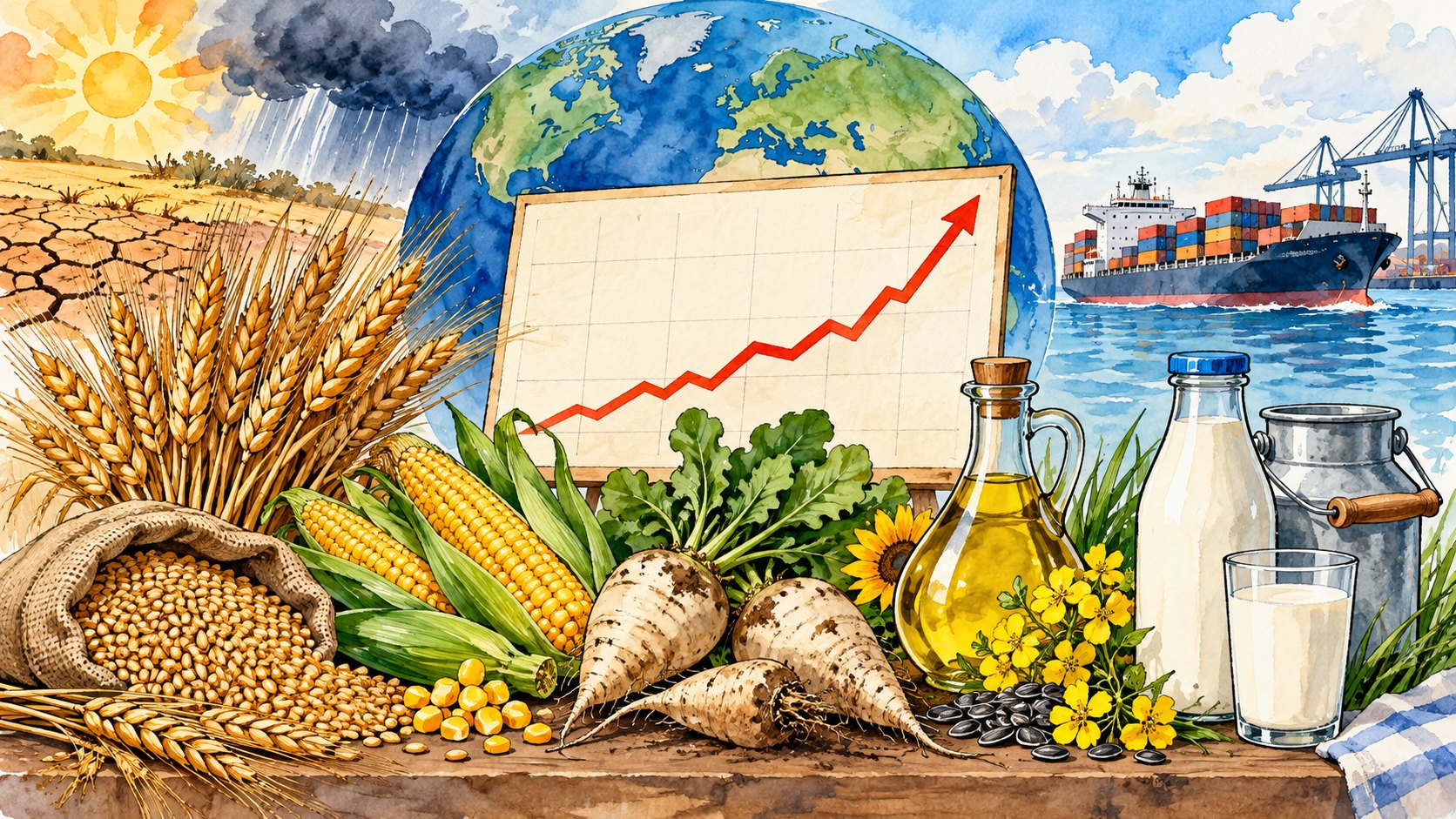
The sugar component jumped 11.9% in the month, reflecting concerns about beet yields in Europe and production prospects in parts of Asia and Brazil. Cereal prices rose 2.2%; wheat and maize quotations increased 2.6% and 2.5%, respectively. Vegetable oils were up 1.1%, meat 1.0% and dairy 2.3%. These are changes in global commodity benchmarks, not a forecast that every household grocery bill will rise by the same amount.
Weather and trade routes both matter. FAO pointed to hot, dry conditions affecting some harvests, continued disruption to Black Sea export logistics and uncertainty around inputs and shipping. Its latest 2026 cereal production forecast was 2.98 billion tonnes, 2% below the 2025 record, while projected end-of-season stocks still indicated a relatively comfortable global supply position by historical standards. A lower crop forecast therefore need not imply an immediate shortage everywhere.
For consumers and policymakers, the distinction is between a world price signal and local retail outcomes. Currency moves, taxes, domestic harvests, transport and retailers’ costs determine how quickly an international change reaches a particular market. The August report is a warning to watch specific commodity and supply developments, rather than a single measure of what every family now pays for food.