Supreme Court Presses Election Commission for Timeline in Trinamool Symbol Dispute
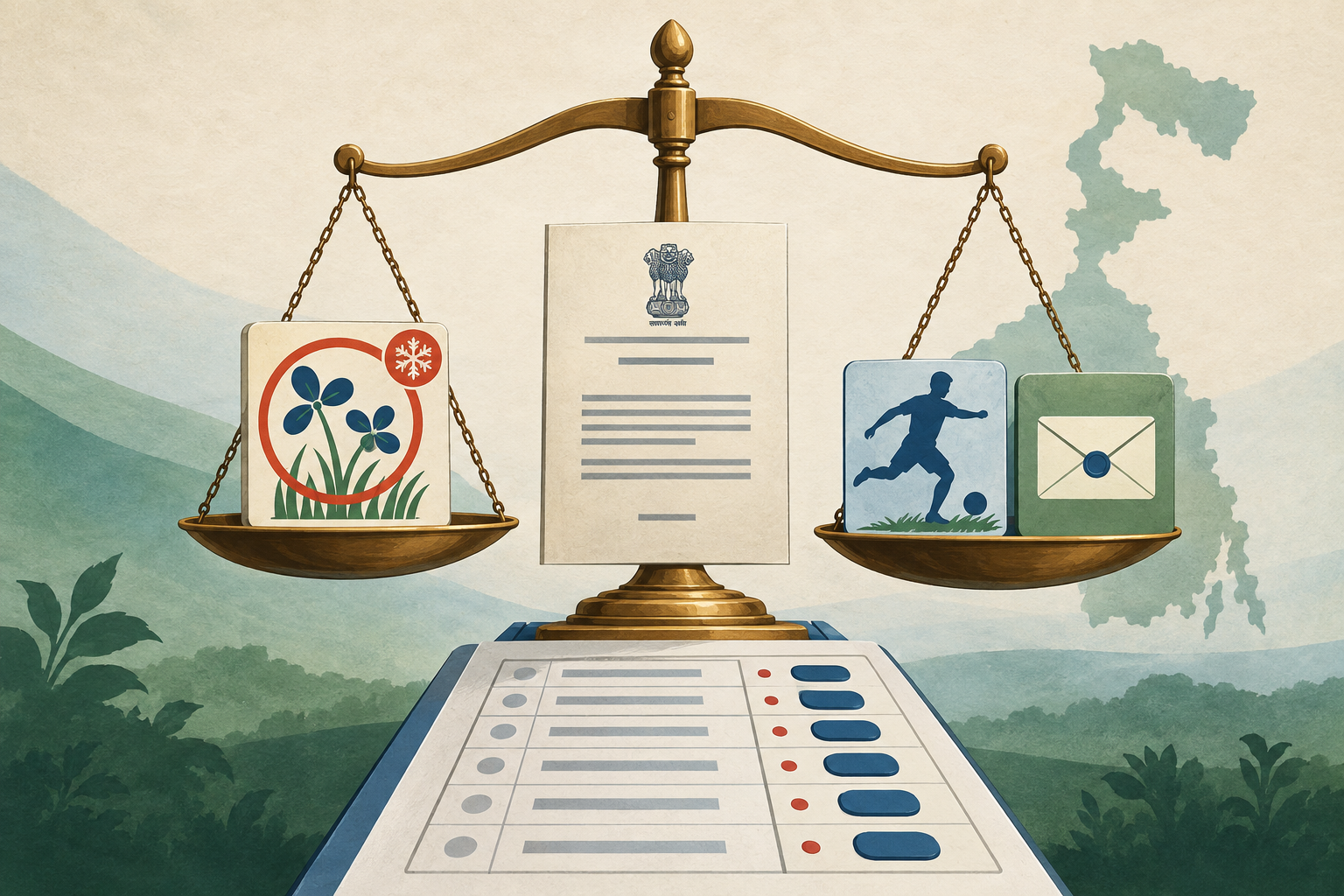
The Supreme Court has asked the Election Commission of India to provide a realistic timetable for deciding which of two rival Trinamool Congress factions is entitled to the party’s original name and its reserved flowers-and-grass election symbol.

The direction came during the hearing of a petition filed by Mamata Banerjee against the Commission’s interim decision to freeze both parts of the Trinamool identity. A three-judge bench led by Chief Justice of India Surya Kant said the proceedings must give both camps a fair opportunity to present evidence but should not remain unresolved for an excessive period.
The Commission’s counsel was asked to obtain instructions and return by Monday, September 28, with an estimate of the time required for a final decision. That deadline does not require the Commission to decide the dispute by Monday. It requires the poll body to tell the court when it can complete hearings and issue its ruling.
Temporary names and symbols remain
The immediate electoral arrangement will not change. On September 17, the Election Commission barred both groups from using the name All India Trinamool Congress and the flowers-and-grass symbol while their competing claims are examined under Paragraph 15 of the Election Symbols Order.
The following day, the Mamata Banerjee-led group was assigned the temporary name Mamata All India Trinamool Congress and the football-player symbol. The rival camp led organisationally by Arup Roy was named Democratic Trinamool Congress and given the envelope symbol.
Those identities will be used in the Nandigram and Rejinagar Assembly bypolls scheduled for October 6. The Supreme Court indicated that it would not disturb this arrangement because the election process had already begun and candidates had filed nominations.
For voters, this means the familiar flowers-and-grass mark will not appear beside either faction’s candidates in the two constituencies. Campaigners must instead teach supporters to recognise the football-player or envelope symbol, while polling personnel and voter-awareness material will use the temporary names approved by the Commission.
What the rival factions claim
The dispute concerns much more than the right to print a symbol on a ballot. Each faction claims to represent the continuing political party and therefore seeks control of its name, organisational structure and electoral identity.
Banerjee’s camp maintains that the party’s office-bearers were elected in 2022 for five-year terms that remain valid until 2027. It has relied on the party constitution submitted to the Election Commission and on decisions taken by its national working committee.
The rival faction has challenged that account. In its submissions to the Commission, it argued that the previous national working committee’s tenure ended in February 2025 and that it could not validly make later appointments. The group says a special party session subsequently elected Arup Roy as chairperson.
The rebel camp also points to its support among a substantial number of the party’s elected legislators. Ritabrata Banerjee, a leading figure in that faction, was recognised as Leader of the Opposition in the West Bengal Assembly after a large group of Trinamool lawmakers broke with the former leadership.
The Election Commission must assess the rival claims using the available organisational records, the status of office-bearers and the support each side commands among elected representatives. Its eventual order may recognise one faction as the original party or conclude that neither has established an exclusive claim.
Why the timetable matters
Banerjee’s lawyers argued that the dispute had been before the Commission since June but that the interim freeze was imposed only after the bypoll schedule was announced. They said the timing left too little room for an effective legal challenge before voting.
The rival faction opposed an overly compressed process, arguing that documentary evidence and contested organisational questions require adequate time. The Supreme Court suggested that concentrated or day-to-day hearings could be considered, while stressing that cooperation from both camps would be necessary.
The political stakes extend beyond the October bypolls. A final decision will determine which faction inherits a party brand built over decades and a symbol recognised across West Bengal. It will also shape membership drives, local committees, fundraising, campaign material and preparations for later elections.
Until the Commission rules, party workers cannot use the original name and symbol for official electoral purposes. Monday’s response should provide the first clear indication of whether the dispute can be concluded within weeks or will continue beyond the bypolls. Any timetable accepted by the court could also establish deadlines for evidence, hearings and written submissions before the Commission delivers its final order.