Zelensky Asks Musk to Restore Starlink for Ukrainian Drones; Service Partly Returns
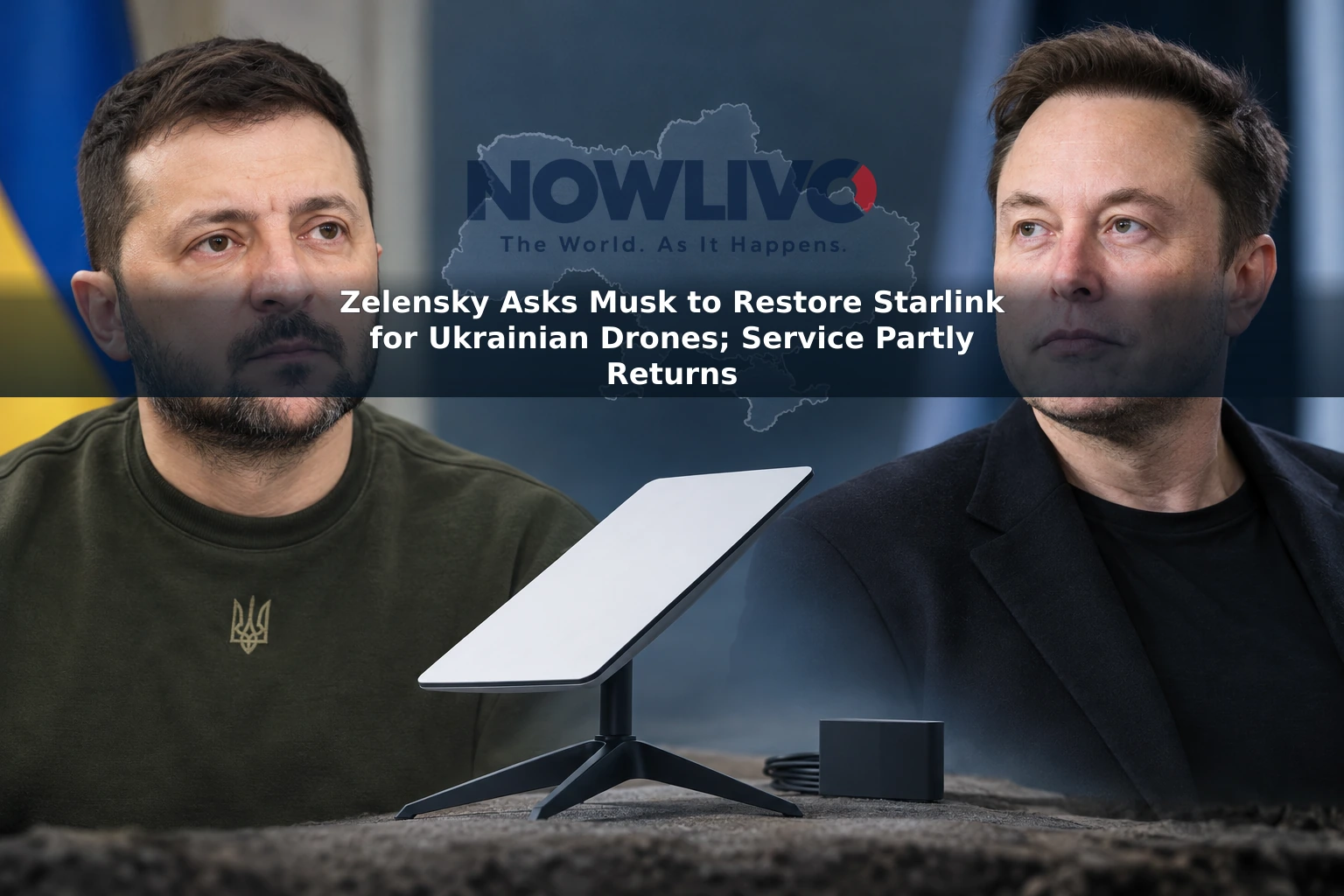
Ukrainian President Volodymyr Zelensky asked Elon Musk to restore Starlink connectivity after an overnight change disrupted Ukrainian drone missions on October 14, 2026. Zelensky warned that people could die if attacks continued while the service was restricted. Later that day, former Ukrainian defence minister Mykhailo Fedorov said connections at speeds up to 160 km/h were being restored, though a wider speed limit on the military service remained.
What happened to Starlink in Ukraine?
Serhii Beskrestnov, a technology adviser to Zelensky, said SpaceX introduced a speed restriction overnight without warning Ukrainian forces. The change affected Starshield, the military-focused service associated with Starlink, and disrupted several missions, he said.
Ukrainian defence sources said terminals mounted on moving drones lost their connection at different speeds. They reported problems with strike drones, drones used to intercept incoming threats, and some front-line communications and logistics. The reported limit was about 160 km/h, or 100 mph, although some units said connections dropped at lower speeds.
This was not a confirmed shutdown of Starlink across Ukraine. The reported problem concerned connectivity for particular military equipment while it was moving, making the distinction important for understanding which operations were affected.
What did Zelensky say to Elon Musk?
Asked during an interview with Piers Morgan what he wanted to tell Musk, Zelensky called the restriction a serious mistake and asked for the service to be switched back on. He said it might be a major technical problem and warned of human losses if Russian attacks continued while Ukrainian systems could not work as needed.
Zelensky did not say that thousands of Ukrainians had died because of the change, nor did he give a figure for deaths it might cause. There is no verified casualty count attributable to the Starlink restriction. His warning was about the potential consequences of impaired defences during continuing attacks.
Fedorov subsequently said Starlink connectivity at speeds up to 160 km/h was being restored and that attack and interceptor drones should be able to operate again. He thanked Musk but said Ukraine still needed the speed limit on Starshield removed entirely. His statement described a partial restoration, not a confirmed end to every reported problem.
Did Trump order the restriction?
There is no confirmed evidence that US President Donald Trump ordered SpaceX to change the service. Ukrainian officials raised questions about the timing amid worsening tensions with Washington, but the reason for the restriction had not been established. SpaceX and the White House had not provided an immediate public explanation in the reports available on October 14.
Zelensky also criticised Trump in the Morgan interview over the United States’ approach to Ukraine and Russia. That political disagreement is separate from the question of who decided to change Starshield connectivity. Calling the restriction a proven joint act by Trump and Musk would go beyond the evidence.
SpaceX’s satellite connections have become important to Ukrainian communications and drone operations during Russia’s full-scale invasion. A drone that depends on a live connection may lose part of its usefulness if that connection drops in flight. That is why a speed-based restriction, even without a nationwide outage, can matter on the battlefield.
How does the dispute relate to Starlink in India?
The Ukraine development comes days after Musk publicly complained about delays to Starlink’s commercial launch in India. On October 8, Rahul Gandhi, India’s Leader of the Opposition, replied to Musk’s criticism with a pointed comment about Indian politics. The BJP accused Gandhi of championing Musk’s interests.
Gandhi’s exchange with Musk was not an endorsement of how Starshield is being used in Ukraine, and there is no established link between India’s licensing debate and the Ukrainian military restriction. Starlink’s proposed Indian service is a commercial satellite-internet offering; the immediate dispute in Ukraine concerns military connectivity during drone missions.
As of October 14, Starlink’s commercial launch in India remained delayed despite earlier regulatory progress. The Ukrainian reports may prompt questions about dependence on a single satellite provider, but they do not establish that the same restriction has affected users in India.