United States Grand Prix 2026: Austin Practice and Race Schedule
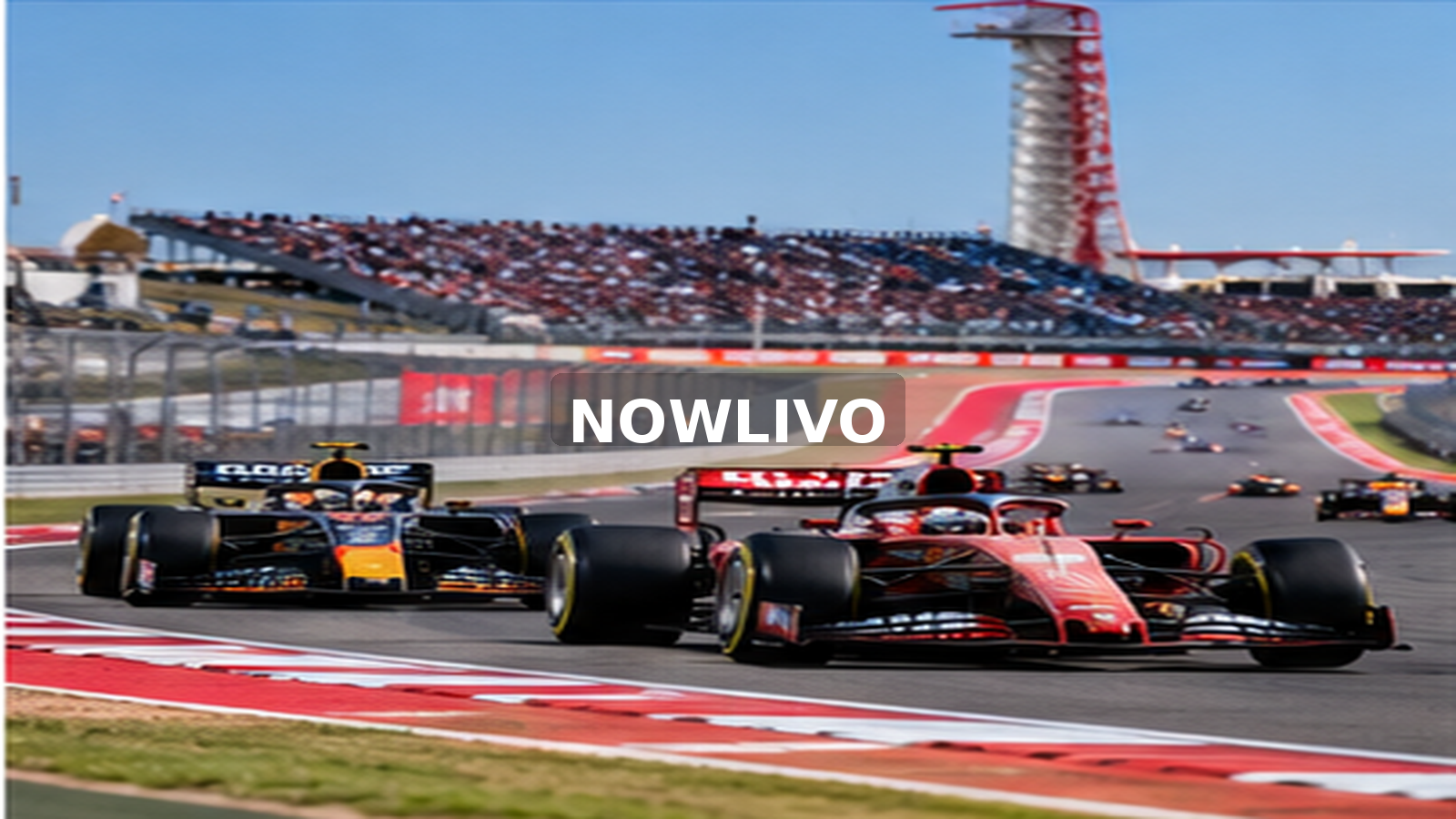
Formula One’s official calendar lists the United States Grand Prix at Circuit of The Americas for October 23–25, 2026. The published schedule places the main race on Sunday October 25 at 3 p.m. Austin local time. This NOWLIVO report separates the documented development from interpretation and identifies what readers should watch next as of October 19, 2026.
What is known at this stage
Formula One’s official calendar lists the United States Grand Prix at Circuit of The Americas for October 23–25, 2026. The published schedule places the main race on Sunday October 25 at 3 p.m. Austin local time. The coverage is about a specific reported event or scheduled action, not proof of every theory circulating around it. Details that depend on another decision, an unaired episode, a closing market price or a newly issued notice are discussed as open questions rather than settled facts.
The weekend programme
Practice sessions begin Friday, with qualifying on Saturday before Sunday’s Grand Prix. In this story, the weekend programme is the clearest place to begin. For readers following this issue online, the easiest mistake is to rely on a clipped image or a short quote without the original setting. Social platforms reward speed and reaction, not necessarily completeness. It is worth checking the date, named participants and what is actually shown. An image of a scene does not independently establish all the reasons behind it.
The main race
The event is scheduled for 56 laps of the Circuit of The Americas, subject to official updates. This gives the headline its proper scale. A useful way to follow the story is to keep three questions separate: what is documented now, what informed observers are debating, and what only a future decision can settle. When those categories are mixed, uncertainty becomes a misleading headline. Where there are conflicting accounts, readers should know they are conflicting instead of being asked to accept one as a hidden fact.
Why Austin tests drivers
Elevation changes, high-speed direction changes and heavy braking zones reward balanced car setup. The distinction matters when readers compare multiple reports of the same development. Finally, the next credible checkpoint may be a formal announcement, a subsequent episode, a court filing, a full results sheet or a revised forecast, depending on the subject. That future information may strengthen or overturn the current interpretation. A responsible update describes the checkpoint plainly without suggesting that the outcome is already known.
The championship context
The field arrives after Singapore, with teams continuing to adjust as the calendar reaches its final races. In this story, the championship context is the clearest place to begin. That detail is important because the public headline compresses several separate developments into a short phrase. In practical terms, a reader needs to distinguish the reported event, the surrounding context and any prediction about what might happen next. Those are not interchangeable claims. The strongest reading is to keep the established fact in view and avoid adding certainty that the original information did not provide.
Time-zone conversion
Fans outside Texas should convert the official Austin schedule rather than relying on a copied screenshot. This gives the headline its proper scale. It also helps to ask whose perspective is represented. Participants, officials, spectators and businesses can interpret the same development differently because the consequences are different for each of them. A quotation or social post can illuminate one perspective without establishing a consensus. Any fair account therefore gives the reader enough context to evaluate the statement rather than treating the statement as a conclusion.
Weather as a variable
Track temperature and wind can influence tire performance and strategy across a session. The distinction matters when readers compare multiple reports of the same development. The timeline deserves attention. A report published today may describe a step that happened yesterday, while background in the same story can be weeks old. That is normal in journalism, but it matters for a reader making plans or forming a view. A later announcement could replace an early assessment, so dates, official decisions and interim observations should be kept in separate categories.
Reliable changes
Only the official Formula One timetable can confirm late schedule adjustments. In this story, reliable changes is the clearest place to begin. There is a difference between an immediate effect and a lasting consequence. A single decision, score, comment or alert can reshape the conversation quickly, yet longer-term outcomes depend on several other factors. It is more useful to identify those factors than to promise a dramatic outcome. This also helps prevent commentary from becoming a false prediction presented as reporting.
Questions readers are asking
- Time-zone conversion: Fans outside Texas should convert the official Austin schedule rather than relying on a copied screenshot.
- Weather as a variable: Track temperature and wind can influence tire performance and strategy across a session.
- Reliable changes: Only the official Formula One timetable can confirm late schedule adjustments.
What happens next?
Only the official Formula One timetable can confirm late schedule adjustments. At the time of writing, any outcome beyond the reporting described above remains conditional. The most useful updates will identify the date of the new information and whether it comes from a direct decision, official record or explicitly attributed account. NOWLIVO will keep the distinction clear between observation and an opinion about what it means.
Why the details deserve careful reading
Practice sessions begin Friday, with qualifying on Saturday before Sunday’s Grand Prix. Elevation changes, high-speed direction changes and heavy braking zones reward balanced car setup. A useful way to follow the story is to keep three questions separate: what is documented now, what informed observers are debating, and what only a future decision can settle. When those categories are mixed, uncertainty becomes a misleading headline. Where there are conflicting accounts, readers should know they are conflicting instead of being asked to accept one as a hidden fact. It also helps to ask whose perspective is represented. Participants, officials, spectators and businesses can interpret the same development differently because the consequences are different for each of them. A quotation or social post can illuminate one perspective without establishing a consensus. Any fair account therefore gives the reader enough context to evaluate the statement rather than treating the statement as a conclusion.