Tharoor Rejects Regime Change Claim as India Voter Roll Row Deepens
A new argument over the meaning of protests
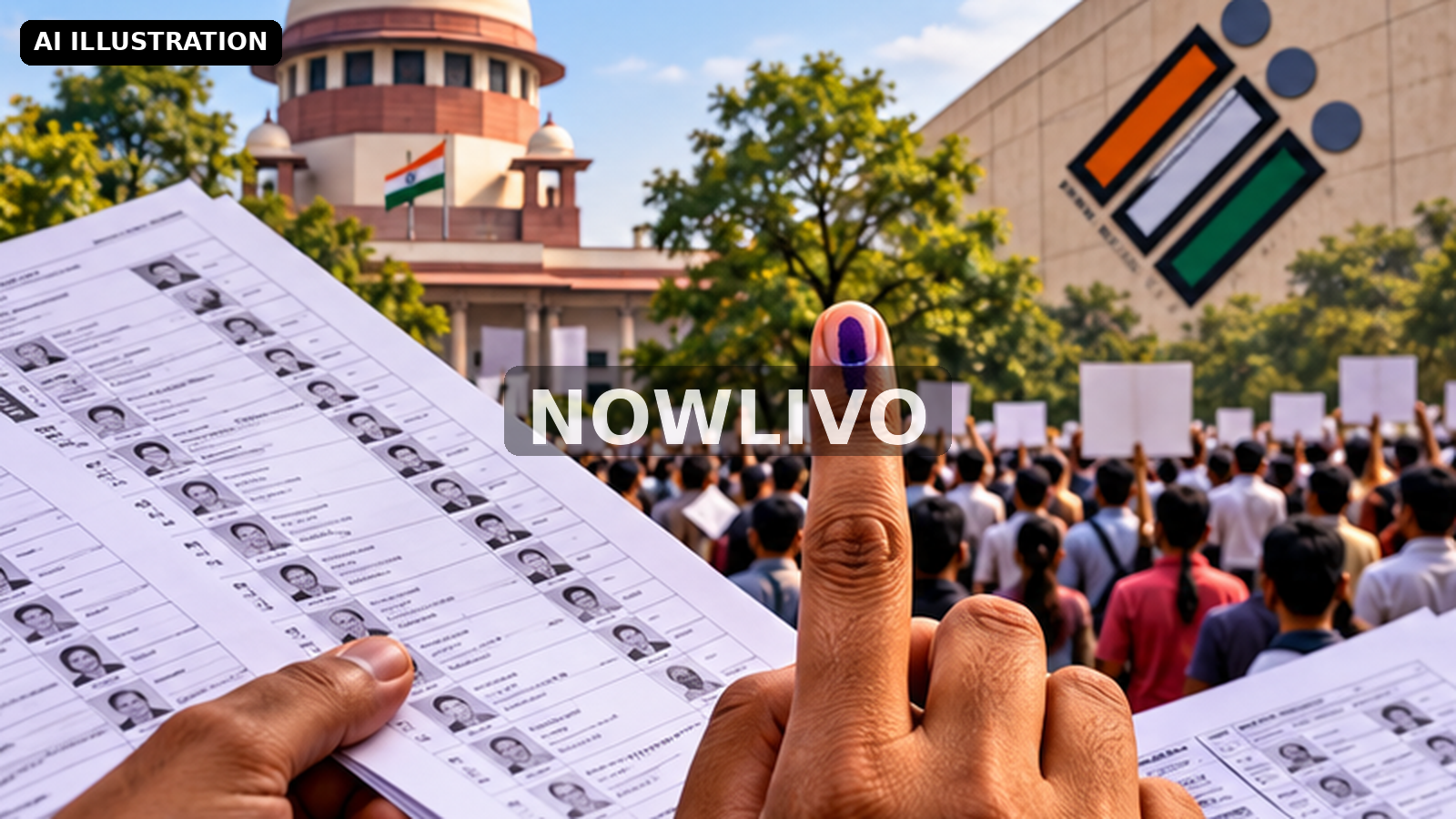
Congress MP Shashi Tharoor has rejected Union minister Kiren Rijiju’s characterization of demonstrations over voter-list revision as an attempt at regime change. Speaking amid the continuing Special Intensive Revision controversy, Tharoor said opposition demands concern electoral fairness and constitutional procedures rather than an effort to overthrow the government. The Indian Express reported the exchange on October 19. This is a dispute over political language as well as administrative policy: whether a protest against an election authority should be treated as routine democratic dissent or as a threat to institutional stability.
Rijiju had compared aspects of the unrest to movements in Bangladesh and France, a framing Tharoor challenged as inappropriate to India’s circumstances. The comparison carries political weight because it suggests motives beyond the protesters’ stated objectives. Tharoor said the opposition supported peaceful action and rejected any association with violence. Neither statement alone establishes what every demonstrator intends. A responsible account distinguishes the minister’s allegation, the opposition response and the separately observable questions about electoral-roll procedures.
What the Special Intensive Revision involves
The revision process is intended to update voter records, including entries that may be duplicated, outdated or otherwise ineligible. Election authorities have defended the exercise as necessary for accurate lists. Opposition parties and civil-liberties advocates argue that documentation requirements and deletions can also affect eligible people, particularly those who struggle to produce records or discover problems only after a deadline. The dispute is therefore not simply about the existence of a voter list; it is about how names are reviewed, what notice is given and whether errors can be corrected in time.
Tharoor pointed to removals that he described as troubling, irregular and in some instances potentially unlawful. Those are his criticisms, not findings that every deletion was illegal. Election administrators must distinguish a genuine duplicate from a voter who moved temporarily or whose identifying details changed. The public also needs understandable explanations of appeal routes. When the administrative system is opaque, even legitimate corrections can create distrust; when review safeguards are weak, eligible voters can face real barriers to participation.
Political accountability and evidence
The opposition has sought scrutiny of the election authority and a more transparent account of how the revision has been conducted. The government and its allies have rejected allegations that the exercise is designed to advantage a particular party. That disagreement cannot be resolved by comparing slogans alone. Useful evidence would include district-level deletion figures, the stated reasons for removal, the number of successful appeals and whether affected people were notified. An independent examination of procedure would also need to account for different categories of entries rather than treating all changes as equivalent.
Protests can be disruptive without automatically being illegitimate. Equally, a public demand for institutional accountability does not relieve organisers of responsibilities around safety and lawful assembly. The challenge for officials is to respond to specific complaints without reducing the entire controversy to an argument over protesters’ loyalty. For opposition leaders, the challenge is to document alleged errors and distinguish confirmed cases from broader political accusations. Both sides have incentives to use strong language, which makes the underlying records especially important.
What readers should watch next
The immediate question is whether election authorities release clearer information about revisions and remedies, and whether courts or oversight bodies take up specific procedural challenges. Another is whether leaders continue to frame the protests in constitutional terms or escalate accusations about each other’s motives. A claim that a process is biased requires evidence; a claim that peaceful protesters seek regime change also requires evidence. Neither should be repeated as established fact merely because a senior politician said it.
For an individual voter, the practical issue is whether their registration remains valid and what official process exists to correct an error. National political rhetoric may draw attention to the subject, but administrative deadlines and local records determine the real-world impact. The October 19 exchange shows how a technical voter-list exercise has become a contest over trust in institutions. Its resolution will depend less on a dramatic label than on accessible records, credible oversight and workable avenues for correction.
Further context and unresolved questions
Electoral-roll disputes become especially complicated when authorities and political parties use different denominators. A large national deletion count may include deaths, relocations, duplicate entries and disputed removals, each with a different meaning. The percentage affected in a particular district may be more informative than the national total for assessing local administrative performance. But even a small percentage can matter greatly to the individuals involved. A credible review would publish categories consistently, provide access to correction procedures and explain whether rejected appeals can be reconsidered. It would also test whether vulnerable groups face unusual documentation burdens. None of those steps requires accepting the opposition’s entire political account; they are ordinary ways to demonstrate that a public administrative process is functioning fairly.
The constitutional argument also has a practical dimension. Peaceful protest is one way citizens and elected representatives express grievances, while election authorities must carry out lawful responsibilities without intimidation. Courts may be asked to decide specific questions about procedure or individual rights, but judicial review cannot replace day-to-day administrative transparency. A ruling on one aspect of the process should not automatically be described as an endorsement or condemnation of every action taken nationwide. Readers should track the precise relief sought in petitions and the scope of any order. The heated comparison to foreign regime-change movements may attract attention, but it is the mundane record of notices, hearings and corrections that will show whether eligible people can participate. That is where the political rhetoric must eventually meet verifiable administrative facts.