Sensex falls 460 points as higher oil prices weigh on Indian stocks
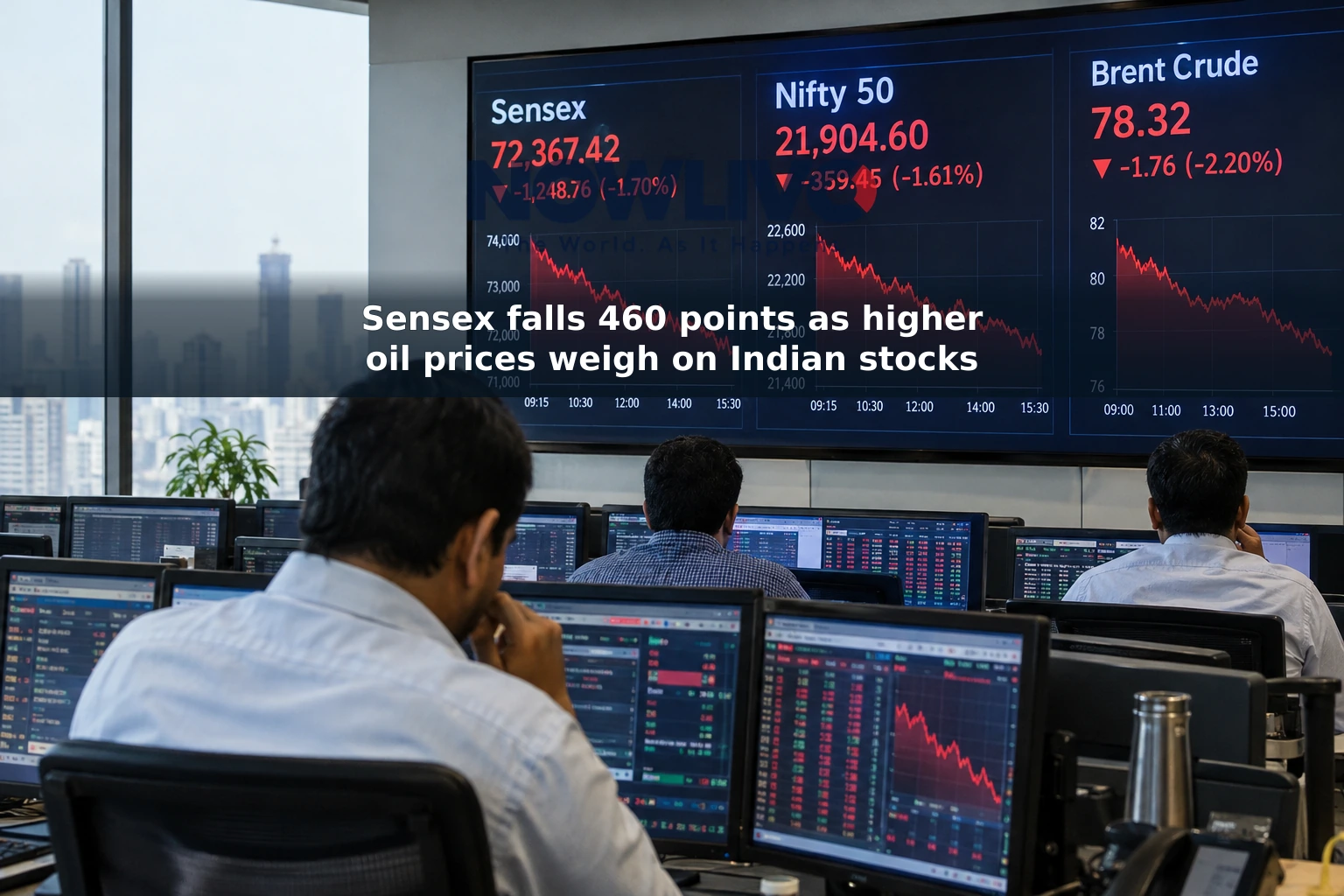
Indian stocks fell for a third straight session on Thursday, October 22, as a jump in crude oil prices added to inflation worries and selling across Asian markets. The Sensex closed 460.30 points, or 0.62%, lower at 73,249.39. The Nifty 50 lost 123.70 points, or 0.54%, to finish at 22,687.65.
The closing figures were less severe than the morning sell-off. The Sensex fell as much as 705 points during the session, while the Nifty touched 22,555, putting it below 22,600 before it recovered some ground.
Why Indian stocks fell
Higher oil prices were a central concern. Brent crude rose above $112 a barrel during the day, raising the prospect of higher costs for an economy that imports much of its crude. Expensive oil can increase costs for businesses that use fuel or petroleum-based materials, while also adding to inflation pressure.
Shares of oil marketing companies, paint makers and tyre manufacturers came under pressure. The wider decline was not limited to oil-sensitive businesses: most major sectors finished lower, and mid-cap and small-cap stocks fell more sharply than the main benchmarks.
Weakness in other Asian markets added to the selling. Investors were also weighing minutes from the Reserve Bank of India’s latest monetary policy meeting, released on Wednesday, which showed that some members saw a possible need for further interest-rate increases to contain inflation.
What the rise in India VIX showed
India VIX rose nearly 6% to around 16.55 during the sell-off. The index reflects the market’s expectation of Nifty volatility over the next 30 days, based on options prices. Its rise showed that traders were pricing in larger potential market swings; it did not, by itself, predict another fall.
The morning Nifty reading below 22,600 and the later close above it describe different points in Thursday’s trading, not conflicting results. For investors following the Sensex and Nifty, the next key developments are whether oil prices remain elevated and whether selling continues beyond the sectors most directly exposed to higher costs.