Jamia Announces Student Union Polls but Protesters Reject Unclear Election Timeline
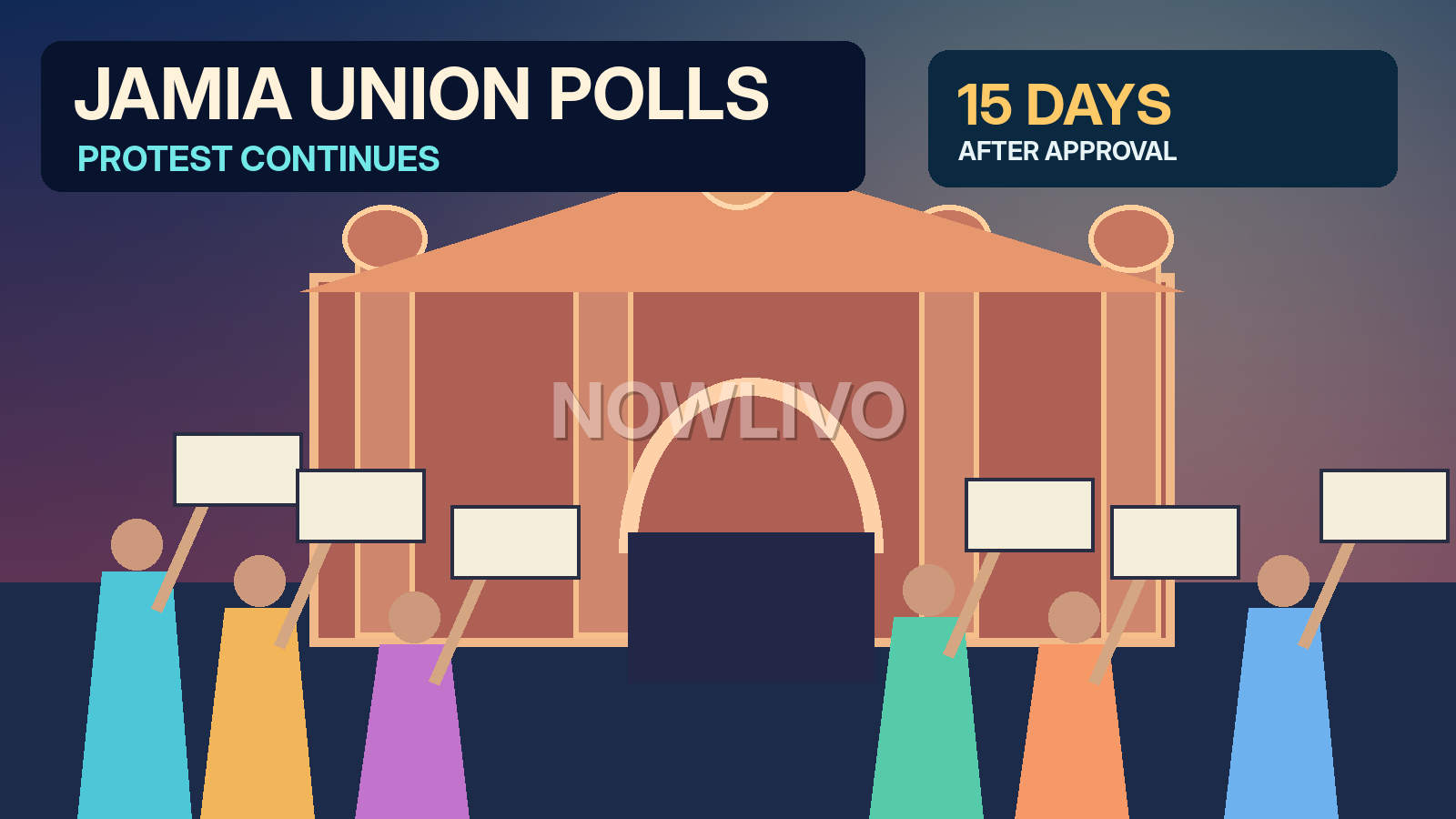
Jamia Millia Islamia has announced a path toward restoring student union elections after nearly two decades, but the university's October 26 order has not ended the protest that pushed the issue back onto the campus agenda. The administration said polls would take place 15 days after approval of a new students' union constitution. It also revoked suspension and show-cause notices issued during the agitation and promised an inquiry into the conduct of security staff. Protesters responded that the order still lacked a fixed date for approving the constitution, leaving the actual election timetable uncertain.
This is a distinct development from the police case involving two Congress MPs reported earlier in the day. The FIR concerns allegations linked to the campus unrest, while Monday's university order addresses the students' core demand for representative elections. Combining the two into a single undifferentiated controversy would miss the new administrative decision and the reasons students say it remains insufficient.
The promise and its missing starting date
The university's order, signed by Registrar Md Mahtab Alam Rizvi, states that the student union election will be held after 15 days from the date the union constitution is approved. That wording offers a timetable only once another event occurs. It does not specify when the constitution must be approved, and therefore does not provide a firm election date. Students on hunger strike have argued that the omission leaves the administration too much discretion over when the process begins.
Jamia's student union has not operated as a regularly elected university-wide body since 2006. The restoration demand has consequently become about more than one ballot: students want a predictable mechanism for representation, elections and accountability. The present protest involved hunger strikes, campus restrictions and public support from other student groups and political figures. Those pressures form the background to the order, but the content of the order itself is the latest news.
The administration also withdrew suspension and show-cause notices against students linked to the protest. That is a tangible concession because disciplinary action can affect students long after demonstrations end. The promised committee to examine security staff conduct is another step, although its membership, timetable and powers will matter in judging how effective the inquiry becomes. An announcement of a committee is not the same as a completed investigation or finding.
Why the protest has not ended
Students have questioned a condition requiring an apology for statements or posts that the administration describes as defamatory, along with the removal of such material from social media. They have also asked for clearer commitments on the union constitution and raised other campus-governance concerns. The administration's order called for the protest to end immediately, but several student representatives said they would continue until the terms were clarified.
The dispute therefore now has two parts. One concerns the principle of holding union elections, on which the university has publicly shifted. The other concerns whether the announced procedure guarantees an election within a meaningful period and how students will be treated while negotiations continue. A resolution would likely require a dated sequence for constitution approval, election administration and polling rather than another general assurance.
Reporting from The Indian Express and Hindustan Times described negotiations with students, including hunger strikers, before the order was issued. Students' representatives and the university have not described the outcome in identical terms. That disagreement is central to the story: the order exists and contains concessions, but the people who demanded them do not regard the matter as settled.
The next decisions that will matter
Attention now turns to whether Jamia publishes the constitution approval timetable, appoints election officials and gives a firm date for polling. The proposed security inquiry also needs a defined process, while the revocation of notices must be implemented for the students affected. Changes to classroom arrangements or campus access would be another concrete development if formally announced.
The renewed election debate is also a test of whether campus rules can provide a stable framework after years without polls. A constitution normally has to define who may vote, how candidates qualify, how disputes are resolved and which body supervises counting. Those details matter, but students argue they should not become a reason for indefinite delay. Publishing a transparent drafting schedule and an election calendar could make the administration's commitment easier to assess. Until that happens, both sides may continue describing the same order very differently: a breakthrough for administrators, and an incomplete promise for protesters.
The protests have attracted political attention, but this is primarily a story about university governance and student representation. An election order can be significant without being the final settlement. For now, Jamia has accepted the principle of resuming polls and rolled back disciplinary notices, while the absence of a starting date for the 15-day clock continues to divide administrators and protesters. Any follow-up should track those specific commitments instead of simply repeating that demonstrations remain tense.