Meta Unveils Plan to Raise Up to $95 Billion as AI Infrastructure Spending Surges
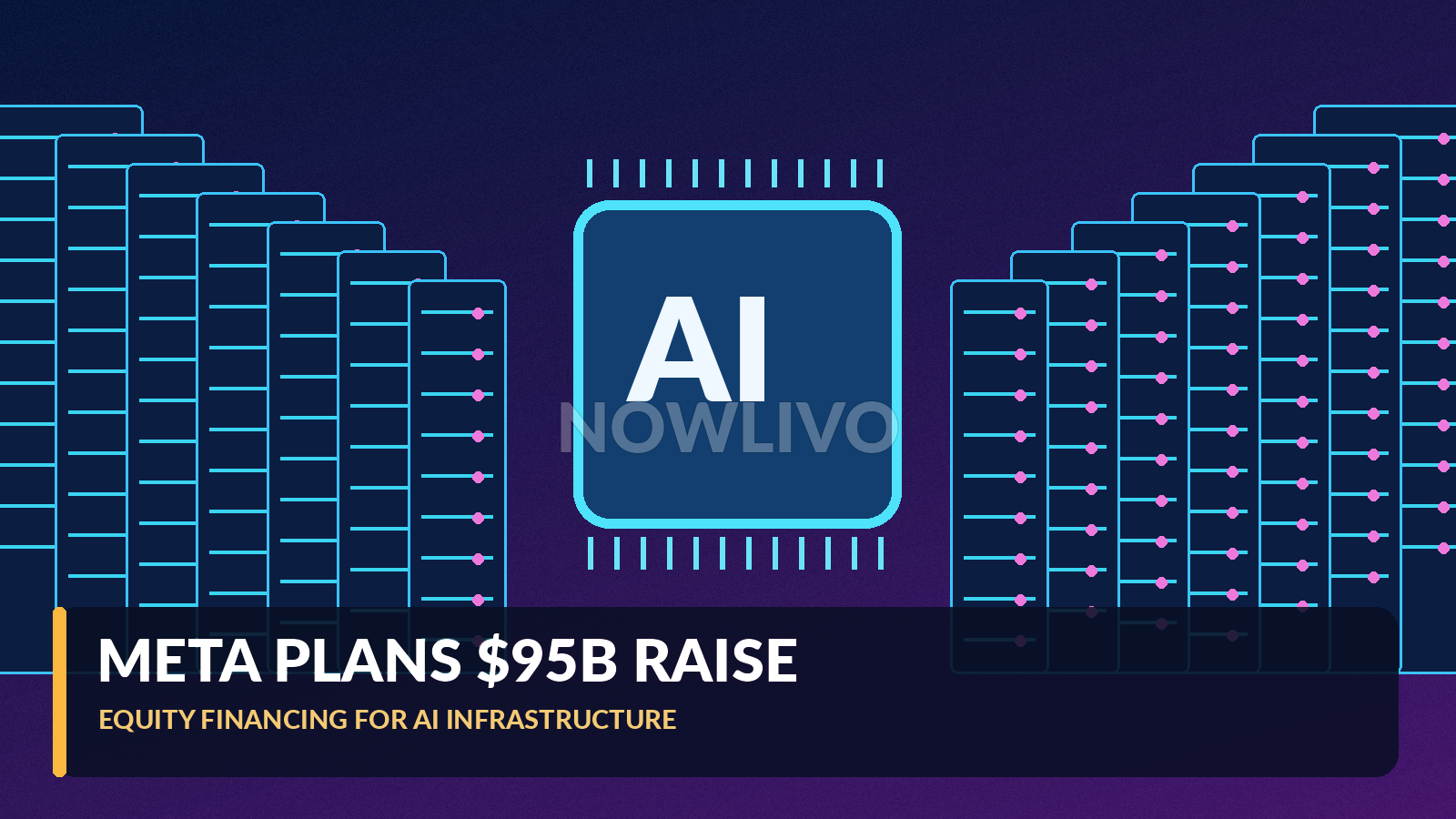
Meta has announced a plan to raise as much as $95 billion through stock offerings as it accelerates investment in artificial intelligence infrastructure. The financing proposal, reported on October 26, is unusually large even for a technology company accustomed to spending billions on data centres and computing systems. It combines an immediate offering of roughly $35 billion with a potential later programme of up to $60 billion. The headline figure describes the maximum planned fundraising, not an amount the company has already received.
Reuters reported that the first phase involves common and preferred shares, while the later at-the-market programme is expected after a new class of non-voting shares begins trading, currently anticipated in early 2027. The structure gives Meta a route to seek funding over time rather than treating the entire $95 billion as a single completed sale. Investors will be watching the terms, timing and final amounts because new share issuance can affect existing shareholders differently depending on the price and class of securities sold.
Why Meta wants more capital
Building advanced AI systems requires more than training software models. Large-scale projects need specialised chips, networking equipment, power supply, cooling, buildings and long-term operating capacity. Meta is expanding infrastructure to support both the models it develops and the products that use them, from consumer assistants to advertising tools. Such investment can be made well before the associated revenue arrives, creating a substantial financing challenge even for a company with a profitable core business.
The scale is visible in Meta's financial commitments. Reuters reported that the company has committed approximately $825 billion in future spending, largely related to AI infrastructure and computing capacity. It also recently raised its annual capital expenditure forecast to a range of $135 billion to $145 billion. Those figures represent different accounting concepts and time periods; they should not be added together as if they were separate bills due immediately. Long-term commitments, current-year capital expenditure and proposed equity fundraising describe distinct parts of the strategy.
The two-stage stock plan
The first approximately $35 billion offering is the near-term financing step. A separate at-the-market programme of up to $60 billion could follow once the non-voting Class C shares begin trading. At-the-market sales generally allow a company to issue shares over time into the market rather than completing a single block sale at one price. The precise execution will depend on market conditions and corporate decisions. There is no guarantee that the full later capacity will be used.
Non-voting shares are significant because they can raise money without granting the same voting rights as other classes. That can help a founder-led company preserve its existing control arrangements while expanding its investor base. It also raises questions about how shareholders evaluate governance and dilution. A financing plan of this size can fund new capacity, but it does not automatically make every future project profitable or prevent competition from rivals.
Why chipmakers are watching
Reuters reported that Nvidia, AMD and Broadcom had expressed interest in investing up to $5 billion collectively. Interest is not the same as a final commitment, and the amount should not be described as a confirmed completed purchase. These companies are important suppliers in the AI infrastructure market, so their possible participation has attracted attention. It also prompts debate about the links between customers, suppliers and investors when the same companies may help finance spending that later supports chip sales.
The wider AI sector is engaged in an expensive contest to build computing capacity. Competitors including OpenAI, Anthropic and Google are pursuing different combinations of cloud partnerships, custom chips and model development. Meta's approach includes its own consumer products and advertising business, which may provide channels for using AI technology at scale. Yet market leadership in a fast-changing field is not guaranteed by the size of a spending plan. The quality, cost and usefulness of resulting products will matter as much as the number of servers installed.
What the numbers say about financial pressure
Meta reported cash and marketable securities of $82.45 billion at the end of September, compared with long-term debt of $80.92 billion, according to Reuters. The company also reported negative free cash flow for the third quarter, reflecting heavy investment. Those figures help explain why a large equity raise might be attractive even with substantial existing resources. They do not mean the company is unable to pay its bills, and a single quarter's cash flow should not be treated as a complete assessment of financial health.
The next developments will be the final pricing and size of the initial offerings, regulatory filings, any confirmed cornerstone investments and the timetable for the later programme. Investors will also examine whether AI spending translates into improved products and financial returns. For users of Meta's services, the announcement is primarily a financing story, not a notice of an immediate change in Facebook, Instagram or WhatsApp features. Its significance lies in the scale of the company's commitment and the questions that commitment raises about the economics of AI.