US Appeals Court Declines to Block California From Counting Disputed Mail Ballots
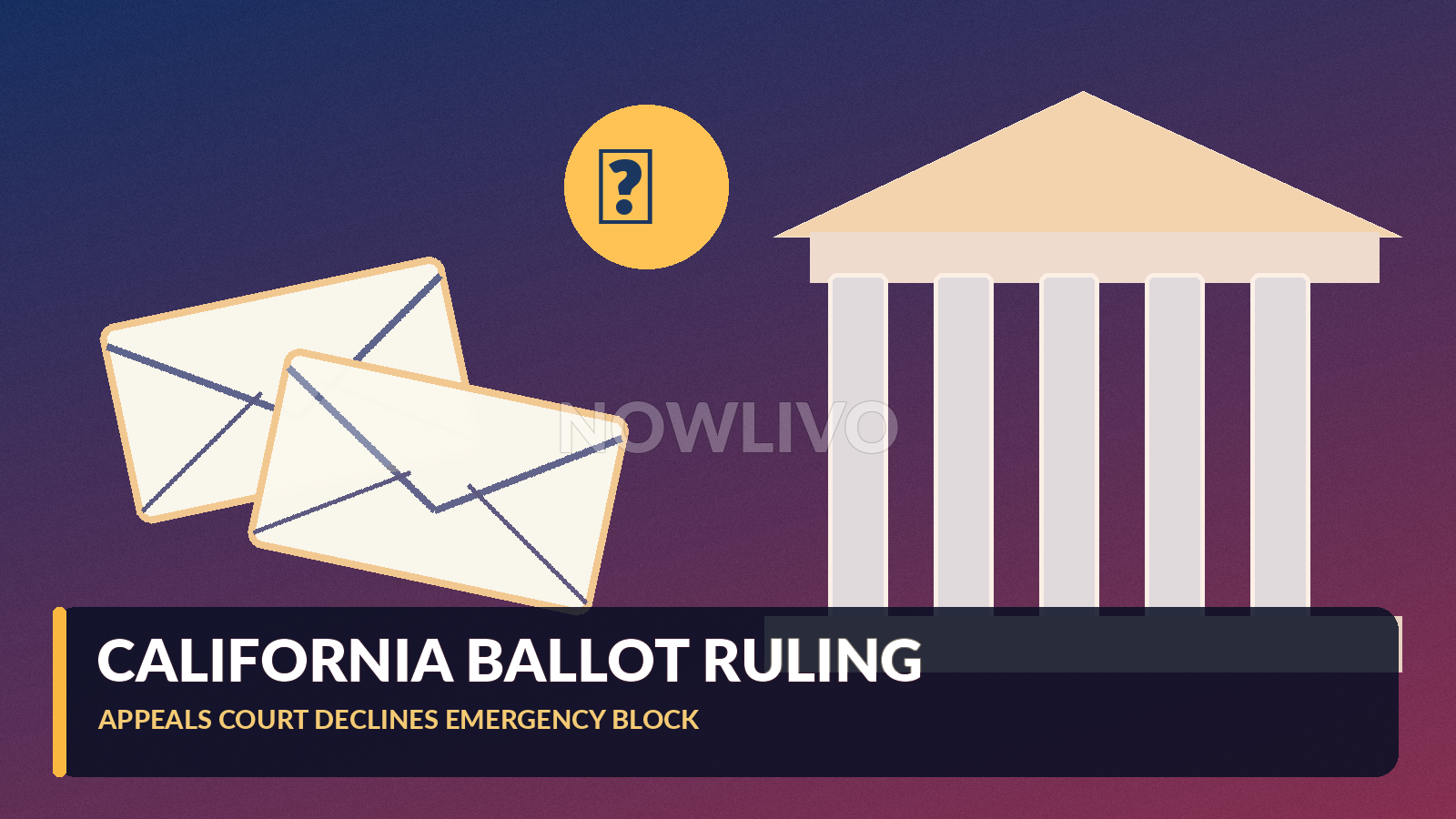
A federal appeals court on October 26 declined to grant the Trump administration's emergency request to prevent California from counting mail ballots associated with roughly 20,000 registered voters whose citizenship status the Justice Department has questioned. The 2–1 decision by the US Court of Appeals for the Ninth Circuit leaves the dispute for further consideration by a lower court, where a hearing is scheduled for Tuesday. It is a new procedural ruling in a closely watched election case, not a final judgment that every person on the federal list is eligible or ineligible to vote.
The Justice Department wants California to set aside ballots linked to the listed voters while their eligibility is reviewed. State officials argue that the list is unreliable and that withholding ballots on the basis of unverified allegations could disenfranchise citizens. Both sides say they are protecting lawful elections, but they disagree about the quality of the information and the authority of federal officials to impose the requested procedure. The appeals court majority concluded that the lower court had not been given enough opportunity to address the request before appellate intervention.
What the judges decided
The majority declined to step in at this stage, effectively returning the immediate dispute to the district court. The judges raised concerns about the timing and the disruption that could follow if an appellate court ordered ballots segregated while voting was already underway. One judge also questioned the constitutional basis for the federal demand. A dissenting judge argued that the government had a strong interest in preventing votes cast by people who are not legally eligible. The split shows that the court was considering both election administration and the limits of emergency judicial action.
The outcome is narrower than some political descriptions may suggest. It does not strike down every federal attempt to check voter eligibility, and it does not establish that the Justice Department's entire investigation was improper. Nor does it establish that 20,000 noncitizens voted. The number refers to registrations the federal government has flagged, while the citizenship status and voting activity of individual people remain contested. The district-court hearing may develop the factual record and produce a further ruling.
Why California disputes the federal list
California officials have questioned the methodology behind the list and said their election systems already include safeguards. The Associated Press reported that Los Angeles officials examining a sample found indications that some people on the list were born in the United States or had registrations that were inactive or otherwise did not match the government's apparent assumptions. A list of suspected problems is not proof of illegal votes. Likewise, errors found in a sample do not independently resolve every record in the larger dataset. The central dispute is whether the evidence supports the extraordinary remedy the federal government seeks.
The Justice Department has said it has brought charges against some people accused of unlawful voting and argues that waiting until after ballots are counted could be too late to prevent harm. Charges are allegations that must be evaluated through the legal process. California responds that moving quickly on unverified data can harm eligible voters and complicate election administration. The competing risks are unusually sensitive because voting is already underway ahead of the November 3 midterm elections.
The wider election stakes
The case is part of a broader series of federal efforts to obtain and review voter-registration information from states. Election administration in the United States is primarily carried out by state and local officials within federal constitutional and statutory rules. Federal authorities have roles in enforcing voting-rights and election laws, but disputes arise over how far those roles permit direct intervention in state procedures. That question has become especially contentious in a campaign environment where public confidence can be affected by claims made before a court has established the facts.
Noncitizen voting in federal elections is unlawful. Available research and previous investigations have generally found it to be rare, which is relevant context when officials discuss large numbers of suspected registrations. It does not mean every allegation should be dismissed without examination. It means the public should distinguish between an initial match in a database, a verified registration problem, a ballot actually cast and a proven illegal vote. Treating those categories as interchangeable would distort the case.
What happens before Election Day
The next step is the district-court hearing scheduled for October 27. Depending on the evidence and legal arguments, the judge may issue a further order, and either side could seek additional review. California election officials will continue administering the election under the rules in force unless a court directs otherwise. The appeals ruling does not require voters to take a new step simply because their state is involved in litigation, and readers should rely on official election offices for individual ballot questions.
For now, the fresh news is that the administration failed to obtain immediate appellate intervention. The underlying allegations remain disputed, and the legal battle is still moving. Reporting the decision accurately means describing the procedural setback, the competing claims and the unresolved questions without turning a preliminary court ruling into a definitive verdict about election fraud or voter eligibility.