Trump Says He Approves of Flávio Bolsonaro Coming to US After Brazil Election Loss
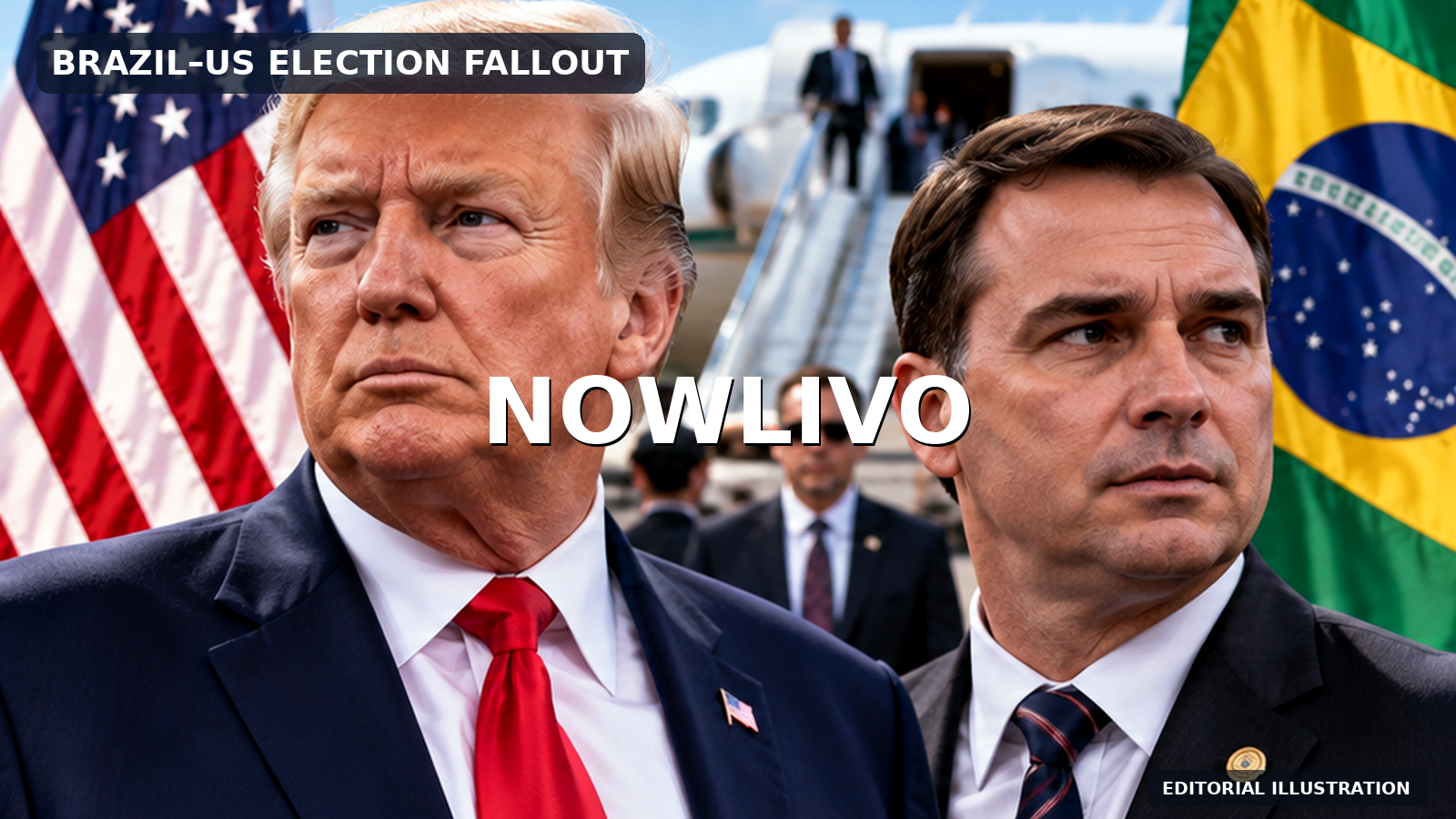
US President Donald Trump said on Wednesday, October 28, that he approved of defeated Brazilian presidential candidate Flávio Bolsonaro coming to the United States. The comment adds a new diplomatic dimension to the aftermath of Brazil's runoff election, which incumbent Luiz Inácio Lula da Silva won on Sunday. Bolsonaro has not conceded and left Brazil after refusing to comply with a Supreme Court order to surrender his passports, according to Reuters. Trump's remarks were a public response to the situation, not an announcement that the two politicians had met.
Reuters reported that a senior US State Department official had said visas would be granted to Bolsonaro and his family. Trump made his own comments to reporters after returning from a campaign trip to Texas. Asked whether he approved of Bolsonaro entering the country, he answered in the affirmative. The precise terms of any visa or the candidate's subsequent movements were not established in the report, and readers should not confuse approval of entry with a final resolution of the Brazilian legal dispute.
A defeated candidate and a court order
Bolsonaro's departure has attracted attention because it follows an election result he has yet to formally accept and a judicial instruction concerning his passports. Those facts are politically significant, but they do not by themselves determine the legal consequences he may face in Brazil. The relevant Brazilian authorities would have to explain any enforcement steps. A news account should not label the travel an established crime without a corresponding judicial finding or other substantiated legal basis.
The defeated candidate is the son of former President Jair Bolsonaro, a figure with whom Trump has maintained a sympathetic public relationship. The family connection helps explain why the US president's response has drawn attention beyond routine immigration questions. It does not establish that Washington directed the candidate's travel or that the election result is invalid. Reuters reported the remarks and the State Department visa position as separate developments.
Trump also criticised the Brazilian election, describing it as strange and pointing to negative market reactions. He insisted that he had not taken sides and said he knew both Lula and Flávio Bolsonaro. Those are Trump's stated positions, not independent evidence of irregularities. Market movements following an election can reflect many factors and are not proof that votes were counted improperly. No substantiated finding of election fraud was presented in the Reuters account of his remarks.
Why Washington's response matters
The United States and Brazil have extensive commercial and diplomatic ties, so comments from the US president can quickly become part of Brazil's domestic political debate. Supporters of Bolsonaro may see Trump's approval as reassurance, while critics may question whether an influential foreign government is intervening rhetorically in a disputed political moment. These are possible reactions and political interpretations, not confirmed decisions by either government.
The visa issue is more concrete. A State Department official's reported willingness to grant entry visas concerns US immigration policy, while the Brazilian court order concerns obligations under Brazilian law. The two legal systems operate separately. Permission to enter one country does not necessarily extinguish legal duties in another. Conversely, an unresolved legal dispute in Brazil does not automatically answer what US authorities may decide under their own rules.
The reporting does not show that Trump offered asylum, that a US court reviewed the Brazilian case or that a formal extradition request was made. Those are distinct processes with their own standards and procedures. Headlines that jump from visa approval to political asylum or immunity would therefore go beyond the known facts. The current development is the president's statement of approval and the reported State Department position.
Lula's victory remains the election result
Lula won the October 25 presidential runoff, an outcome that earlier reporting had already established. Trump's new comments do not change that result. The central electoral question was settled by the vote; the new political questions concern Bolsonaro's response, his travel, the court order and Washington's reaction. Keeping those threads separate prevents a new diplomatic controversy from being framed as if the election itself had been rerun.
The Brazilian political divide also has a history that extends beyond this one election. Jair Bolsonaro's earlier presidency, the country's courts and disputes over institutional authority have been recurring points of contention. That background explains the intensity of reactions, but it should not be used to assume the motives of individual officials in the present case. What matters for this update is what was actually reported on October 28.
Trump also addressed other international issues
In the same exchange with reporters, Trump spoke about hopes for further contacts involving Russia and Ukraine and a planned discussion with Chinese President Xi Jinping. Those comments show that the Brazil question arose during a broader foreign-policy conversation. They should not be mistaken for evidence of a coordinated diplomatic package linking the unrelated issues. Reuters reported them together because they were part of the same public remarks, not because they were components of one agreement.
Trump also faces US midterm elections the following week, making his statements part of an especially busy political period. The timing may increase the attention paid to his comments, but there is no need to invent a domestic electoral motive. The report establishes what he said and when he said it; it does not establish why he chose a particular answer beyond his own explanation.
What would make this story move again
The next material development could be an official Brazilian court response, confirmation of Bolsonaro's immigration status, a statement from Lula's government or a new formal action by US authorities. Another repetition of Trump's earlier criticism, without a new decision or document, would not justify presenting the same story as fresh news.
For now, the new fact is Trump's expressed approval of Flávio Bolsonaro coming to the United States, alongside the reported visa position and the unresolved Brazilian court issue. The election result remains Lula's victory, and the legal consequences of the defeated candidate's travel remain a separate matter.