Lost Your Driving Licence in India? How to Apply for a Duplicate Through Parivahan
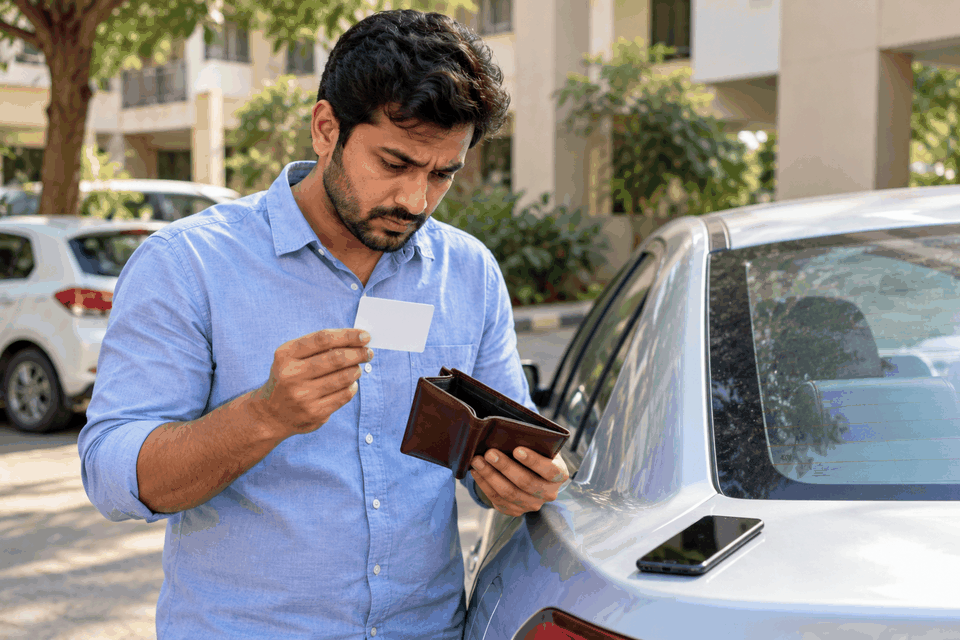
A lost driving licence can turn an ordinary day into an anxious search through a wallet, car, office bag and old photographs. A damaged card creates a different problem: the number may still be known, but the physical document is no longer usable. In India, a duplicate driving licence is a replacement for a lost, destroyed or damaged licence; it is not the same service as renewal, a change of address or applying for a first licence.
The central Parivahan information describes duplicate issue for a licence that has been lost or destroyed, defaced or torn, or requires replacement of the photograph. The application route and evidence requirements can vary across states and licensing authorities. This guide explains the decisions to make before applying, how to approach the official Sarathi service, and what to do if your case does not fit the standard online workflow.
Confirm what happened to the original licence
Start by distinguishing lost, stolen, damaged and expired. If you simply cannot find the card, check where you last used it and whether a digital record or photocopy contains the licence number. If you suspect theft, consider the appropriate local police report promptly and protect any other documents that went missing with the wallet. If the card is torn or illegible, keep it: the authority may ask to see the original damaged document.
An expired licence needs attention to renewal rules as well. A duplicate of an expired card does not automatically restore the underlying driving entitlement. Likewise, a change of residential address may require an address-update service rather than only a duplicate. Selecting the wrong service can waste time and create inconsistent records.
Find the issuing authority and licence details
Look for the licence number, date of birth, name as recorded and the state or RTO that issued the licence. Old scans, an insurance file, employer records or a previously saved official digital driving licence may help. Do not post a photograph of your licence in public groups asking strangers to identify the number. If no record is available, contact the issuing transport authority through its official channel and ask how it can help locate your details.
Check that the licence is present in the electronic record where the service expects it. Older licences may require a record update or manual assistance. A missing online record does not by itself prove that your licence was invalid, but it is a reason to seek the authority’s instructions rather than repeatedly paying intermediaries.
Use the official Sarathi service as the starting point
Go to the official Parivahan/Sarathi system and choose the state associated with your licence. Find the services for an existing driving licence and look for the duplicate-licence option. Read the state-specific instructions before entering data or paying. The names of menu items and whether the process is fully online can change, so a current official screen is more reliable than a years-old video tutorial.
Typically you will need to identify the existing licence, provide the reason for the duplicate, supply the requested documents and complete any applicable fee and appointment steps. The authority may require identity or address evidence, a photograph, a declaration or a report concerning the loss. Do not assume that every state requires the same police document or that a particular fee quoted on a commercial website applies everywhere.
Prepare a small evidence folder
Keep a copy of any available driving-licence details, a current identity and address document where required, the damaged card if you still have it, and any police acknowledgement requested for a loss or theft. Save the application number and fee receipt once you submit. If the portal asks for a scan, make it legible and crop unrelated material rather than uploading an entire household document bundle.
The central Parivahan duplicate-licence information lists an application form, the original or defaced licence if available, photocopies when available in a loss case, and prescribed fees. State transport departments can publish additional requirements. Delhi’s transport page, for example, describes its own documentation and reporting expectations. These examples show why the final checklist must come from the authority handling your application.
Understand the difference between a report and a duplicate application
A police complaint or loss report documents circumstances; it is not a replacement driving licence. Filing one does not automatically update the RTO’s record. Similarly, submitting a duplicate application does not itself resolve the theft of a wallet containing bank cards or identity documents. Treat those as parallel tasks with separate authorities and records.
If the licence was stolen, record the incident accurately. Do not report theft if the card was merely misplaced because someone online claims that a theft report is always faster. False statements can create legal and administrative complications. Ask the transport authority which evidence it accepts for your actual circumstances.
What if you need to drive while the card is being replaced?
First verify that your underlying driving licence is valid and that you are authorised to drive the relevant vehicle class. India recognises certain official electronic documents through approved digital channels, but the exact acceptance rules, availability of your record and any special situation should be checked against current government guidance. A photograph saved in a chat is not automatically equivalent to an officially issued digital document.
If you have access to a verified licence in DigiLocker or the government-supported vehicle-document system, check that it displays the correct current details. If the record is unavailable or disputed, contact the licensing authority rather than assuming that an application receipt grants driving permission. Keep proof of your duplicate request for enquiries, but do not treat it as a new licence.
After payment, track the application rather than starting again
Record the application number, date, selected RTO, fee transaction reference and any appointment details. Use the official application-status service to check progress. If a document is rejected, read the specific reason before resubmitting. Repeated new applications can create duplicate fees or confusion when the original application is still active.
When a visit or biometric verification is required, carry originals and the acknowledgement listed by your authority. If a courier or postal delivery is involved, verify the address in the application and retain the dispatch reference. Processing times depend on the state, workload, document completeness and service channel; avoid promises of a fixed nationwide delivery date.
Common problems and sensible responses
The portal says the licence cannot be found. Double-check the state, licence-number format and date of birth. If the record is older, ask the issuing RTO about digitisation or record correction. Do not try random licence numbers or pay an unofficial ‘database activation’ agent.
The photograph or name is wrong. A duplicate may reproduce existing details. Ask whether a separate correction or change-of-particulars service is required before paying for a card that will carry the same error.
The payment succeeded but status did not update. Preserve the receipt and transaction reference. Use the portal’s official support or grievance route before paying a second time. A bank debit alone does not tell you whether the transport application was completed.
You moved to another state. Check which authority can process the duplicate and whether a separate address update or transfer of records is needed. Requirements for an out-of-state licence can differ from those for a local record.
Protect yourself from unofficial agents
Search results can contain advertisements and lookalike websites. Confirm the government domain before entering your date of birth, licence number or payment details. Do not give a stranger remote access to your phone or share one-time passwords. A legitimate authority may require documents, but it should not require you to disclose a bank login password or approve an unrelated payment request.
If an intermediary assists with form filling, review the submitted information yourself. Keep the application reference in your own possession and ensure any payment is made through the designated official channel. A ‘guaranteed same-day duplicate anywhere in India’ claim should be treated skeptically.
Frequently asked questions
Can I use duplicate-licence service to renew an expired licence?
A duplicate replaces a document; renewal addresses validity. Ask the transport authority which service or combination applies if the licence is expired as well as lost.
Must every lost licence have an FIR?
Do not assume a single nationwide rule. The evidence required for loss or theft can depend on the state and circumstances. Check the relevant official transport department and police guidance.
Will a duplicate automatically change my address?
Not necessarily. If the underlying record contains an old address, check the official change-of-address procedure instead of assuming replacement will update it.
Can an agent complete the whole process without me?
Some steps may require applicant authentication, original-document verification or an appointment. Review all declarations and use official channels even if someone helps you prepare the application.
A final checklist before you submit
Identify the correct state and issuing authority; distinguish loss, theft, damage and expiry; locate the licence number; verify the current official document list; retain the damaged original or loss evidence; submit through the proper service; save receipts; and track the same application until it is resolved. This process is more reliable than treating a replacement card as a simple online purchase.
Official sources and update note (reviewed 31 October 2026): Parivahan duplicate-licence information and Delhi Transport Department’s duplicate-licence guidance. The Delhi page illustrates state-specific requirements, not a universal checklist. Verify the current Sarathi/state instructions before applying.