
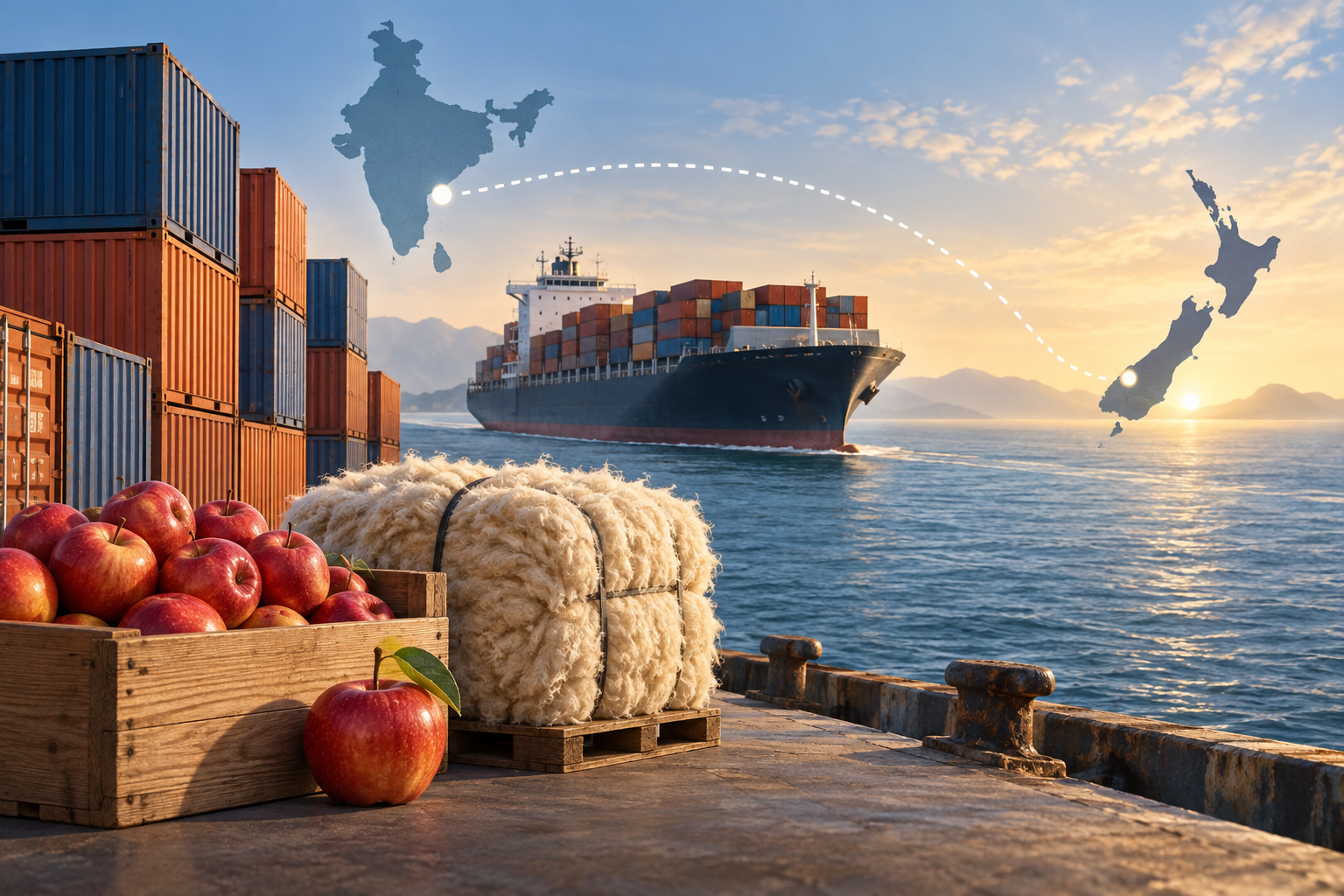
India and New Zealand Ratify Trade Pact Ahead of October 20 Start
India and New Zealand have completed ratification of their free trade agreement, clearing the way for it to take effect on October 20, 2026. The two governments announced the completion on September 21. Ratification settles the legal process; the tariff changes begin only when the agreement enters into force.

The Indian commerce ministry says all Indian export tariff lines will enter New Zealand duty free from that date. New Zealand’s government says 57 percent of its exports to India will be tariff free on the first day, including sheep meat, wool and coal, with further reductions scheduled for January 1, 2027. Those figures describe different measures: one covers tariff lines for Indian goods, while the other measures the share of existing New Zealand exports. They should not be read as competing estimates of the same benefit.
India has kept sensitive products outside its tariff concessions, according to its commerce ministry. The exclusions include dairy, most meat other than sheep meat, sugar and edible oils. Access for products such as apples and kiwifruit is governed by quotas and safeguards rather than unrestricted tariff removal. For businesses, the relevant questions will be which product classification applies, whether a quota remains available and whether the shipment satisfies the agreement’s origin rules.
The agreement was signed on April 27. New Zealand enacted its implementing legislation on September 16, and the governments then completed their domestic procedures. New Zealand Trade Minister Todd McClay exchanged ratification documents with Indian High Commissioner Muanpuii Saiawi at Parliament, the New Zealand government said.
Both sides have described a goal of lifting bilateral trade to NZ$7 billion by 2030. That is an ambition, not a measured consequence of the agreement. Likewise, a stated commitment to facilitate NZ$20 billion in New Zealand investment in India should not be confused with money already invested. The initial test will be whether exporters use the new preferences and whether firms can meet the rules and practical costs of entering each market.