
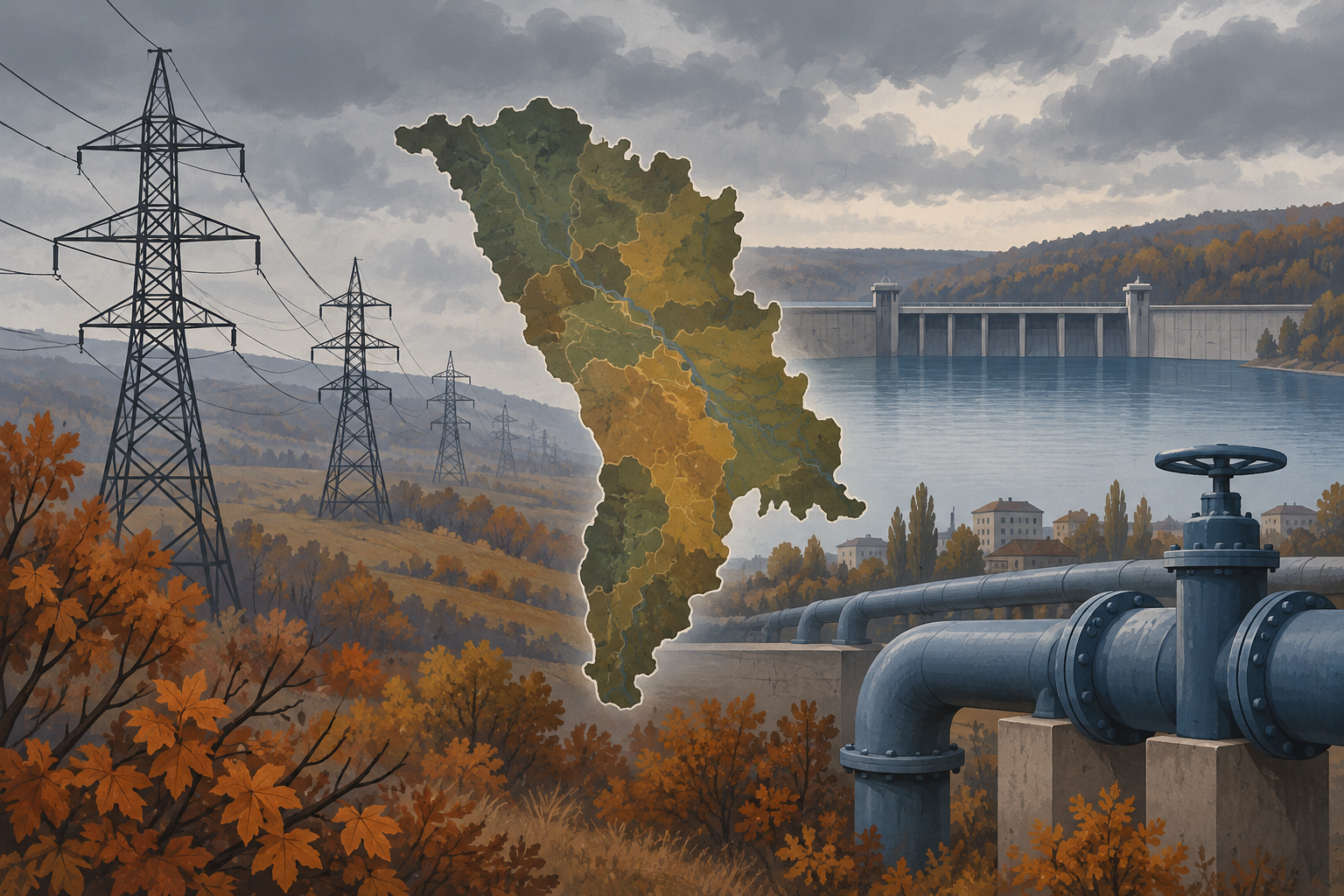
Moldova Approves 60-Day Energy and Water Emergency Before Winter
Moldova’s Parliament has approved a nationwide 60-day state of emergency in its energy and water sectors beginning September 26. The government describes the measure as preventive: it is seeking authority to respond quickly if several supply risks coincide as colder weather approaches. The vote does not mean that gas, electricity or drinking water supplies have already stopped.

Prime Minister Vasile Tofan told lawmakers that risks in fuel, gas, electricity and river flows can reinforce one another. In the government’s account, more than 90% of the country’s winter gas needs are under contract, but some prices remain linked to the European market. Low water in the Dniester basin and reduced hydropower output on the Prut add another pressure. Electricity is also necessary to run large municipal pumps, making energy and water planning inseparable. These figures and forecasts are the government’s assessment and may change with market conditions and weather.
The distinction between an emergency declaration and an immediate restriction matters for households. Authorities say the new powers can support faster purchases of equipment for critical infrastructure, temporary procedures for backup generation and storage, and measures to prioritize drinking water if the hydrological situation worsens. Such steps would depend on conditions; the declaration itself is not an announcement of water rationing or a change to individual utility tariffs.
Moldova has been using an alert framework that expires on September 25. According to the government, that framework enabled daily stock reporting and other preventive measures but did not provide every tool needed if several problems occur simultaneously. The government says diesel stocks recovered from less than four days of consumption in August to roughly ten days after intervention, an example it cites for acting early.
Parliament’s approval creates a defined 60-day window, while the public-interest test will be how narrowly any emergency powers are used and what evidence authorities provide for specific interventions. Residents need clear updates on actual supply conditions, any temporary restrictions and their duration. For now, the confirmed development is legal preparedness before winter, with the precise effects dependent on future decisions and conditions.