
Apple Rumors Point to New Home OS and Near-Borderless iPhone Pro
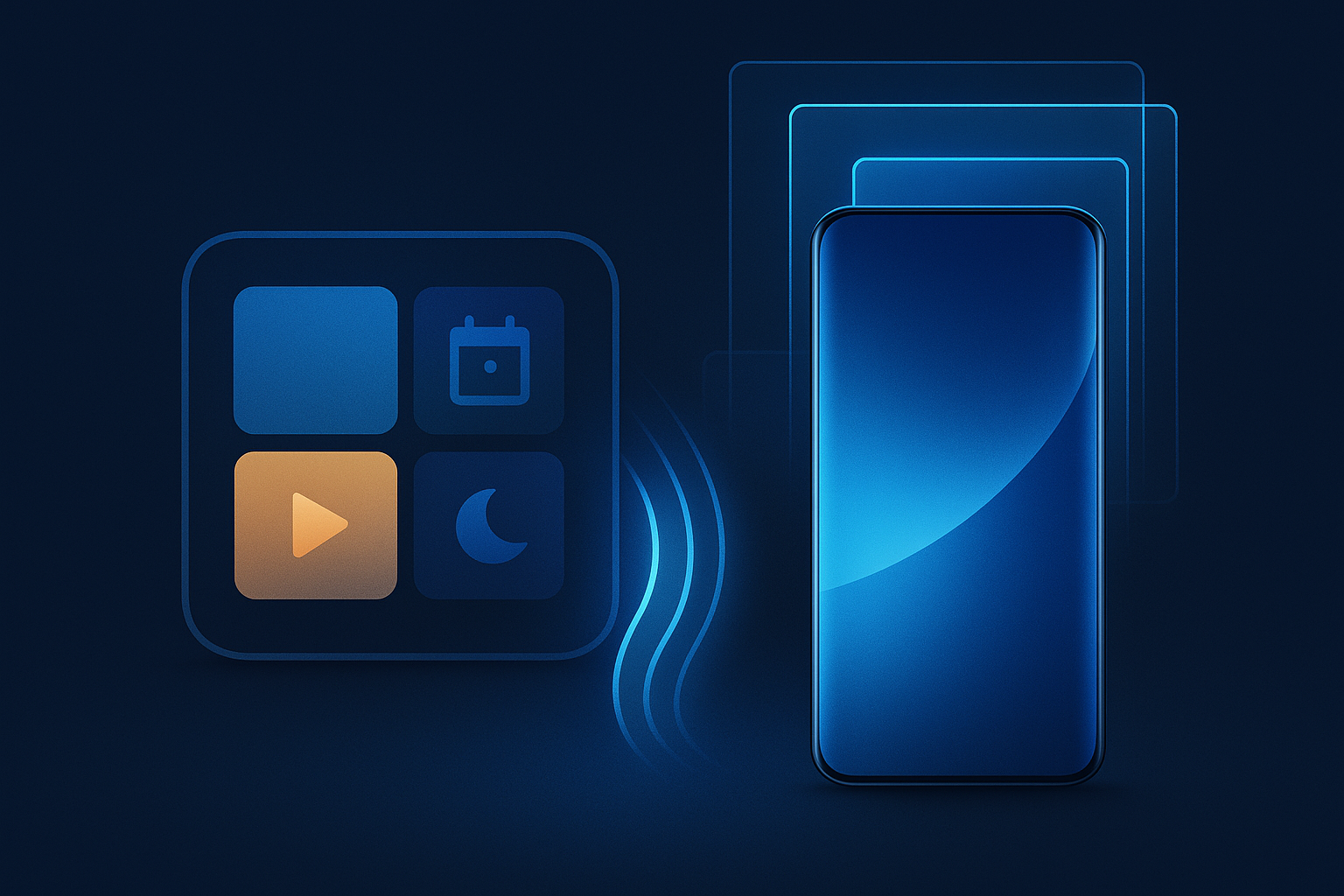
Apple may be preparing two significant additions to its product roadmap: an entirely new operating system built for the home and a major iPhone Pro display redesign. Reports published between September 22 and September 23, 2026, and circulating widely on September 24, describe projects that could reshape both Apple’s smart-home strategy and the appearance of future iPhones.

Neither plan has been confirmed by Apple, and the timelines could change. However, the claims provide a possible outline of how the company intends to expand beyond its established software platforms while gradually introducing thinner and more efficient display technology.
A new operating system for Apple’s home hub
Technology journalist Mark Gurman says Apple is developing a software platform that combines elements of iOS, watchOS and tvOS. The operating system is reportedly intended for the company’s long-rumored smart-home hub, a device described as pairing a HomePod-style speaker with a square display measuring approximately six or seven inches.
The software could be called homeOS, although Apple has not announced an official name. Its interface is expected to include a grid of applications, interactive widgets and customizable clock faces. That combination suggests a system designed to provide information at a glance while remaining simple enough to operate from across a room.
Facial recognition could allow the hub to identify individual household members and automatically display personalized information. Interface elements may also change size depending on whether someone is approaching the device or moving away, potentially making controls easier to see and use at different distances.
Reported functions include FaceTime calls, smart-home accessory controls, security monitoring, music and podcast playback, calendars, reminders, notes and photo galleries. Multi-user support is also expected, which would distinguish the device from an iPhone or iPad that is normally associated with one person.
Siri and Apple’s newer artificial-intelligence features are expected to sit at the center of the experience. If the reports prove accurate, the hub would serve as both a household control panel and a dedicated interface for conversational assistance. Apple could introduce the product as soon as October 2026, but no event or release date has been confirmed.
Anniversary iPhone design reportedly remains on schedule
A separate supply-chain report says Apple is still targeting 2027 for a near-borderless iPhone Pro marking the iPhone’s 20th anniversary. The device is expected to use glass that curves into all four sides, creating the impression that the display extends almost uninterrupted across the front.
Two supporting panel technologies, however, are reportedly no longer expected to be ready for that model. The first is Color Filter on Encapsulation, commonly shortened to COE. This approach removes a conventional polarizer and integrates color-filtering elements more directly into the OLED panel. It can make a display thinner while allowing more light through, potentially improving brightness or reducing power consumption.
The second delayed technology is LTPO+, an evolution of the backplane technology used to control OLED pixels. Its intended benefits include greater efficiency and a potentially simpler manufacturing process. Industry sources reportedly believe that costs and technical readiness have prevented both upgrades from meeting Apple’s requirements for the 2027 device.
The delays do not necessarily mean the near-borderless design has been abandoned. The four-sided curved panel is described as a separate feature, meaning Apple could proceed with the dramatic exterior redesign while relying on more established internal display components.
More efficient Pro displays could follow in 2029
Display-industry research group UBI Research expects Apple to bring COE panels to conventional Pro iPhones in 2029. The technology is reportedly being introduced first through the foldable iPhone Duo, giving Apple and its suppliers an opportunity to evaluate polarizer-free OLED panels before producing them at the much larger scale required for the Pro lineup.
Removing the polarizer can create challenges involving reflections, outdoor visibility, contrast, viewing angles and color accuracy. Those issues become particularly important when tens of millions of panels must meet consistent quality standards. Samsung Display and LG Display are expected to be leading candidates for future orders, with BOE potentially competing if it can satisfy Apple’s specifications.
If Apple successfully adopts the technology, users could eventually see brighter screens with similar battery consumption, longer battery life at existing brightness levels or thinner display assemblies that leave more internal room for cameras and batteries. The near-borderless 2027 model and the more efficient panels expected around 2029 therefore appear to represent different stages of a longer display transition.
For now, both the home operating system and future iPhone designs remain unannounced projects. The clearest takeaway from the reports is that Apple may be planning its next major changes in phases: a new software category for shared household devices, followed by increasingly ambitious iPhone display designs as manufacturing technology becomes ready.