
Nine Dead in Sleeper Bus Fire on Yamuna Expressway
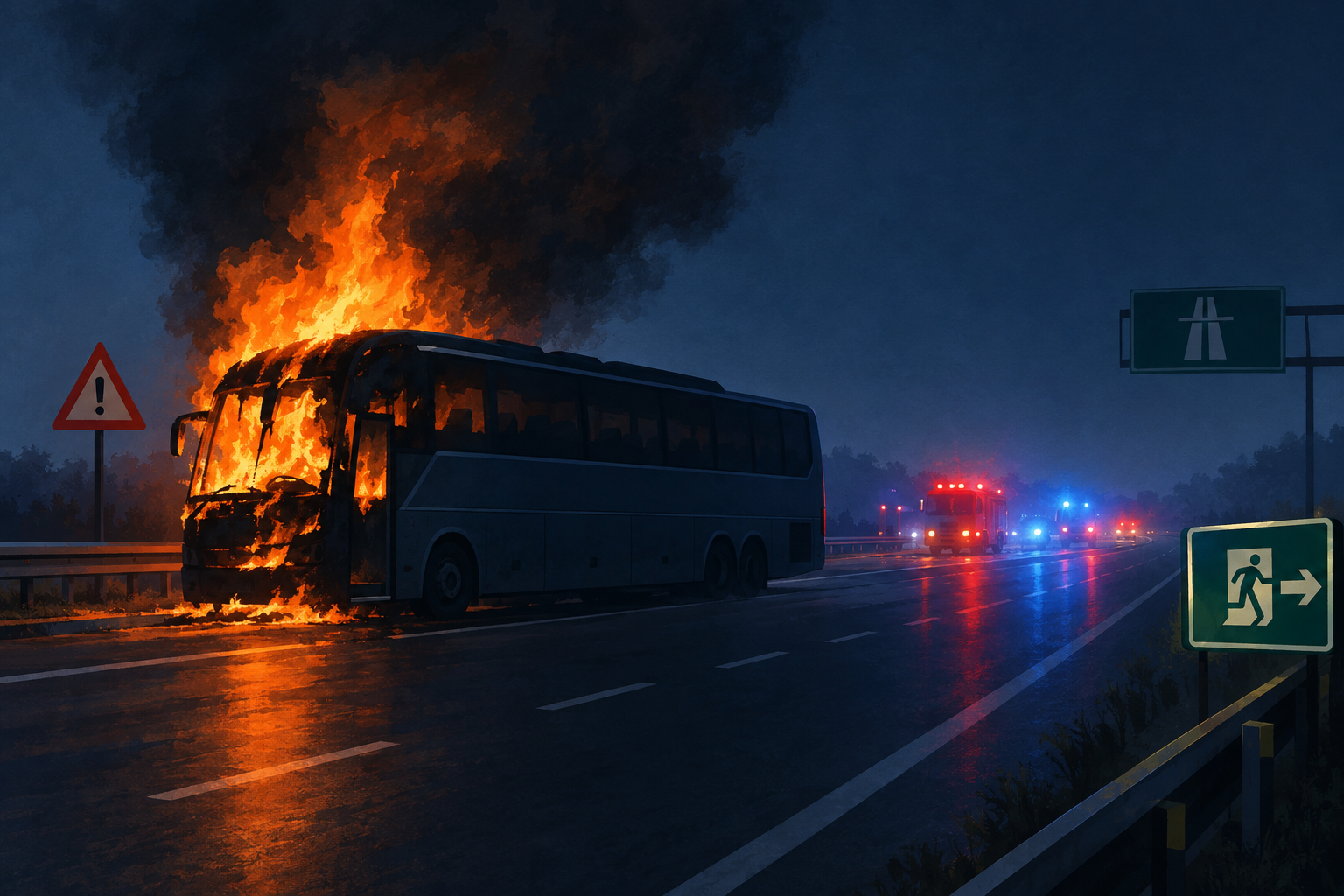
Nine passengers were killed after a private air-conditioned sleeper bus caught fire on the Yamuna Expressway in Greater Noida late on Wednesday, September 23, authorities said. More than 20 people escaped or were rescued as flames and heavy smoke rapidly engulfed the vehicle.

The bus was travelling from Delhi’s Kashmere Gate area to Mahoba in Uttar Pradesh when the fire broke out near the 33-kilometre marker in the Jewar police station area at about 11:30 p.m. It was carrying approximately 35 passengers.
Police said the nine victims, including one woman, were found inside the bus after firefighters brought the blaze under control. They are believed to have died from burns or smoke inhalation. The bodies were sent for post-mortem examinations, while officials worked to confirm their identities and contact their families.
Passengers treated after escaping blaze
Several survivors received treatment for burns and other injuries at hospitals in the Jewar area. Officials said about 15 passengers were sent onward to Mahoba in a special vehicle after receiving first aid, while others continued their journeys through private arrangements. One woman remained under hospital care on Thursday.
Authorities had not released a final, consolidated injury count by Thursday afternoon. Survivor accounts described a chaotic escape as smoke filled the passenger compartment and people rushed toward available exits or climbed through windows.
FIR contains serious allegations
An FIR registered at Jewar police station contains allegations that passengers noticed a burning smell coming from the front of the bus before visible flames appeared. The complaint, filed by a passenger, alleges that the driver and conductor were alerted repeatedly but did not immediately stop and inspect the vehicle.
The FIR further alleges that members of the crew dismissed the warnings and continued driving until fire erupted near the driver’s area. These claims remain allegations under investigation and have not been established by a court. Investigators will need to examine survivor statements, the damaged vehicle and available technical evidence before determining responsibility.
A preliminary police assessment indicated that a spark or malfunction in the air-conditioning system may have ignited lubricating oil near the engine, causing the flames to spread quickly. Another local official described the suspected trigger as a short circuit. The precise cause has not yet been conclusively established.
Drivers and conductor taken into custody
Police registered a case under relevant legal provisions and took two drivers and a conductor into custody for questioning. Investigators are examining who was driving at the time, how the crew responded to the first warning signs and whether a faster stop and evacuation could have reduced the loss of life.
The condition of the bus and its regulatory history are also under scrutiny. A Delhi traffic police official said the vehicle had nine pending challans in the capital, mainly for alleged speeding and improper parking. The official added that the bus had a permit valid until October 26, underscoring that pending penalties and the legal authority to remove a vehicle from service are separate issues.
Compensation announced
Prime Minister Narendra Modi expressed condolences to the bereaved families and announced assistance from the Prime Minister’s National Relief Fund. The next of kin of each person killed will receive ₹2 lakh, while injured passengers will receive ₹50,000.
Uttar Pradesh Chief Minister Yogi Adityanath directed officials to provide medical care and support to those affected. State authorities also announced ₹2 lakh in assistance for each bereaved family.
Safety oversight faces fresh scrutiny
The disaster raises broader questions about fire prevention and emergency preparedness on privately operated intercity buses. Investigators will need to establish whether the bus had functional extinguishers, accessible emergency exits, compliant electrical and air-conditioning systems, and a crew trained to respond immediately to smoke or a burning smell.
The vehicle’s operational links across several states also highlight the challenge of coordinating permit, fitness, pollution and enforcement records. A bus may accumulate violations in one jurisdiction while continuing to operate elsewhere, making timely sharing of compliance information critical.
The investigation’s findings will be important not only for assigning responsibility in this case but also for determining whether stronger inspections, integrated violation records and mandatory evacuation training are needed to prevent another warning sign from becoming a mass-casualty fire.