The ₹14.50 Balance Meme Turns UPI Confidence Into Comedy
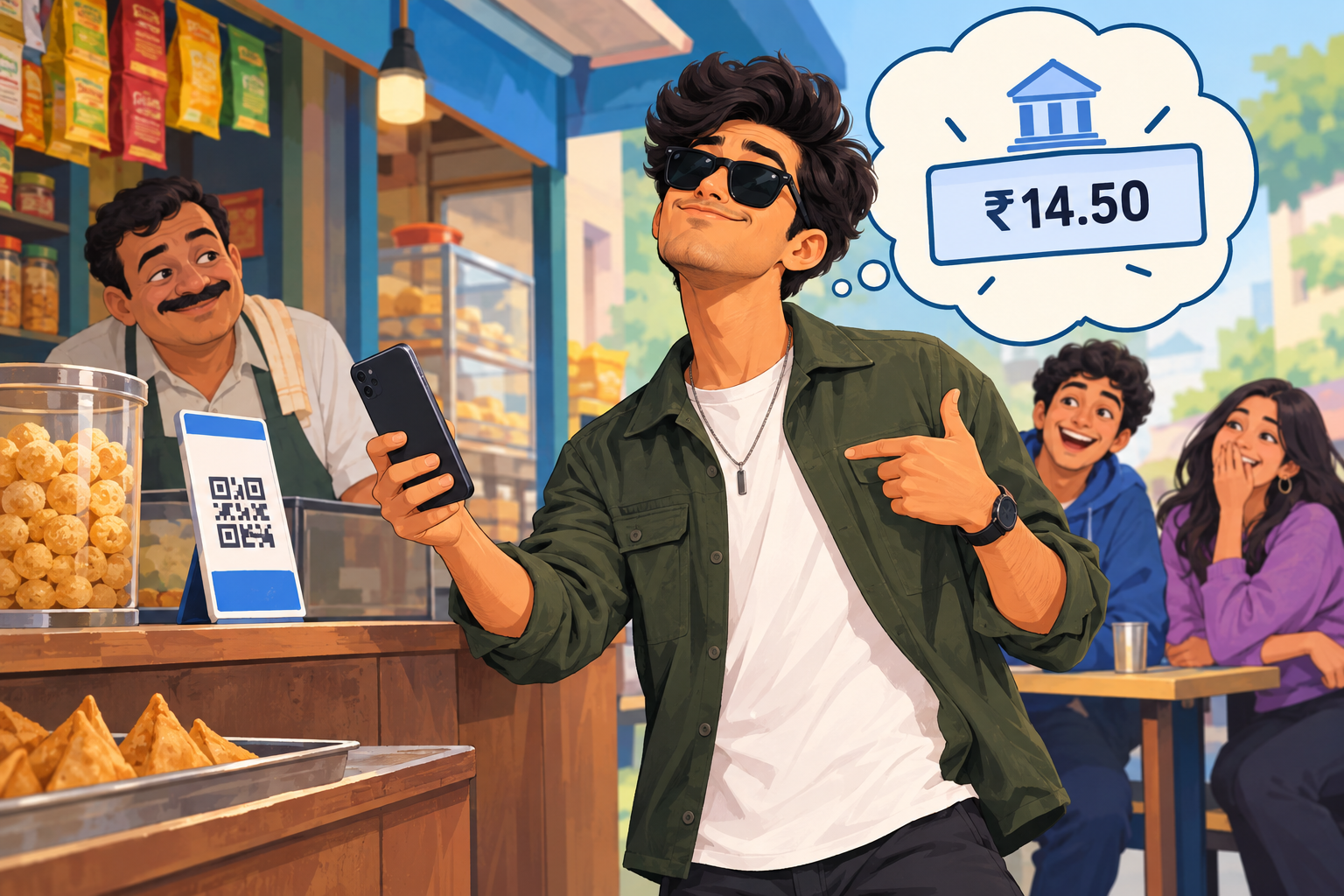
There is a particular kind of confidence that appears when someone opens a payment app and points a phone at a QR code. The movement is quick, the expression is calm and the posture suggests that money is no concern. Then comes the punchline: the person’s bank balance is exactly ₹14.50.

That contrast powers the ₹14 bank balance meme, a simple but highly adaptable joke about looking financially fearless while privately calculating whether one can afford tea, transport or a late-night snack. The person scanning the code behaves like a billionaire completing a major acquisition. The audience, meanwhile, is shown the brutally modest account balance behind the performance.
Why ₹14.50 Makes the Joke Work
The amount is funny because it is neither a clean zero nor enough to offer meaningful comfort. A balance of ₹14.50 suggests that the account holder has already survived several small transactions and is now operating in the narrow space between one final payment and complete financial surrender.
Its specificity also makes the image feel familiar. Many people have opened a banking app expecting a healthier number, only to discover a balance made up of a few rupees and some paise. Even when the screenshot is staged for a meme, the emotional experience it represents is instantly recognisable.
The remaining fifty paise adds another layer of comic precision. It implies that the user has reached the point where every decimal deserves attention, even as they maintain an expression of absolute financial authority in public.
UPI Swagger Meets End-of-Month Reality
The format draws much of its energy from the everyday ritual of QR payments. At roadside stalls, cafés, taxis and neighbourhood shops, scanning a code has become an ordinary action. It can also look surprisingly dramatic on camera: lift the phone, focus the scanner, enter the amount and wait for confirmation.
Meme creators exaggerate this routine by pairing it with cinematic music, slow motion, sharp clothing or a serious facial expression. The subject may appear to be managing an investment portfolio rather than paying for a plate of momos. A sudden cut to the ₹14.50 balance destroys the illusion.
The joke becomes especially effective near the end of the month, after rent, subscriptions, food orders and spontaneous purchases have reduced a once-respectable balance. The account may be struggling, but the QR-scanning technique remains polished.
A Meme Built for Personal Variations
The basic template can be adapted to almost any situation. One version shows a friend volunteering to pay the bill before quietly checking whether anyone can transfer money. Another features someone confidently telling a shopkeeper to display the QR code, followed by a close-up of a payment app warning about insufficient funds.
Other variations shift the focus from the payer to the audience. A person may scan a code with the confidence of a celebrity while their friend, already aware of the ₹14.50 balance, watches in disbelief. Captions often present the action as a battle between “my attitude” and “my account statement.”
The humour also works across languages because the visual structure requires little explanation. Confidence is established first, financial reality is revealed second and embarrassment completes the scene. The exact balance acts as the final line of the joke.
Financial Anxiety, Made Shareable
Beneath the exaggeration is a softer observation about how people handle money worries. Small balances can be stressful, but memes turn that discomfort into a communal experience. Instead of presenting financial struggle as an individual failure, the format invites viewers to recognise their own end-of-month calculations and laugh together.
It also captures the strange invisibility of digital spending. Cash physically disappears from a wallet, while multiple small digital payments can feel harmless until the balance is checked. The meme compresses that moment of discovery into one image: impressive confidence on one side and ₹14.50 on the other.
As with any payment, users should still verify the recipient and amount displayed before entering a UPI PIN. The meme may celebrate reckless-looking swagger, but real transactions deserve a second glance.
The Last ₹14.50 Still Has Main-Character Energy
The enduring appeal of the format lies in its refusal to let a low balance ruin the performance. The account may be nearly empty, but the person holding the phone remains composed. They have no spending power, yet somehow possess unlimited confidence.
That is the central fantasy of the ₹14.50 meme: money can disappear, payday can feel distant and the transaction may not even succeed—but the QR code will still be approached like a billionaire has entered the shop.