
Uttar Pradesh rain toll rises to 81 as rivers raise flood concerns
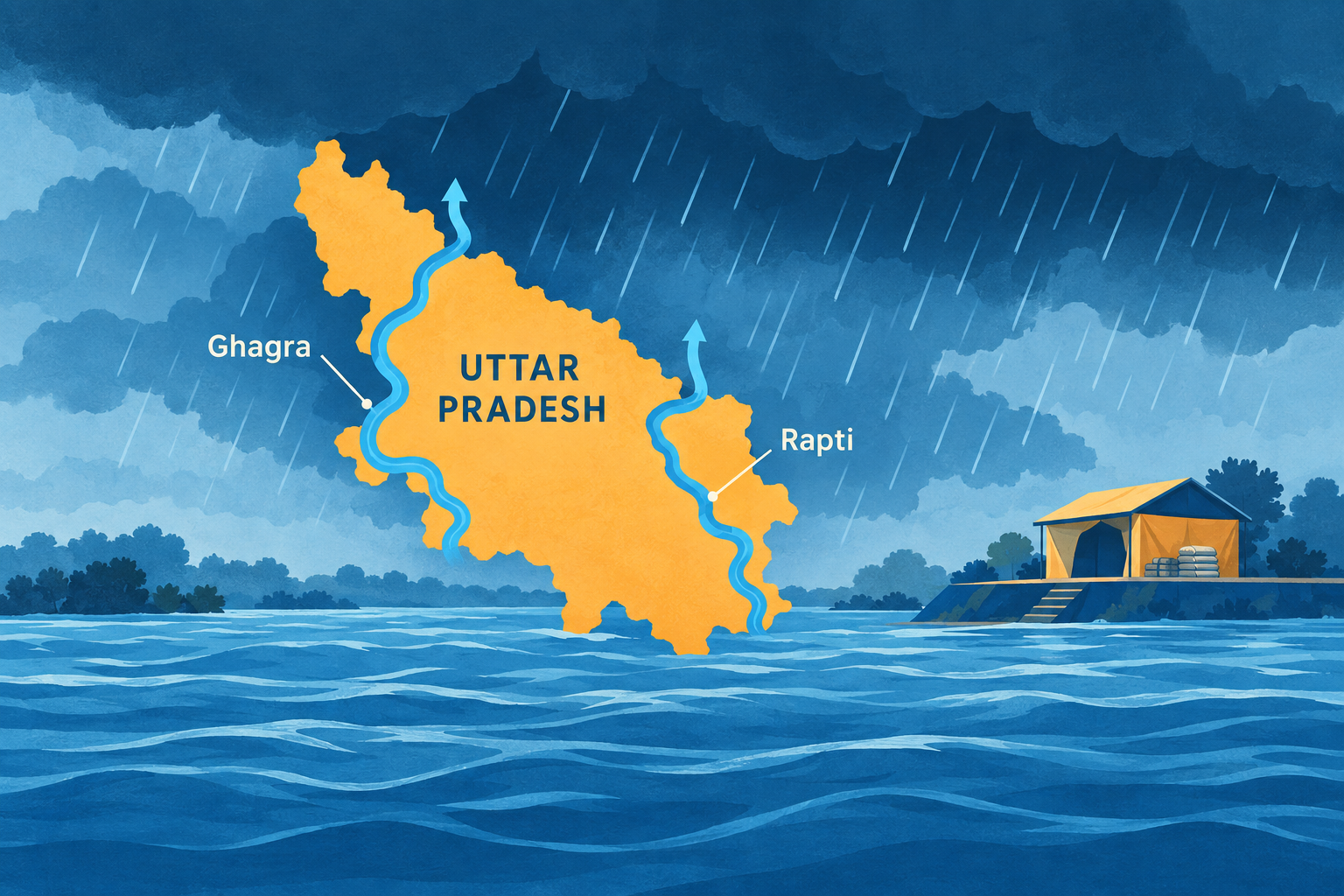
Heavy rain and storms across Uttar Pradesh killed 56 people and injured 46 between September 25 and the morning of Sunday, September 27, according to figures from the office of Relief Commissioner Hrishikesh Bhaskar Yashod. Officials also reported damage to 1,021 houses in that period. Those figures are a Sunday-morning snapshot, not the final toll from the wet spell.

As reports from districts continued to arrive, the relief commissioner’s office raised its count for September 25–27 to 81 deaths, 62 injuries and 2,254 damaged houses. The later figures include incidents reported after the Sunday-morning cutoff. Readers should not add the two sets of numbers together.
The scale of the damage has left families dealing with injuries, damaged homes and uncertain conditions near swollen waterways. District administrations were assessing losses and carrying out rescue and relief work, while officials monitored river levels and waterlogged areas.
Rising rivers add to the risk
The Central Water Commission reported rising levels on the Ghagra and Rapti rivers on Sunday, sharpening concerns for low-lying communities. At Elginbridge in Barabanki district, the Ghagra stood above its danger level on Sunday morning. The river was also above its warning level at Ayodhya. At Balrampur, the Rapti had crossed its warning level, according to the commission’s Sunday readings.
Those readings describe conditions at particular monitoring stations at particular times; they do not establish that every settlement along either river was flooded. Water levels and forecasts can change quickly, including after rain eases. People living near rivers, drains or waterlogged roads should follow instructions issued for their own district and avoid trying to cross fast-moving water.
The relief commissioner’s office reported seven deaths in Sitapur in its Sunday-morning district breakdown. Lakhimpur Kheri, Bahraich and Balrampur recorded five each, while Ayodhya and Gorakhpur recorded four each. The figures show that the impact extended beyond one river basin or one urban area. Subsequent statewide totals may reflect further reports from these and other districts.
Relief work and local instructions
Yashod directed district officials to assess crop and housing damage, arrange alternative accommodation where needed and speed up assistance for eligible affected families. Officials were also asked to remain in contact with residents during rescue and relief operations. The state relief commissioner’s emergency helpline is 1070.
That direction to arrange accommodation does not confirm that a particular shelter is open, has space or is accessible from a flooded village. Nor does a statewide damage count identify which roads are safe to use. Residents needing help should contact local authorities or the state helpline rather than travel to a listed relief site without confirmation.
District-specific warnings and arrangements require a fresh check before this report is published or used for travel or evacuation decisions. In particular, editors should obtain the latest notices from the affected district administrations, the India Meteorological Department and river-monitoring authorities, and confirm which relief camps, boats, medical services and access routes are operating. Sunday’s river readings and weather alerts must not be presented as live Monday conditions without that verification.
The immediate flood concern remains distinct from the casualty count: even where rainfall has weakened, runoff can continue to raise rivers and affect low-lying areas. The relief commissioner’s office has advised people to avoid unnecessary movement through flood-affected or waterlogged places, stay clear of fast-flowing rivers and drains, and heed local official instructions. Further changes to the toll or district-level safety advice should be checked against the latest official updates before publication.