
Iran reports Chabahar–Zahedan track laid, but train service has yet to begin
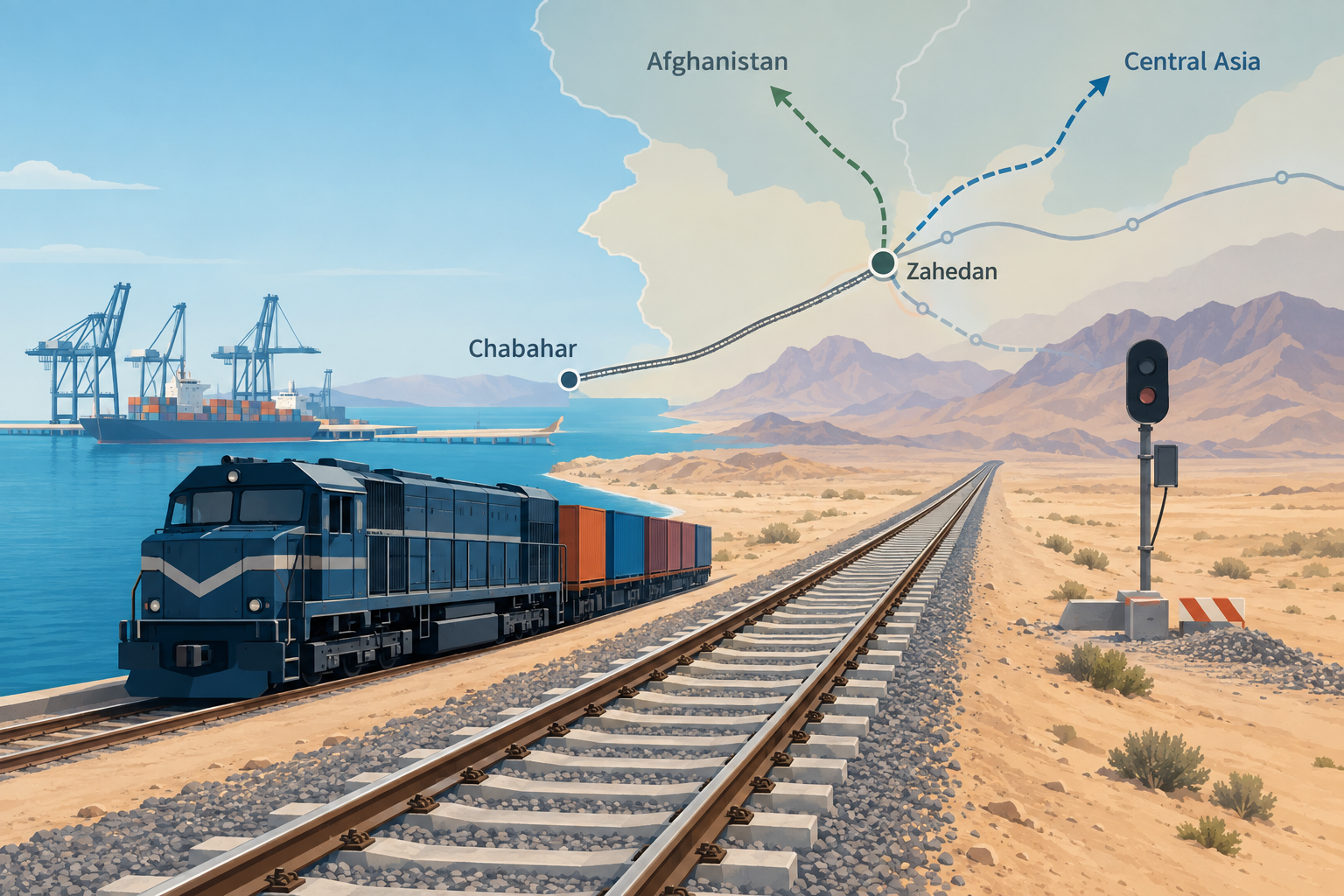
Iran has reported a major construction milestone on the Chabahar–Zahedan railway, a route that could eventually strengthen India’s trade access to Afghanistan and Central Asia. But the September 28 coverage of a completed, roughly 730-kilometre link should not be read as an announcement that trains are running along it.

The distinction comes from the Iranian officials overseeing the project. During a September 24 visit to the line, Mansour Bijar, governor of Sistan and Baluchestan province, said track-laying had finished between Chabahar and Iranshahr and in the Chabahar port area. He described the wider Chabahar–Zahedan project as entering a stage of final work and preparation for use. His account did not announce the start of through passenger or freight service.
Track in place is not a service launch
The line is intended to connect the port city of Chabahar, on Iran’s southeastern coast, with Zahedan and the country’s existing rail network. Iranian accounts of the project describe its total length differently depending on whether branch and associated tracks are included. The approximately 730-kilometre figure in the September 28 reports is best understood as a description of the overall project, not a measure of newly opened railway service.
Bijar’s update also identified work still in progress. He said additional track switches were due to arrive and described ongoing rail welding and ballast work on the Chabahar–Iranshahr stretch. Those are practical steps between laying rails and making a route ready for routine trains. Other preparations, including completion of stations and technical checks, must also be distinguished from the physical presence of track.
The governor said officials were working to a timetable for bringing the project into use by the end of the Iranian month of Dey, in January 2027. That is a target, not confirmation of an opening date. As of September 28, the verified official update establishes a track-laying milestone and continuing preparations; it does not establish that end-to-end services have commenced.
Why the route matters to India
For India, the railway’s appeal begins at Chabahar. Ships can bring cargo from Indian ports to Iran’s coast, where onward transport could move it toward inland Iranian routes and markets farther north and east. India and Iran signed a long-term agreement in May 2024 concerning the equipping and operation of the Shahid Beheshti terminal at Chabahar. The rail project could make that maritime connection more useful, but the port agreement and the railway are separate undertakings.
Indian officials have long presented Chabahar as an option for reaching Afghanistan and improving commercial links with Central Asia without routing goods through Pakistan. In a 2025 joint statement with Central Asian countries, India welcomed their interest in using the Shahid Beheshti terminal for trade with India and other markets. That interest explains the attention paid to a rail connection between the port and Iran’s wider transport system.
The potential benefit is a better-connected freight corridor, not an automatic direct train from Chabahar into every destination beyond Iran. Cargo bound for Afghanistan would still need suitable onward routes, border crossings and transit arrangements. Trade with Central Asian countries would likewise depend on working connections, customs procedures, available services and competitive costs across the full journey. Completing one Iranian railway project does not, by itself, complete those cross-border logistics chains.
Nor does a possible route establish how much cargo will use it. Shippers will judge the corridor by schedules, reliability, handling capacity and the cost of moving goods from ship to final destination. Its commercial value will become clearer only after the railway is commissioned and services are established.
For now, the news is a construction advance with regional implications. Iran’s account places the Chabahar–Zahedan line closer to service, while leaving the decisive operational milestone ahead. Claims that the railway has already opened as a working trade route go further than the official project update supports.