
Why Indian stocks fell on September 28 as oil and yields rose
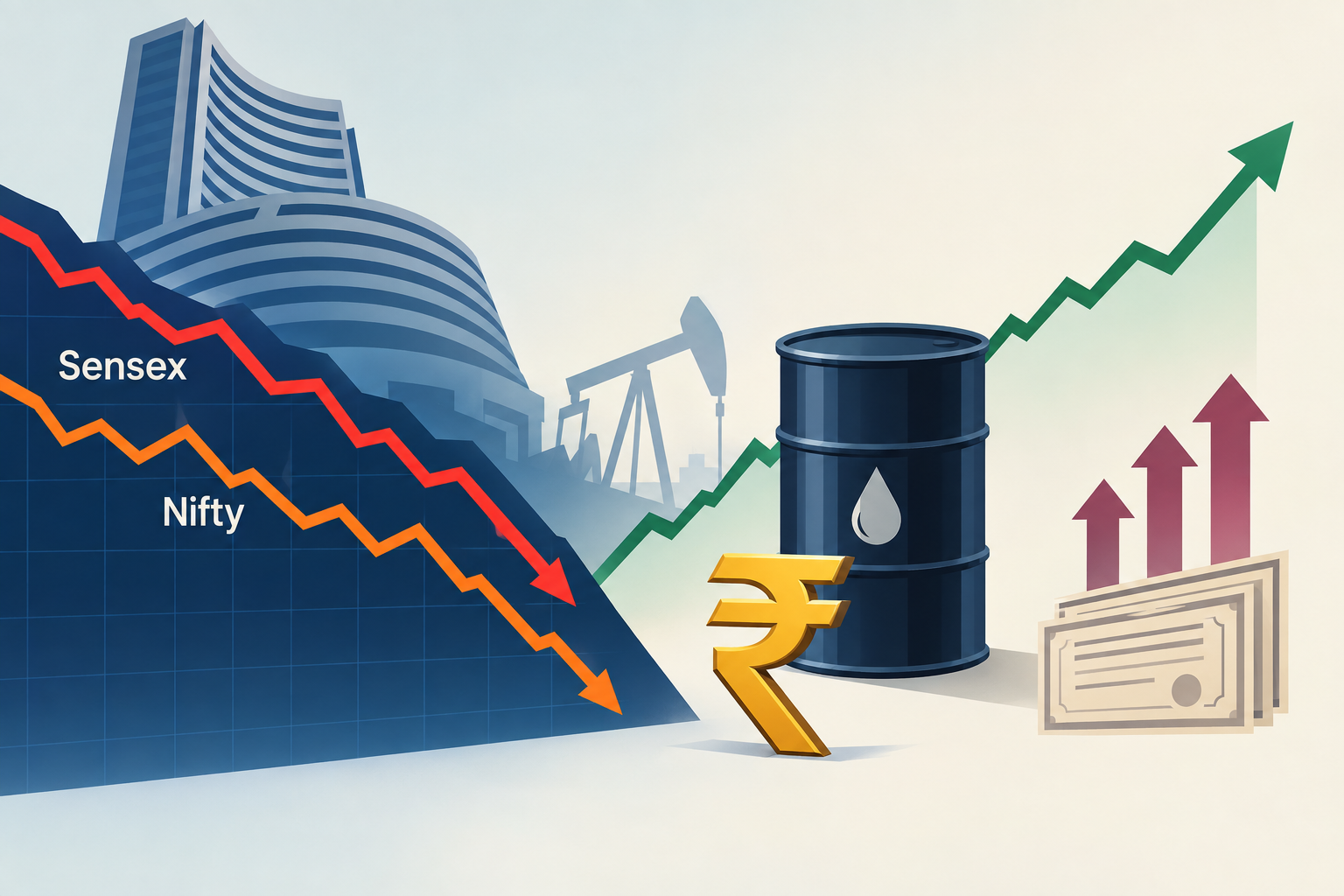
Indian equities opened lower on Monday, September 28, 2026, and the decline deepened through the morning as investors weighed a rise in crude oil prices alongside foreign fund outflows and higher global bond yields. The move followed seven consecutive weeks of losses for the benchmark indexes, leaving the market sensitive to another round of unfavorable news.

These are intraday readings, not closing levels: At 9:15 a.m. India Standard Time, the Nifty 50 stood at 23,064.90, down 0.33%, while the Sensex was at 73,734.83, down 0.22%. By about 11:20 a.m., the Sensex was at 72,867.11, down 1.39%, and the Nifty was at 22,815.90, down 1.40%. Both indexes could move again before the end of trading.
Why oil mattered
Brent crude rose roughly 2% to around $106.50 a barrel during the morning. The increase came as diplomacy between the United States and Iran appeared to have stalled. US President Donald Trump said he had rejected an Iranian proposal concerning the Strait of Hormuz and an end to fighting. Iran maintained that diplomacy was the way to resolve the conflict. Those statements added uncertainty about the path to an agreement; they do not, by themselves, establish precisely how much of the oil-price move was caused by the diplomatic setback.
For India, the concern is direct. The country buys much of the crude it uses from abroad, so a sustained increase in oil prices can raise its import bill. It can also put pressure on the rupee and make fuel and transport more expensive. Businesses that cannot pass higher energy costs on to customers may see their profit margins narrow. Those are potential consequences rather than an immediate, measured effect on every company or household.
The distinction between a price spike and a lasting increase matters. A brief rise in crude need not have the same effect on inflation, company earnings or government finances as months of elevated prices. On Monday morning, investors were reacting to a risk whose duration remained unknown.
Foreign flows and bond yields
Oil was not the only issue in view. Foreign institutional investors had sold Indian shares in the preceding sessions, including roughly ₹3,700 crore on Friday, September 25. Selling can add pressure to share prices, particularly when buyers are reluctant to step in. Friday’s figure, however, describes an earlier trading session; it does not prove that foreign investors drove Monday’s morning decline.
US government bond yields had also risen, with the 10-year Treasury yield around 5.2% during the morning. Higher yields offer investors a greater return on US bonds and can make riskier assets, including emerging-market equities, less attractive by comparison. They can also strengthen demand for dollars. That is a plausible route by which global rates could weigh on Indian shares and the rupee, not a precise accounting of the day’s trades.
The rupee was near 95.95 per US dollar during morning trading. A weaker rupee can compound the cost of dollar-priced oil imports, while concern about oil can itself put pressure on the currency. The relationship runs through several markets at once and should not be reduced to a claim that one intraday currency move caused the equity sell-off.
What the market move does—and does not—show
The broader context helps explain why the opening losses accelerated. The Sensex and Nifty had finished the previous week lower for a seventh straight week, despite gains in Friday’s session. A market already on the defensive may respond sharply when oil rises and global borrowing costs remain high.
Still, market movements rarely come with a verifiable single cause. The index declines and contemporaneous moves in oil, bonds and the rupee were observable; the weight each factor carried in investors’ decisions was not. The stalled diplomacy, foreign selling and yields are best understood as reported pressures and possible transmission channels, rather than confirmed explanations for every point lost.
The next things to watch are whether crude holds its gains, whether bond yields and the rupee stabilize, and whether buying offsets selling later in the session. Until trading closes, Monday’s quoted index levels remain snapshots of a developing market move.