AI Built a Business on Human Work. Who Gets Paid?
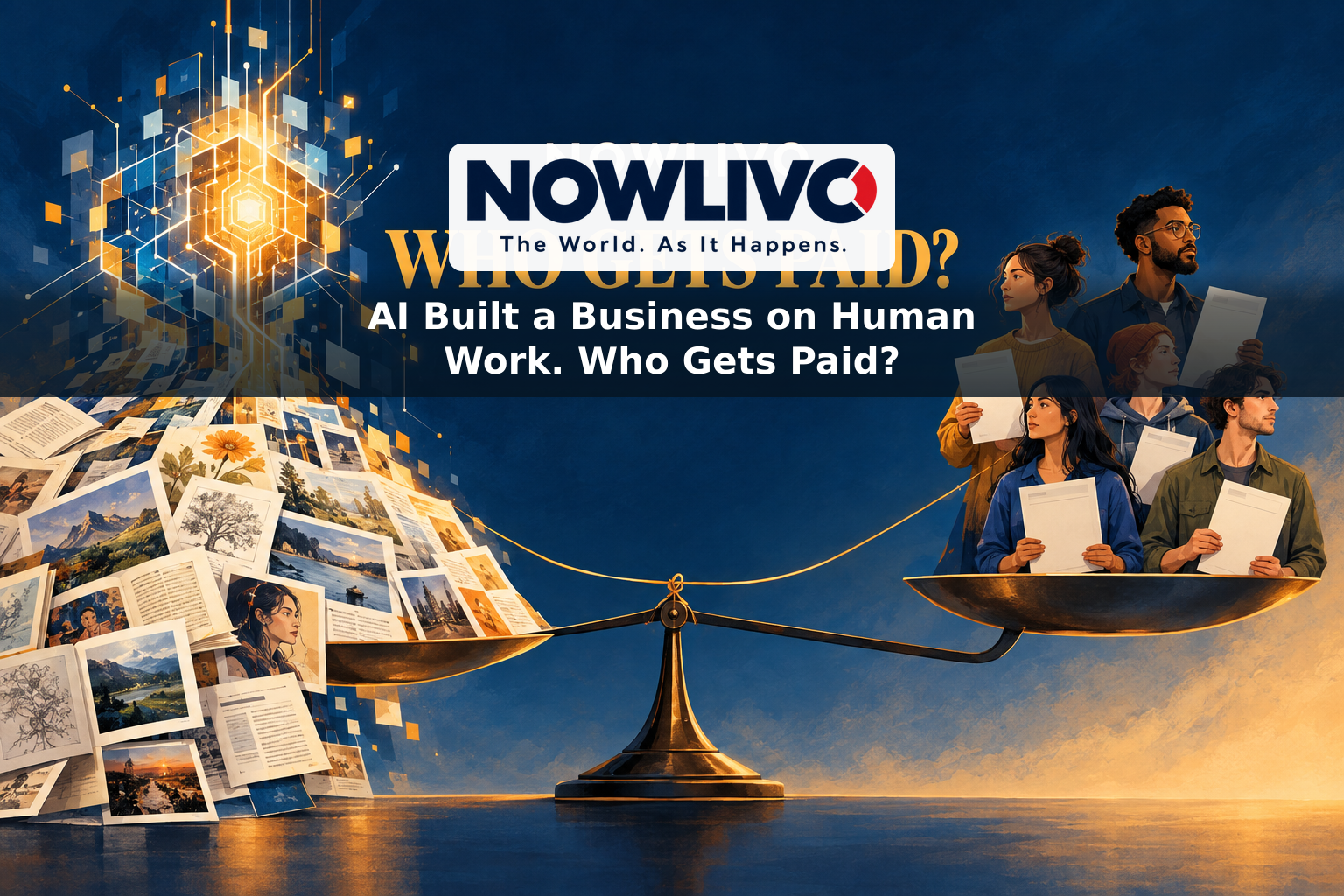
The internet was full of work people could read for free. That did not mean its creators agreed to help build someone else’s business. Yet books, articles, photographs, illustrations and other human-made material have become valuable inputs for artificial intelligence. The companies developing AI can sell access to tools shaped by that material. Many of the people who made it say they were never asked.
That is the fight beneath the AI copyright lawsuits: not whether the technology is useful, but who gets to decide what happens to creative work once it is online. As of September 2026, courts have not delivered one universal answer. A major settlement has put money on the table, while other cases are still testing whether copying works for AI training is lawful without permission.
How did internet content become an AI asset?
AI systems learn patterns from enormous collections of material. A model trained on writing can generate text; one trained on images can produce new pictures. Developers also bring expertise, computing power and product design to the process. But the material that helps make those products useful did not appear by itself. Writers reported stories, authors finished books, photographers made pictures, and artists developed styles through years of work.
The commercial benefit is real: AI tools can be sold through subscriptions, business contracts and software services. That does not establish that every work in a training set increased a company’s revenue, or that every creator suffered a measurable loss. It does explain the outrage. Creators see companies building valuable products with access to work that often took them considerable time and money to produce.
Why creators want permission, not just a payout
For many creators, this is about control before it is about compensation. Posting an illustration to find clients is not the same decision as licensing it to train a system that might compete for those clients. Publishing an article for readers does not necessarily mean agreeing to have it incorporated into a chatbot.
Payment raises another difficult question: who would receive it? A publisher may control some rights, while an individual author retains others. The Authors Guild has urged publishers to give writers a larger share of claims involving long-out-of-print books in the Anthropic settlement. Even when an AI company pays, the person who created the work may still have to negotiate with an intermediary.
The problem with making creators opt out
Some AI developers offer ways to exclude material from future collection. Creators argue that opting out reverses the usual expectation that they choose whether to grant permission. A photographer whose images appear across several websites may not control every site’s settings. An exclusion made today also cannot undo copying that has already happened.
The strongest defense of AI training
AI companies argue that training analyzes works to learn patterns rather than supplying customers with copies of those works. OpenAI maintains that training on publicly available material is protected by fair use and says its models serve purposes distinct from the originals. Developers also warn that requiring permission for every item could make it prohibitively difficult for smaller rivals to build competitive systems.
That defense cannot be dismissed simply because a company earns money. Under U.S. copyright law, fair use depends on several factors, including the purpose of the copying and its effect on a work’s potential market. Nor does a paid licensing deal prove that all unlicensed training is unlawful. Companies may license material for reliable access, particular uses or reduced legal risk.
The hard question is whether an AI product merely learns from a work or can also replace demand for it. The answer may differ between a research tool that analyzes text and a commercial system that produces competing articles, images or books.
What the court battles have—and have not—settled
In July 2026, a federal court approved Anthropic’s $1.5 billion settlement with authors over past acquisition and copying of books. It was a consequential payment, but not a ruling that all AI training requires a license. The settlement leaves claims about future conduct and AI outputs outside its release.
Earlier rulings show why sweeping declarations are premature. In one case involving Anthropic, a judge found training on books to be fair use while treating the company’s acquisition and retention of pirated copies separately. In a case involving Meta, a judge ruled for the company on the fair-use claims presented by those plaintiffs, while warning that different evidence of market harm could lead to a different result.
Meanwhile, authors and publishers continue to press claims against OpenAI and Microsoft. In September 2026, the U.S. Justice Department urged a broad fair-use approach to AI training; publishers challenged that position. Those filings are arguments to a court, not a final judgment. The U.S. Copyright Office has likewise described training uses as a spectrum: some are likely fair use, while others—particularly uses involving pirated expressive works and competing outputs—may not be.
Could paying creators change the open web?
Licensing is already one possible path. Some companies pay for access to publishing archives or image collections, and some arrangements provide payments to contributors. But a deal with a large rights holder is easier to negotiate than agreements with countless independent writers and artists. A system built only around expensive private deals could protect established catalogs while leaving smaller creators with little bargaining power.
The opposite outcome has a cost, too. If making work visible online also makes it freely available to train commercial competitors, creators may choose to publish less openly. Readers could then face a poorer internet: more restrictions, fewer accessible archives and less original work available to discover.
The choice is not simply between stopping AI and giving it everything. Courts, companies and creators are working through distinctions between access and ownership, learning and substitution, past copying and future permission. The central question remains uncomfortable: if human creativity helps make AI valuable, what would a fair share—and a meaningful choice—actually look like?