Stella McCartney Brings an Ocean Protection Message to Paris Fashion Week
Stella McCartney turned her September 30 Paris Fashion Week show into a conversation about the ocean. In the gardens of the British embassy, models presented her Summer 2027 collection in clothes that suggested moving water and marine life. The message behind them was more pointed: McCartney wanted the audience to think about the animals beneath the surface, not just the beauty of the sea.
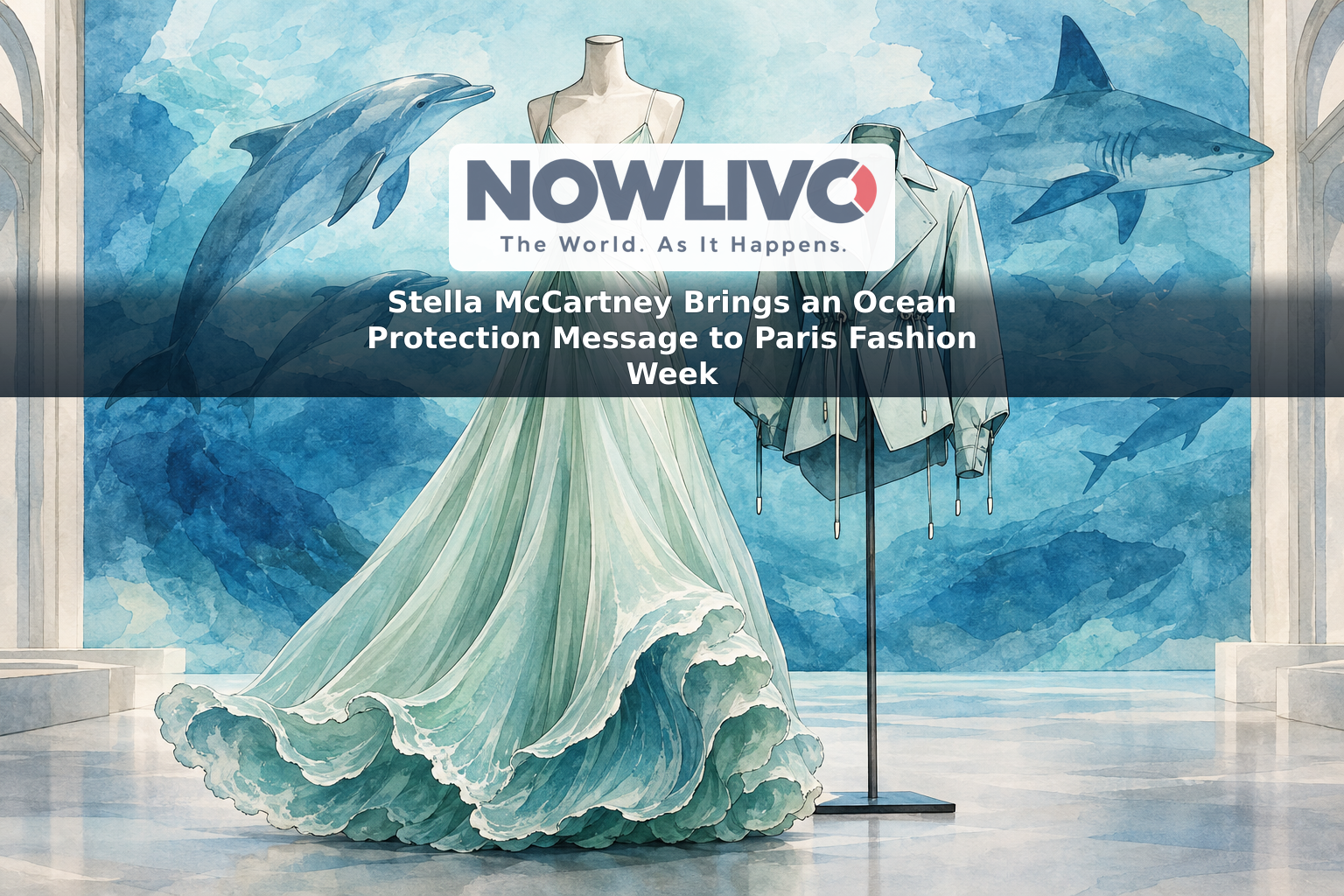
Rain fell on the outdoor show, where Jennifer Lopez and Juliette Binoche were among the front-row guests. The setting gave the presentation a dramatic backdrop, but the clothes carried McCartney’s argument. Dolphins appeared on T-shirts, a sweater featured sharks, and the edges of dresses curled like waves. Pale aqua and seafoam tones reinforced the theme without turning every look into a costume.
An ocean theme woven into everyday clothes
Much of the collection was designed to work beyond the runway. Oversized blazers had drawstrings, while soft tailoring sat alongside technical jackets and close-fitting leggings. Sheer layers and draped evening gowns added a lighter, fluid quality. A seafoam gown worn by Miranda Kerr gathered at the waist; a minidress worn by Karlie Kloss had a wave-like detail at the shoulder.
Those contrasts mattered to the show’s purpose. McCartney did not present ocean protection as a separate campaign attached to a fashion collection. Instead, she placed marine imagery on familiar pieces and carried the shapes of water into tailoring and eveningwear. The result gave viewers something to notice first as design, then consider as a message.
McCartney summed up that message as “sea life, not sea food.” After the show, she questioned why people can admire ocean animals in nature and then regard them differently on a menu. She also raised concerns about fishing nets catching animals other than those being sought. Those comments expressed her animal-welfare position; the runway itself focused on making marine creatures visible and appealing.
Materials are part of the argument
The collection also brought McCartney’s longstanding approach to fashion materials into focus. Her label has avoided leather, fur and feathers since its founding in 2001. There was no wool on this season’s runway, McCartney said, although the brand has used wool in other collections. She has been developing alternatives, including Brewed Protein, a fermented material made by Japanese biotechnology company Spiber.
Other material choices in the Summer 2027 collection included recycled cotton denim, organic cotton and a black pigment produced from algae. For McCartney, such experiments offer ways to make desirable clothes while reconsidering what goes into them. They do not, on their own, settle every question about a garment’s environmental impact. How a material is produced and used remains as important as the label attached to it.
That distinction makes the show more than a simple claim that ocean-inspired clothes can protect the ocean. Its two strands were related but different. McCartney spoke directly about marine animals and fishing, while the collection’s material choices addressed fashion’s own responsibilities. Bringing both into one presentation asked viewers to consider not only what the clothes depict, but how they are made.
Advocacy with an audience
McCartney has spent decades making animal welfare part of her design practice, and her Paris show followed that pattern. Oceanographer Sylvia Earle delivered the invitation by video, establishing the marine theme before guests arrived. The presence of celebrities helped draw attention to the runway, but the focus stayed on the clothes and the questions McCartney wanted them to raise.
A dolphin T-shirt cannot explain the full environmental consequences of fishing, and a wave-shaped hem cannot measure the footprint of a fashion collection. Both can, however, make an audience pause. In Paris, McCartney used the appeal of a summer wardrobe to put marine life—and the choices made in fashion—firmly in view.