
Why Are People Protesting India’s Voter Lists? The Dispute Behind Calls for the Election Chief to Resign
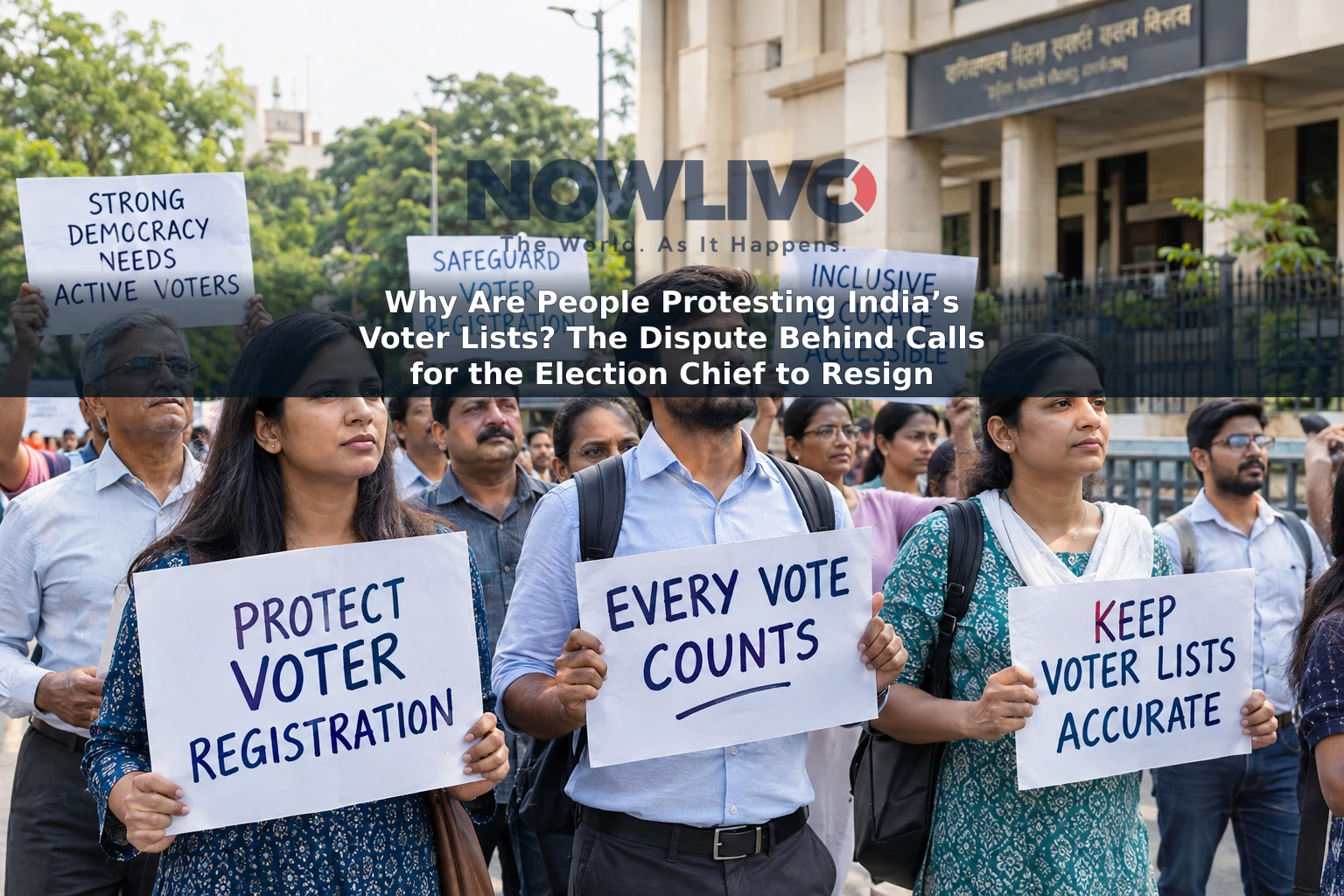
People are protesting India’s voter lists because they fear a sweeping review could remove eligible voters before future elections. Opposition parties, student groups and civil society activists accuse the Election Commission of handling the process in ways that could benefit Prime Minister Narendra Modi’s Bharatiya Janata Party (BJP). They want Chief Election Commissioner Gyanesh Kumar to resign and the review halted. The commission and the BJP reject the allegations of political bias.
The dispute brought opposition lawmakers into the streets of New Delhi on October 6, 2026, after a week of demonstrations that also included protests in Mumbai. It joins two concerns: what happens to people whose names disappear from electoral rolls, and whether the independent body responsible for those rolls can retain public trust.
What is happening with India’s voter lists?
The Election Commission is conducting a Special Intensive Revision, known as SIR, to check and update voter rolls. The exercise began in Bihar in 2025 ahead of its state election and has expanded to most Indian states and federally administered territories. Voters must provide documents to establish their eligibility to remain on the lists.
The commission says the review is meant to remove duplicate and ineligible entries without excluding legitimate voters. Critics argue that its document requirements can be confusing or difficult to meet, especially for people who lack older records. Their concern is that an eligible person removed from the roll may be unable to vote unless the error is corrected in time.
The scale of the changes has sharpened that concern. A revision ahead of West Bengal’s 2026 state election removed about 9 million names from its voter list, according to the Associated Press. That figure describes names removed from a roll; it does not, by itself, establish why each name was removed or prove that the exercise was designed to favor a party.
What are the voter-list allegations?
Opposition parties allege that the revisions could disproportionately remove people likely to vote against the BJP, while retaining or adding voters who favor it. Those are allegations of political manipulation, not established findings about the purpose of the nationwide exercise. The Election Commission denies wrongdoing and says the revisions have no political motive. The BJP has also dismissed the opposition’s accusations.
Questions about decisions inside the commission have added to the protests. In September, The Indian Express reported that the other two members of the three-person commission had recorded objections to decisions involving voter-list revisions, registration procedures and digital systems. The commission acknowledged differences in its internal deliberations but disputed the description of those exchanges as formal objections. An internal disagreement, even over an important decision, does not on its own prove partisan manipulation.
Why is Gyanesh Kumar facing calls to resign?
As chief election commissioner, Kumar has become the focus of demands for accountability over how the SIR is being carried out. Protesters want him to step down, an inquiry into the commission’s conduct and a pause in the current revision. Some have called for earlier voter lists to be used for future elections instead.
The campaign extends beyond established opposition parties. The youth movement that calls itself the Cockroach Janata Party has joined demonstrations over the voter lists after previously mobilizing around education and government accountability. On October 6, opposition lawmakers marched toward the Election Commission’s headquarters in New Delhi; police blocked their route, and several protesters were detained.
At the heart of the dispute is a question neither slogan alone can settle: whether the review is reliably removing ineligible entries while giving eligible voters a fair chance to stay registered. The commission says that is its goal. Protesters say the risks and the decisions behind the process warrant a halt and closer scrutiny.