RBI Rate Hike: PNB, Bank of Baroda and Four Other Banks Raise Repo-Linked Lending Rates
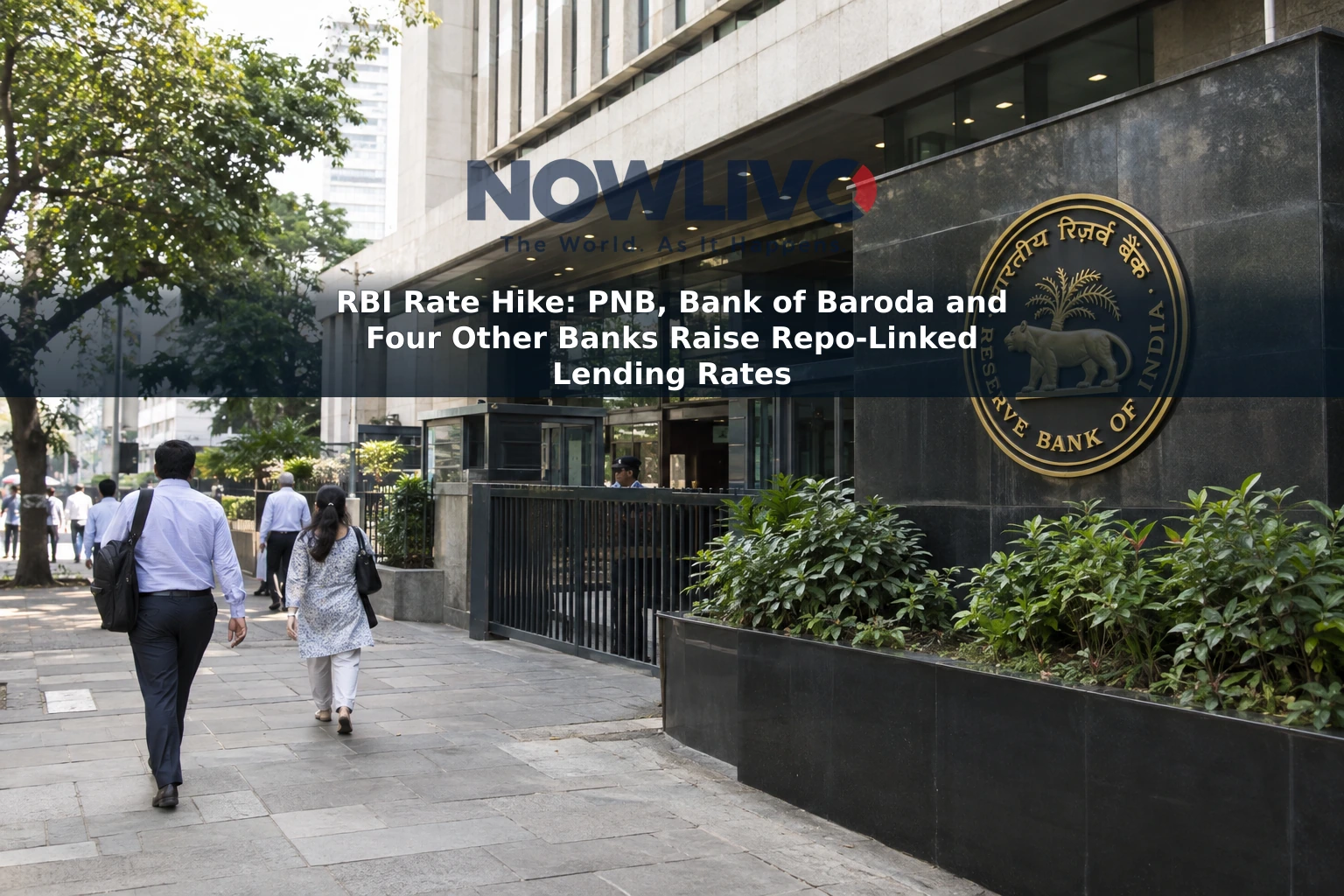
Punjab National Bank (PNB), Indian Bank, Bank of Baroda and three other lenders have raised their repo-linked lending benchmarks after the Reserve Bank of India (RBI) increased its policy repo rate by 0.25 percentage point to 5.50% on October 7, 2026. The banks’ revised rates take effect on October 8. Borrowers with eligible floating-rate loans may face higher interest costs when their loans next reset; the announcements do not raise every customer’s rate immediately.
Which banks have raised lending rates?
The six announced benchmark revisions are:
- Punjab National Bank: Its repo-linked lending rate rises from 8.10% to 8.35%. PNB said its marginal cost of funds-based lending rate (MCLR) and base rate remain unchanged.
- Indian Bank: Its repo-linked benchmark lending rate rises from 7.95% to 8.20%.
- Bank of Baroda: Its Baroda repo-based lending rate rises from 7.90% to 8.15%.
- Bank of India and Indian Overseas Bank: Both announced repo-based lending rates of 8.35%.
- Tamilnad Mercantile Bank: Its repo-linked lending rate rises from 8.25% to 8.50%.
Each stated before-and-after change is 0.25 percentage point, matching the RBI’s increase. These figures are bank lending benchmarks, not a single interest rate payable by every borrower. A loan’s actual rate also depends on its agreed spread and other applicable terms.
Will home loan EMIs rise after the RBI rate hike?
For an existing floating-rate home loan linked to a bank’s repo-based benchmark, a higher benchmark can increase the interest charged at the loan’s next reset. Whether the borrower then pays a higher monthly instalment, has a longer repayment period, or sees a combination of the two depends on the loan terms and the options provided by the lender. A borrower whose loan is linked to MCLR or another benchmark should not assume that a repo-linked rate announcement changes their rate on October 8. A fixed-rate loan is not repriced solely because the repo rate has risen.
To illustrate the possible size of a change, a ₹30 lakh loan repaid over 20 years would have a monthly instalment of about ₹25,093 at 8.00% interest. At 8.25%, it would be about ₹25,562—roughly ₹469 more a month—if the remaining principal and 20-year term were otherwise unchanged. This is a calculation, not a quoted rate or repayment estimate for any of the banks above.
Borrowers can check their loan agreement or latest statement for three details: the benchmark used to price the loan, the current interest rate and the next reset date. RBI rules for floating-rate EMI-based personal loans require lenders to communicate the effect of rate resets and give borrowers choices concerning the instalment amount and loan tenure. Any option to switch to a fixed rate is governed by the lender’s applicable policy and terms.
Why did the RBI raise the repo rate?
The RBI’s Monetary Policy Committee voted unanimously on October 7 to lift the repo rate by 25 basis points, or 0.25 percentage point. It also changed its policy stance to calibrated tightening, citing a less favourable inflation outlook even as economic activity remained resilient. The central bank projected consumer price inflation of 5.2% for the 2026–27 financial year.
The policy decision helps explain why banks moved quickly to revise repo-linked benchmarks. It does not, by itself, establish what every lender will charge for a new home, auto or business loan. Customers comparing offers should look at the final loan rate, its benchmark, the spread and the reset terms rather than the benchmark figure alone.