Elon Musk Says ‘Oligarchs’ Are Blocking Starlink in India; Government Rejects Bias Claim
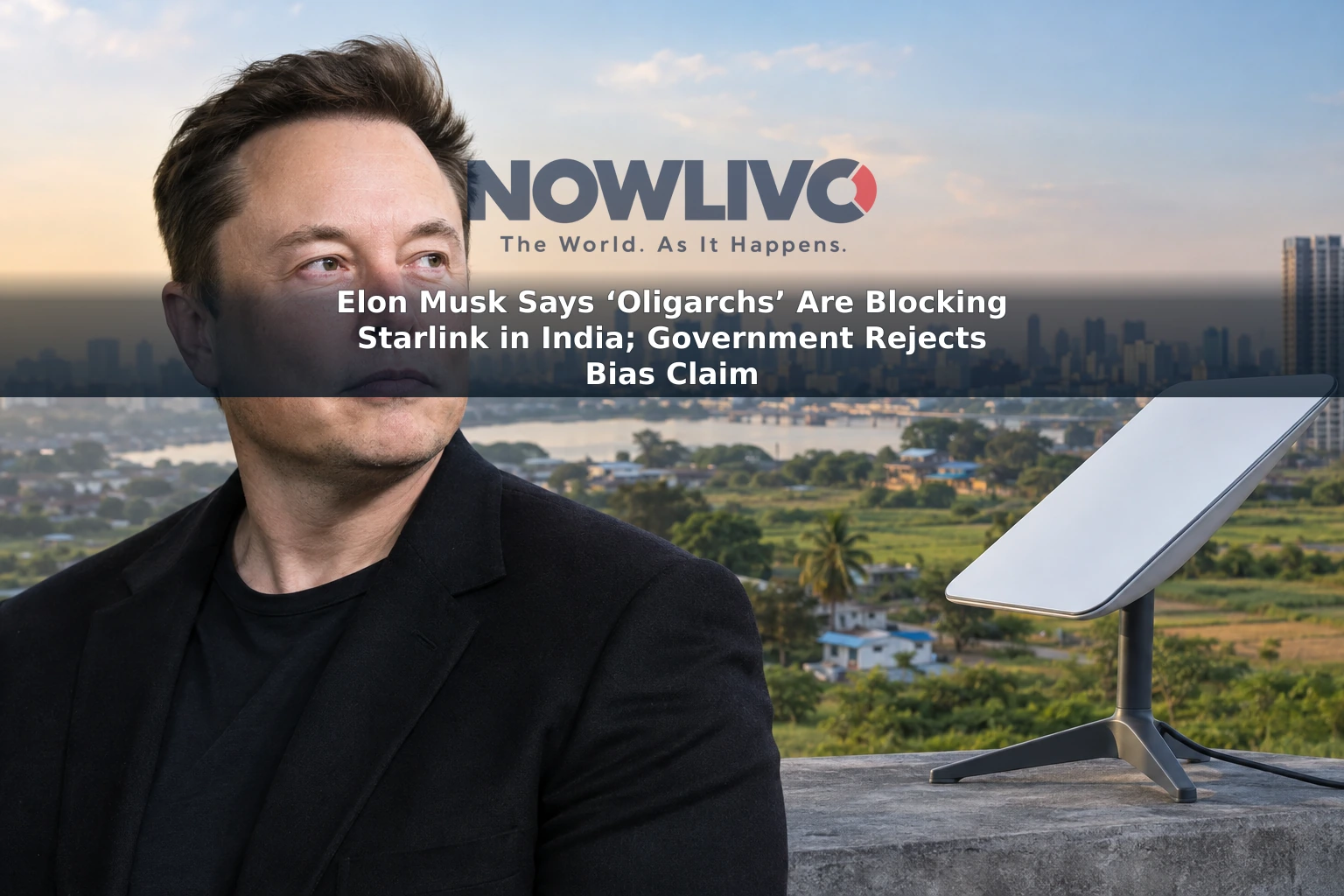
Elon Musk says powerful business interests are blocking Starlink’s launch in India to protect their hold on the telecom market. He did not name the people or companies he accused. India’s Ministry of Communications responded on October 8, 2026, saying its satellite-service approval process is fair and that all three licensed operators are undergoing security assessments.
In an October 7 post on X, Musk said Starlink was being blocked by “certain oligarchs” seeking to maintain a “monopolistic chokehold” on Indian consumers. His allegation came as the SpaceX satellite internet service continued to wait for permission to begin commercial operations in the country. Musk offered no public evidence in the post identifying who was responsible for the delay or how they had intervened.
What did India’s government say?
The Ministry of Communications rejected the suggestion that satellite communications rules are being applied unfairly. In a statement issued the following morning, it said three companies hold the relevant satellite telecom licences and that security reviews are underway for all three. It described the operators as being at broadly the same regulatory stage.
Under the process the ministry outlined, a licensed company must demonstrate compliance with security conditions before it can move to the next step: seeking an assignment of radio spectrum. The ministry called suggestions that the framework or its application is discriminatory “baseless and misconceived.” Its statement addressed the fairness of the approval process; it did not identify the unnamed people Musk accused.
Why hasn’t Starlink launched in India?
Starlink has a satellite telecom licence from India’s Department of Telecommunications and authorisation from the country’s space regulator, IN-SPACe. Those approvals do not, by themselves, permit it to switch on a commercial service. Security clearance and spectrum assignment remain key steps before customers can use the network.
Starlink is not alone in awaiting those steps. The other licensed operators in this group include Bharti-backed Eutelsat OneWeb and Reliance Jio’s satellite communications business. The ministry says each is subject to security assessment. No confirmed date has been announced for Starlink’s commercial launch in India.
Hours before Musk’s post, Lauren Dreyer, SpaceX’s vice-president of Starlink business operations, told the India Mobile Congress that the company was ready to serve India once authorised. She said Starlink had built 20 gateway sites with hundreds of antennas and designed its Indian operations around local security requirements, including keeping Indian user data in the country. Those are the company’s descriptions of its preparations, not a confirmation that its remaining approvals have been granted.
Which businesses was Musk referring to?
Musk did not say. Reliance Jio and Bharti Airtel are major players in India’s telecom market, but naming either company as the target of his allegation would go beyond what he stated. The relationship is also more complicated than a simple stand-off: Starlink announced agreements with both Airtel and Jio in 2025 to explore bringing its services to Indian customers, subject to government approval.
Starlink’s satellite network could provide another way to reach places where laying fibre or extending mobile coverage is difficult. Whether and when it can offer that service in India depends on completing the remaining regulatory steps. For now, Musk’s claim about business interests and the government’s account of the approval process are competing explanations; the allegation that unnamed businessmen caused the delay has not been established.