Why Are Young People Protesting in Delhi Today? The Cockroach Movement and Voter-List Row Explained
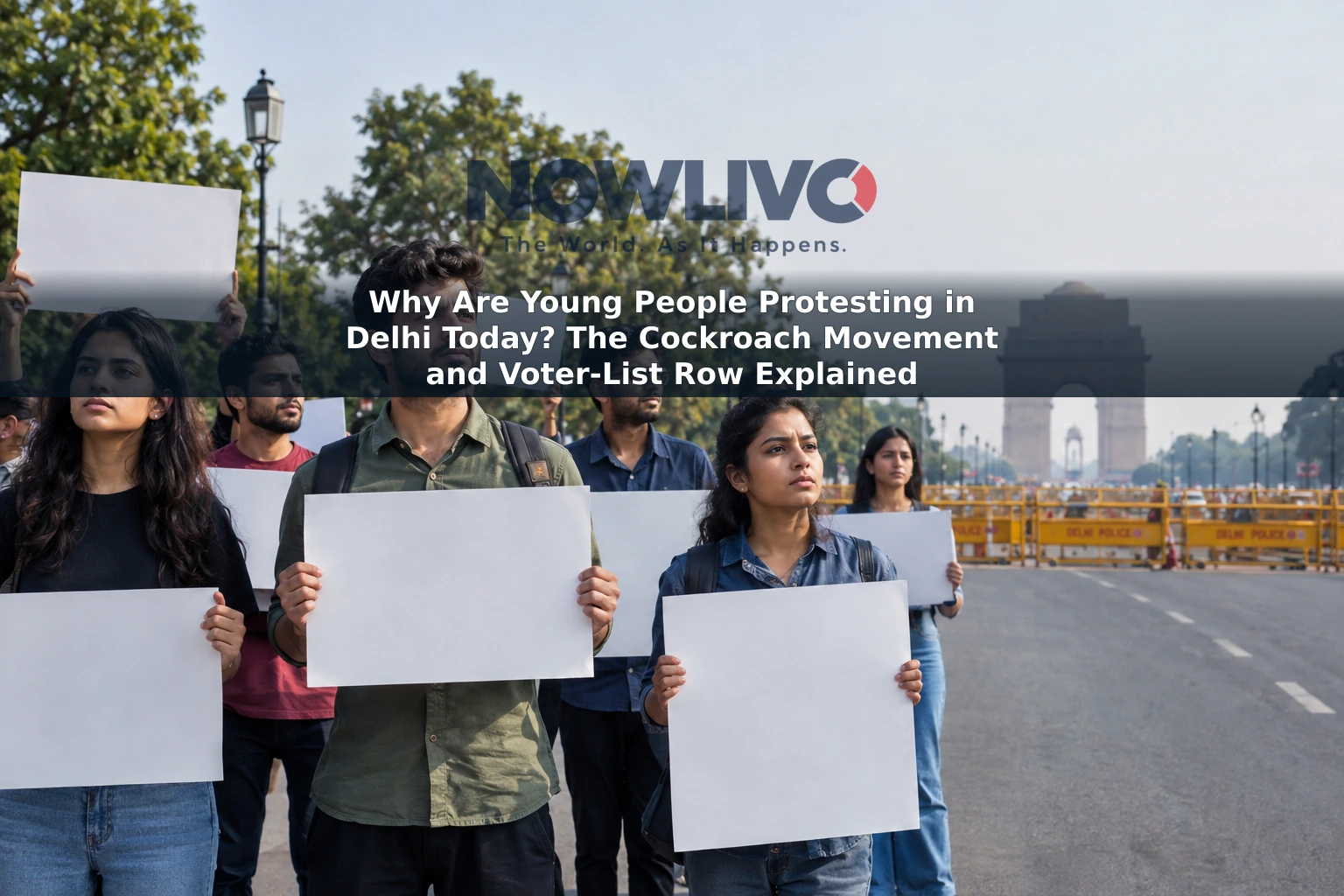
Young people are protesting in Delhi on Saturday, October 10, over changes to India’s voter lists. The youth-led Cockroach Janta Party has called on supporters to gather at Jantar Mantar and demand the resignation of Chief Election Commissioner Gyanesh Kumar. Protesters say the revision could exclude eligible voters; the Election Commission and government reject allegations of political manipulation. Delhi Police have denied permission for the planned gathering.
What is planned in Delhi today?
Organizers called for a demonstration at Jantar Mantar, a designated protest venue in central New Delhi, with thousands expected to try to attend. The protest is part of a wider campaign involving student groups and opposition parties, following demonstrations in Delhi and other Indian cities.
Police said on Friday that permission had been denied because the application was submitted too late. Barricades and a large security deployment were put in place around the venue. Authorities also announced transport restrictions, including metro station closures and train cancellations, while mobile internet was suspended in parts of the capital. Those measures could make it difficult for demonstrators to reach Jantar Mantar. A planned turnout is not a confirmed crowd count, and the gathering’s size or outcome should not be assumed in advance.
What is the voter-list revision row?
The dispute concerns the Election Commission’s Special Intensive Revision, or SIR: a review of electoral rolls that began in Bihar in 2025 and expanded to most Indian states and federally administered territories. The commission says it is removing duplicate and ineligible entries so that voter lists are accurate. More than 130 million names have been removed from the rolls so far, according to Associated Press reporting, and millions of people have appealed deletions.
Critics argue that documentation requirements and the appeals process can be difficult for eligible voters, especially people without older records. Opposition parties allege that the removals disproportionately affect their supporters and minority communities and could benefit Prime Minister Narendra Modi’s Bharatiya Janata Party. The Election Commission and government deny that the revision has a political motive or is designed to manipulate elections. A name’s removal from a roll does not, by itself, establish why it was removed or whether the person was eligible to vote.
The protesters want the revision halted, earlier voter lists used for future elections and Kumar to leave office. Their demands also include greater scrutiny of how the commission makes decisions. At its simplest, the disagreement is whether the review is correcting inaccurate rolls or placing legitimate voters at risk of being left off them.
Why is it called the Cockroach movement?
The name predates the voter-list dispute. The movement began online in May after a remark by India’s chief justice comparing some unemployed young people to cockroaches prompted a backlash. Young supporters adopted the term as a symbol of resilience, and Abhijeet Dipke launched the satirical Cockroach Janta Party. Despite the name, it developed as a protest movement rather than beginning as a conventional electoral party.
Its first campaigns focused on alleged examination paper leaks, unemployment and frustration with opportunities for young people. Supporters later took their campaign from social media onto the streets. The voter-list dispute has given the movement a new focus: protesters say young people should be able to trust that eligible voters will remain on the rolls and that election officials will be held accountable. Saturday’s call to gather in Delhi tests whether they can press that demand despite the police refusal and travel restrictions.