Why are opposition parties protesting India’s voter list changes? What happened in Delhi on October 12
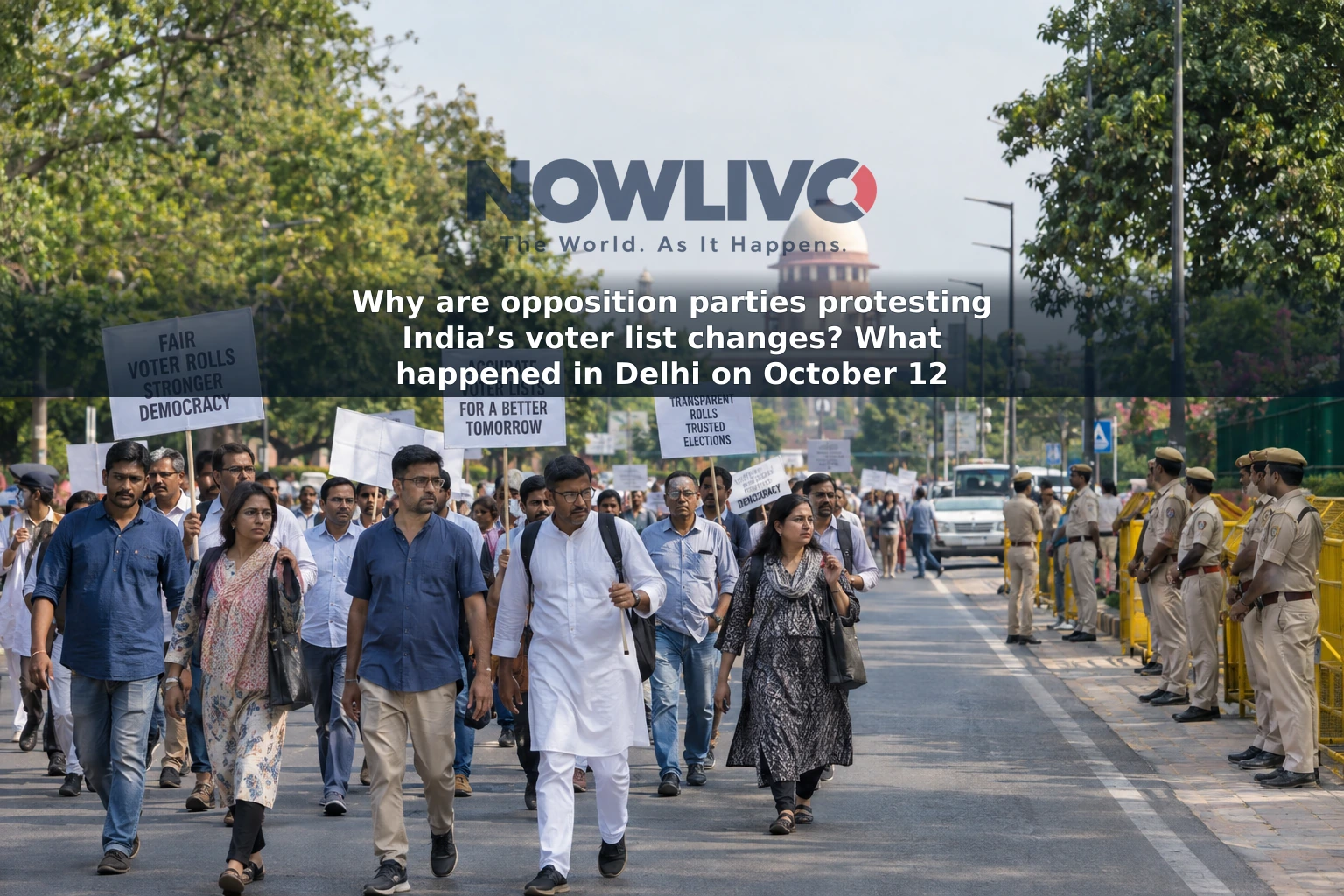
India’s opposition parties are protesting voter list changes because they say a nationwide revision could wrongly remove eligible voters and favor Prime Minister Narendra Modi’s Bharatiya Janata Party (BJP). On Monday, October 12, 2026, opposition lawmakers and supporters marched toward the Supreme Court in New Delhi to seek the resignation of Chief Election Commissioner Gyanesh Kumar. The march followed a weekend in which police detained thousands of protesters. The Election Commission and the BJP deny that the revision is politically motivated.
What happened at the October 12 protest in Delhi?
Congress party workers and other opposition supporters gathered for a march toward the Supreme Court. They sought to present their objections to the voter-list revision to the chief justice and pressed for Kumar to step down. Authorities closed six Delhi Metro stations ahead of the march and warned commuters about traffic disruption.
The demonstration came after a sharp escalation over the weekend. Police detained thousands of people during protests in the capital, including leaders of a youth-led movement that has helped organize demonstrations against the revision. Police said most of those detained on Saturday were released later that day. Smaller protests continued on Sunday, when officers detained additional demonstrators.
The march was a protest directed at the court, not a finding by the court that votes had been stolen or that election officials had acted improperly. Cases concerning the revision are before the Supreme Court.
What is India’s voter list revision row about?
The dispute centers on the Election Commission’s Special Intensive Revision, a review of electoral rolls that began in Bihar in 2025 and expanded to much of India. More than 130 million names have been removed from voter lists during the exercise, according to reporting on the revision. A name removed during a review does not, by itself, establish that its holder was an eligible voter permanently denied a ballot: affected people can challenge deletions or seek to restore their registration.
Opposition parties and other critics say the scale of the removals, along with documentation requirements, puts legitimate voters at risk. They argue that people who lack older records or have difficulty navigating an appeal could be excluded. Opposition leaders also allege that the changes disproportionately affect their supporters and minority communities, while benefiting the BJP. Those claims of partisan manipulation are contested, not established findings.
The Election Commission says it is checking the rolls to remove duplicate and ineligible entries and keep voter lists accurate. The BJP also rejects the allegation that the process is designed to help it win elections. The central question is whether the review corrects inaccurate records without wrongly excluding eligible voters.
Why did opposition leaders march to the Supreme Court?
Opposition leaders want judicial scrutiny of the revision and its consequences. Their demands include stopping the current exercise and removing Kumar from his post. The weekend detentions added another immediate point of conflict: protesters accuse authorities of restricting dissent, while police have described security measures around demonstrations as necessary to maintain public order.
Monday’s march brought those two disputes together. The detentions and transport restrictions are events that can be reported; claims that election officials deliberately altered the rolls for partisan gain remain allegations. Whether individual deletions were justified, and how the wider revision should proceed, are questions requiring examination beyond the protest itself.