Global Protests Share Youth Anger and Online Tactics, Not a Single Political Plot
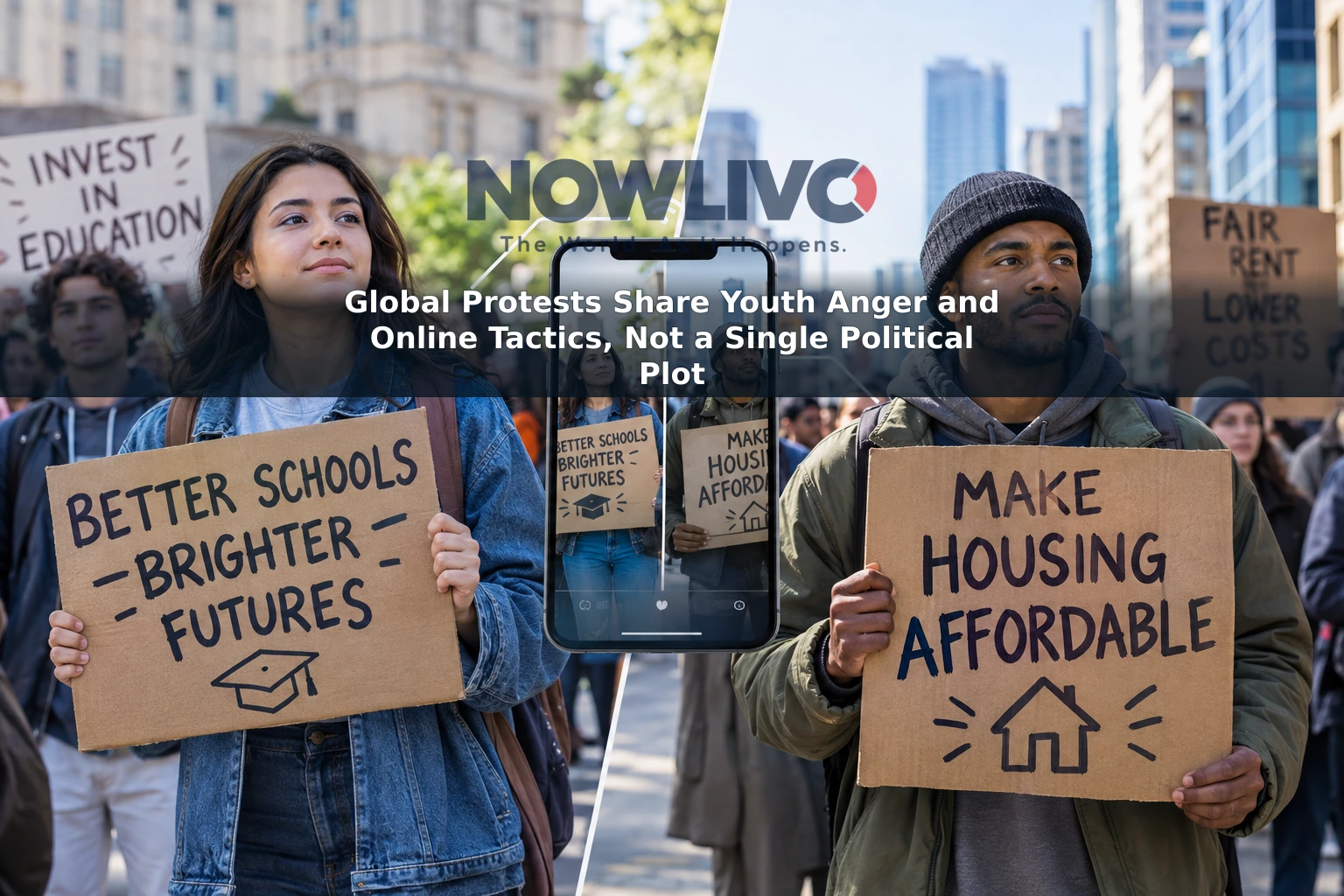
Young people have taken to the streets in countries across Europe, Asia, Africa and Latin America over the past two years. Their demands often sound familiar: better schools, affordable housing, reliable services and leaders who respond to public concerns. But similar grievances, protest tactics and symbols do not make these movements one coordinated campaign.
The distinction matters after a weekend of unrest in France. On October 17 and 18, 2026, large demonstrations over living costs and school conditions were followed by rioting and looting in several cities. Hundreds of thousands marched peacefully, while smaller groups clashed with police and damaged property. The violence has prompted renewed claims online that protests around the world follow a single plan.
Similar pressures, different starting points
France’s student movement began in September with complaints about overcrowded classrooms, teacher shortages and deteriorating school buildings. It later drew support from university students, teachers and unions, while wider anger over the cost of living brought more people into the streets.
Elsewhere, the immediate causes have been different. Protesters in Spain have camped out over high rents. In 2025, demonstrations in Madagascar began amid repeated water and electricity cuts. Young people in Nepal protested a social media ban and corruption. In Morocco, demands for better healthcare and education helped drive the Gen Z 212 movement.
These examples show why the claim that all protests began over the same basic issues goes too far. Poor services and economic pressure recur, but each movement has its own history, demands and participants. Some campaigns began well before October; Morocco’s Gen Z 212 protests started in late September 2025, and France’s current student protests began in September 2026.
Online connections are real, but they are not proof of central control
Social media helps organizers announce marches, circulate footage and learn from demonstrations elsewhere. Discord played a role in youth-led movements in Nepal, Madagascar and Morocco. Protesters have also adopted the skull-and-straw-hat flag from One Piece in multiple countries.
Those connections are visible and worth reporting. They show how an image or tactic can travel quickly between movements. They do not establish that one organization directs the people carrying the same flag, using the same app or setting up a blockade.
Nor did every protest start with a newly formed youth group. Some young organizers built new networks, while others worked through established student bodies or joined longer-running campaigns. Teachers, unions, farmers and political parties have participated in some demonstrations. Their presence does not, by itself, show that they founded or secretly control them.
Police conduct can also change a protest’s course. Accounts and images of injuries during France’s student demonstrations have caused public anger. Research on earlier youth-led movements has likewise documented cases in which a forceful response drew more people into the streets. That is an important part of a protest’s history, not evidence of a shared international script.
The claim about Muslims and violence is unsupported
The most serious assertion in the circulating account blames violence at European protests on Muslims joining them. It offers no evidence linking a person’s religion to the unrest. In France, researchers have distinguished largely peaceful marches from smaller groups involved in vandalism and clashes. French authorities have blamed some violence on far-left radicals and opportunistic looters. Neither account supports assigning responsibility to Muslims as a group.
Pro-Palestinian slogans at a demonstration cannot establish a participant’s religion or explain who committed an act of violence. A protest can bring together people with several causes and political views without those causes becoming interchangeable.
The broader claim that communists control education and media, and are using liberal democracies and Muslim communities to provoke revolt, is also unsupported. It turns separate, observable events into an allegation of hidden control without showing who exercised it, where or how. It overlooks protests in countries with sharply different political systems and religious populations.
October is not evidence of an October Revolution plan
The argument about timing rests partly on the name of Russia’s 1917 October Revolution. That name uses the calendar then in force in Russia: its decisive events took place on October 24–25 under the Julian calendar, corresponding to November 6–7 on today’s Gregorian calendar. The name does not make October a scheduled month for modern protests.
There are genuine patterns in recent demonstrations: frustration with public services and the cost of living, rapid online organizing, and growing anger when governments fail to respond. There are also important differences in what protesters want and how events unfold. Understanding both is more useful than treating everyone in the streets as part of a single plot.