Paris imposes overnight curfews in two areas after riots spread across France
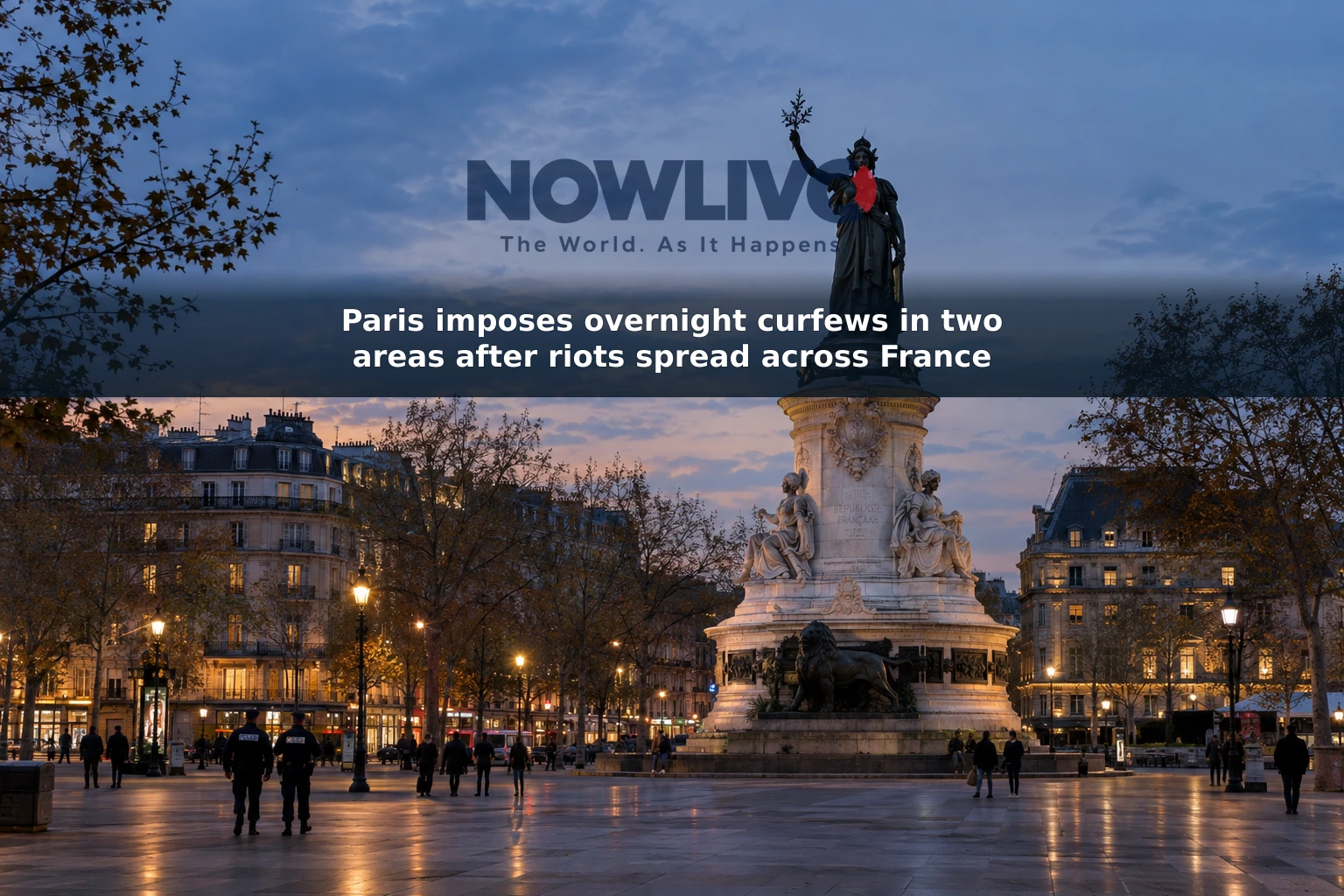
Paris imposed overnight curfews in two parts of the city on Monday, October 19, after a weekend of rioting and looting across France. The restrictions covered Place de la République and part of the Les Halles shopping district from 11 p.m. Monday until 6 a.m. Tuesday, October 20. Other cities introduced their own local measures.
The Paris order barred people from entering or remaining within the specified areas during those hours. It was not a citywide curfew: residents, people traveling for work, merchants and emergency workers had exceptions. Police also banned gatherings and demonstrations in several central Paris areas from 8 p.m. Monday.
The measures followed mass demonstrations on Saturday, October 17, over rising living costs and conditions in schools. Hundreds of thousands marched peacefully, but groups of rioters set fires, attacked public buildings and looted shops. Violence continued in some cities on Sunday. French authorities reported at least 2,400 arrests over the weekend and estimated that at least 3,000 businesses had been damaged or looted.
Restrictions differ from city to city
Prime Minister Sébastien Lecornu asked regional officials to use limited, local curfews in areas where further damage was a concern. Rules varied by location and did not amount to a nationwide curfew.
In Lyon, an overnight curfew covered part of the central Presqu’île district from 9 p.m. Monday to 6 a.m. Tuesday, with exceptions for essential travel and people returning to their homes or hotels. Nice imposed nighttime restrictions on unaccompanied minors in parts of the city center. Lille and several nearby northern towns also introduced restrictions, including curfews affecting children and teenagers.
Marseille took a different step, banning protests and gatherings from noon to 8 p.m. Monday. Anyone moving around an affected city should check the precise local area and hours rather than assume the same rules apply throughout France.
Travel within Paris was disrupted as well. At police request, the city’s transit operator closed République, Châtelet, Châtelet–Les Halles and Les Halles stations from 10 p.m. Monday for security reasons. Trains passed through the closed stations without stopping.
Macron orders review after security failures
The unrest has put France’s security planning under scrutiny. Interior Minister Laurent Nuñez offered to resign on Sunday, but President Emmanuel Macron refused, saying the country needed continuity in the command of law enforcement. Macron ordered a review of failures in planning and intelligence-gathering ahead of the violence.
Nuñez acknowledged that police had lost control in some major cities on Saturday. The government says it will adjust its policing response, while investigators examine footage to identify people involved in attacks and looting. Lecornu said about 200 investigators in the Paris police force would work on video evidence.
The damage has been especially severe for some shopkeepers and local governments. In Limoges, a fire nearly destroyed the city’s 19th-century town hall and caused its roof to collapse. The government has announced support for affected businesses and workers who cannot work because of the damage.
Protests began with demands for better schools
The demonstrations grew out of weeks of protests by students seeking better conditions in French schools. Wider concerns about fuel prices, household costs and public services brought more groups into the streets for Saturday’s nationwide marches. The violence occurred alongside those demonstrations; it does not describe everyone who took part.
Student organizations and groups seeking to revive the Yellow Vest movement have called for further action later in the week. That leaves officials preparing for more gatherings while businesses clean up and residents navigate local restrictions.
For visitors, the curfews are a reason to check plans by neighborhood, not to assume all of Paris is closed. Demonstrations and police operations can change access to streets, transit stations and attractions at short notice. The Louvre was unable to open on Monday after students blocked its entrance. U.S. travel guidance advises Americans in France to avoid demonstrations and areas with significant police activity.