UN Experts Call for Inquiry Into Policing of India’s Election-List Protests
A fresh international intervention
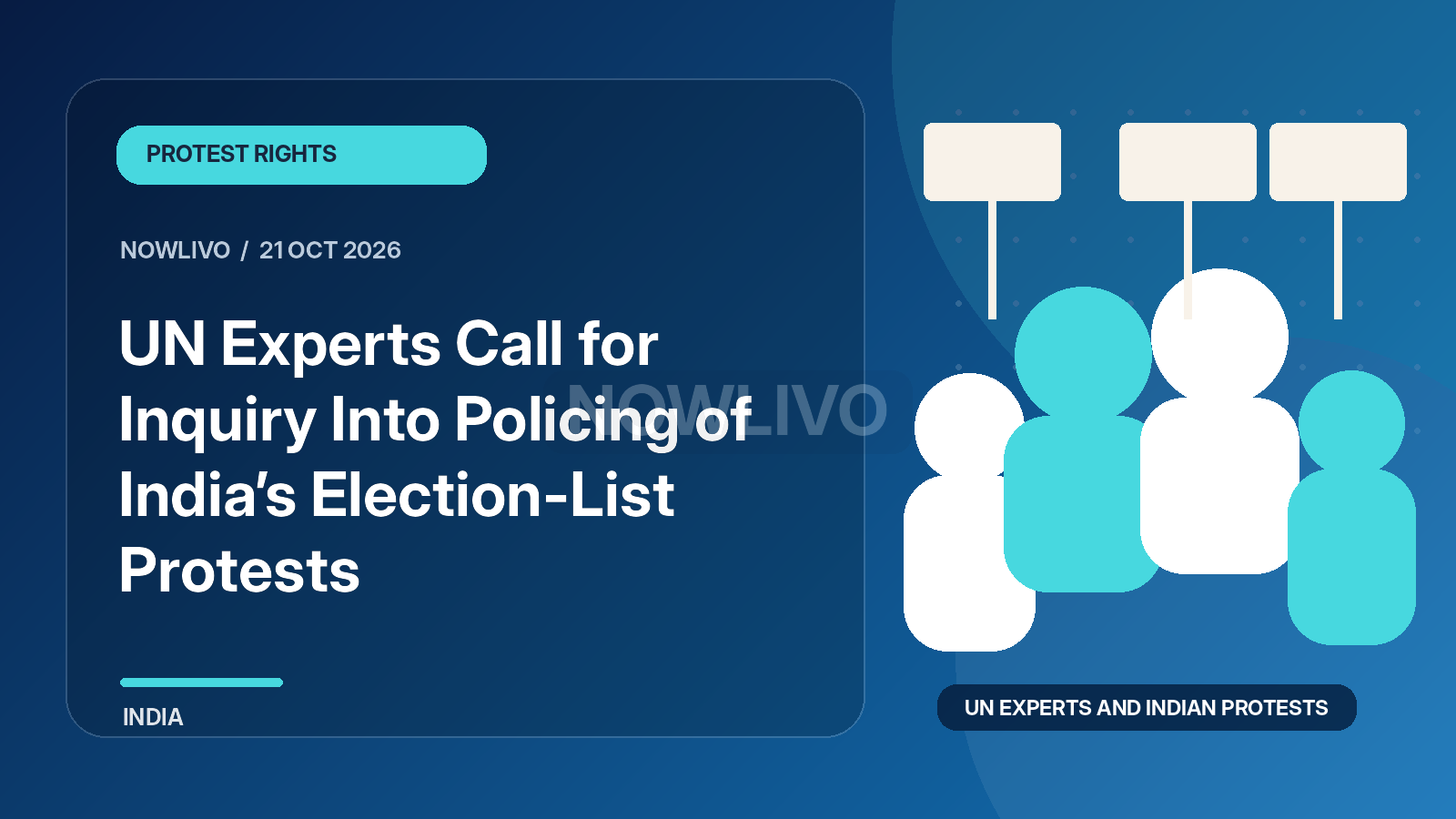
United Nations human-rights experts have urged Indian authorities to investigate allegations of excessive force during protests over electoral-roll revisions, adding a new international dimension to a domestic argument about elections and the right to demonstrate. Reuters reported the intervention on October 20. The experts referred to accounts of baton charges, detentions and restrictions on public assembly. Their statement is a call for scrutiny, not a judicial finding that every alleged violation occurred. That distinction is important while legal challenges and political disputes surrounding the demonstrations continue.
Why people have been protesting
The demonstrations involve opposition parties, student organisations and youth activists critical of the Election Commission's Special Intensive Revision of voter lists. Protesters contend that eligible voters were removed and that the process could disadvantage marginalised communities. The Election Commission has defended the exercise as an administrative effort to correct records and remove ineligible entries, with avenues for objections and appeals. The reported scale of deletions has become a political flashpoint, but an entry removed from a roll does not by itself prove unlawful exclusion or establish the motive behind an individual decision.
What the UN experts want examined
The experts urged an independent inquiry into reported police conduct and called for restraint in the use of force. Their concerns extended to broad restrictions on assemblies, digital surveillance and internet shutdowns that can limit communication during protests. These are distinct issues: a city may regulate traffic and crowd safety, while restrictions on peaceful expression must still satisfy legal safeguards. An investigation would need to establish which orders were issued, how they were implemented and whether force was necessary and proportionate in particular incidents.
India's response and the political divide
Indian authorities have argued that public-order measures are lawful and have rejected some international criticism as interference in domestic affairs. Government supporters say police must protect people and infrastructure when demonstrations threaten disruption. Opposition groups respond that peaceful dissent cannot be treated as a security problem merely because it challenges officials. Neither position resolves the factual questions about specific detentions or injuries. Records of arrest, medical evidence, video verified for place and time, and testimony from officers and demonstrators would be needed to assess individual allegations.
The election-list dispute beneath the protests
The controversy over electoral rolls has two separate layers. One is technical: whether duplicate, deceased or otherwise ineligible registrations have been identified correctly and whether genuine voters have a meaningful route to restore their names. The other is political: whether the procedures and timing unfairly advantage one side. A credible assessment needs granular evidence about notices, objections, appeals and outcomes, not just headline totals. Election administrators must be able to explain the process without exposing voters' personal data or turning routine corrections into partisan messaging.
Why protest rules matter beyond this movement
Public assemblies often involve competing rights and practical constraints. Residents need access to roads, hospitals and businesses; demonstrators need a realistic opportunity to make their views heard. A blanket prohibition may raise different legal questions from a time-limited restriction at a specific site. The experts' statement therefore matters beyond the current movement because it raises questions about standards that would apply equally to supporters and opponents of any future government. Rules gain legitimacy when they are predictable, publicly explained and enforced without political preference.
What an independent review could clarify
A serious review would separate allegations into events rather than treating all protests as one episode. It could examine why people were detained, whether they received access to legal assistance, and how authorities assessed risks before using force. It could also compare official accounts with footage and witness statements. Such a process would not automatically vindicate either protesters or police. Its value would lie in producing findings capable of being checked, correcting false claims and identifying any misconduct or procedural failures.
What readers should watch next
The immediate questions are whether the government responds formally to the experts, whether courts address specific detention and assembly restrictions, and whether the Election Commission releases clearer information on voter-list corrections. Political leaders may continue trading accusations, but the most useful updates will be documents, court orders and demonstrable changes in practice. Readers should avoid treating an international appeal as a verdict or a government denial as the end of an inquiry. The underlying test is whether both election administration and policing can withstand transparent examination.
How to read the competing numbers
The reported figure of 130 million names affected by the voter-list exercise has been prominent in political discussion. Readers should ask whether a report counts deletions, entries flagged for verification, or people whose status remains under appeal. Those categories can differ substantially. They should also ask what period and geographic scope a number covers. The fairness of a revision cannot be measured solely by its size: accuracy, notice to affected voters and the success of appeals are essential. A transparent release of anonymised administrative statistics would allow stronger conclusions than speeches by either side.
The importance of chronology
Recent demonstrations followed months of disputes about electoral administration. A statement issued on October 20 may refer to alleged conduct at earlier events rather than an incident that happened on the same day. Readers should check whether a reported detention was temporary, whether charges were filed and whether a court later changed the person's status. Similar care is needed with videos: old footage can be recirculated as fresh evidence. A credible timeline separates the date of the protest, the date of the alleged conduct and the date on which an official body responded.
Accountability is more than a press statement
If authorities announce a review, its independence, terms of reference and ability to obtain evidence will matter. A review that examines only a small selection of incidents might leave broader concerns unanswered; one that presumes misconduct before hearing officers would also lack credibility. A useful process would identify disputed events, establish whether official orders were lawful and recommend proportionate remedies where failures are found. Public communication should also explain what happens to complaints that do not meet the evidence threshold. That approach protects demonstrators' rights and gives police a fair opportunity to respond. It would help separate genuine abuses from misleading online claims and establish standards that can be applied in future protests regardless of the political cause involved.