Chennai–Arakkonam Gets Its First AC Local Train Service
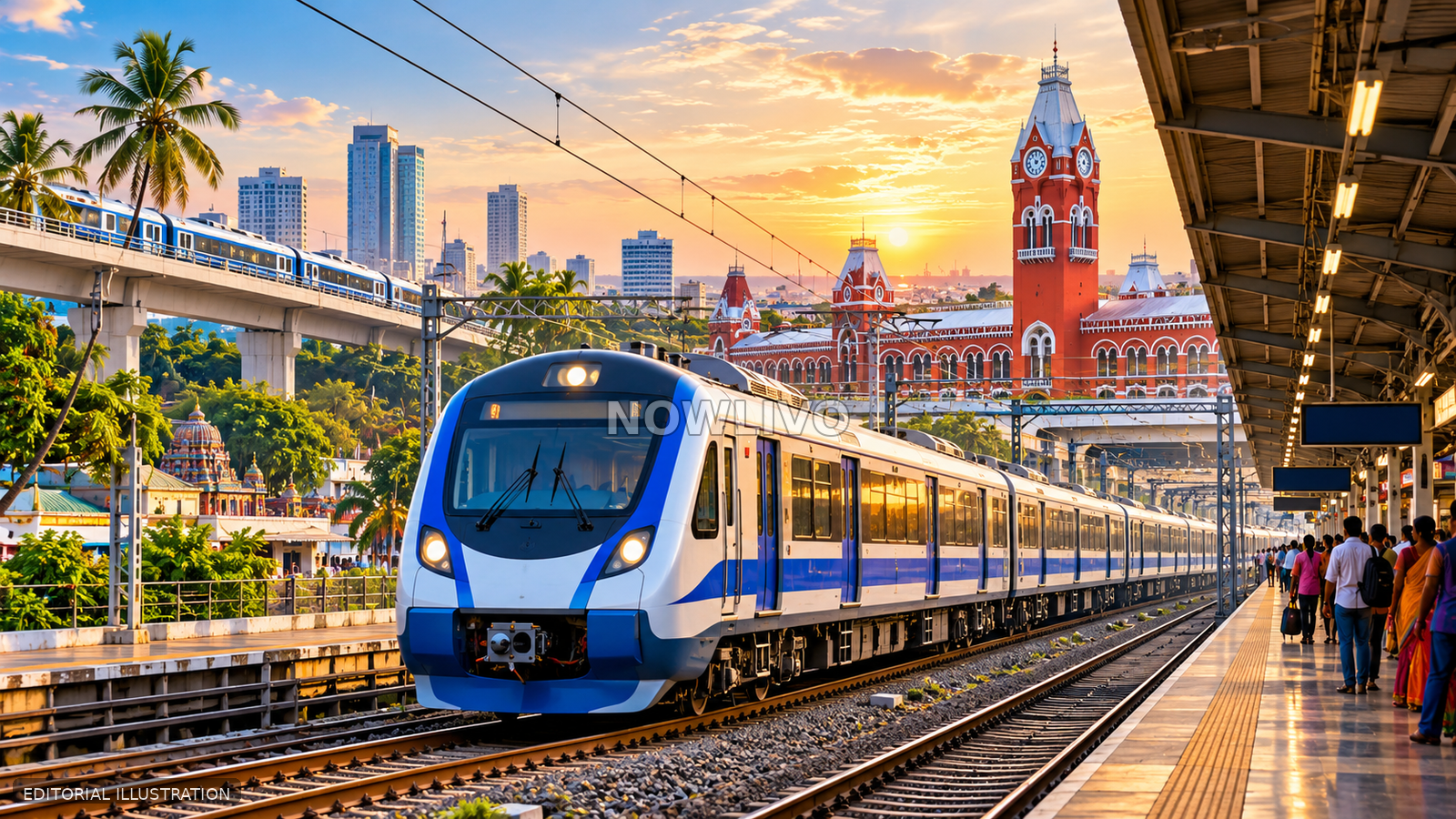
An air-conditioned electric multiple unit service has begun operating on the Chennai Central–Arakkonam suburban corridor, giving commuters a new travel option on one of the city region’s important rail routes. The Indian Express reported that six AC EMU services were scheduled to run between Chennai Central, Avadi and Arakkonam from October 23 through December 24, 2026, as a trial. Two of the services are described as fast services. The launch follows an earlier AC suburban service introduced on the Chennai Beach–Chengalpattu section in April 2025. For passengers, the practical questions are frequency, timetable reliability, the stops served and how the trial fits into an already crowded commuter network.
What has started
The new service is an air-conditioned electric multiple unit, or EMU, operating on the Chennai Central–Arakkonam route. AC suburban trains are intended to provide a more comfortable option for passengers who make regular journeys across the metropolitan rail network. The launch date reported was October 23, and the initial programme is described as a trial through December 24. Six services are planned across portions of the Chennai Central, Avadi and Arakkonam corridor. That does not mean every train on the route is being replaced by an air-conditioned set. Commuters should check the specific service number and departure time before travelling rather than assume all trains have changed.
The trial timetable and its limits
The reported timetable includes services running in both directions and two fast services. Examples published in the coverage include a morning Avadi-to-Arakkonam service, a mid-morning Chennai Central-to-Avadi service and an evening fast service from Chennai Central Suburban toward Arakkonam. The trial period allows the operator to assess passenger response and operations, but the published timetable may be subject to official updates. Passengers should check Southern Railway notices for current departure times, stopping patterns and any temporary changes. A service can be useful for one commute and less convenient for another, depending on the departure time and whether it serves the stations a rider needs.
How it fits the suburban network
Chennai’s suburban system supports daily travel for workers, students and families spread across a large urban area. Adding AC trains to one corridor expands the range of services, but its value depends on how well the additional option integrates with existing trains. Frequency, platform access, connections and dependable information are all part of the passenger experience. The earlier AC EMU introduced on the Chennai Beach–Chengalpattu section in April 2025 provides a point of comparison, though the routes have different travel patterns. A trial is a chance to see how the new service performs on its own corridor before drawing broad conclusions about the network’s direction.
Comfort is only one part of access
Air conditioning may make a meaningful difference for passengers travelling in hot or humid weather, especially during longer journeys. Yet comfort is not the only measure of a successful commuter service. Fares, seating, crowding, platform accessibility, service frequency and the ease of changing trains can matter just as much. A premium-feeling carriage is less useful if its timetable does not align with shift starts or school hours. Operators need to understand which groups use the service and where it fills a genuine gap. For passengers with disabilities, older riders and families with small children, clear boarding arrangements and accessible station facilities also shape whether a train is practical.
What a trial can reveal
A trial can give railway managers information on demand, load patterns, dwell times, punctuality and maintenance requirements. It can also expose timetable conflicts or uneven demand between morning and evening services. Those measurements matter when decisions are made about extending the trial, changing stopping patterns or adding trains. Passenger feedback is useful when paired with operational data: one crowded run may reflect a local event, while repeated peak-time crowding can signal a broader need. The existence of a trial does not guarantee that every planned service will continue unchanged after the end date. Official notices will be needed to confirm any timetable changes or extension.
Planning a commute around the new service
Commuters should verify the train number, platform, stop sequence and return option for the day they travel. The published examples show different journey patterns, including an Avadi-to-Arakkonam train and a Chennai Central Suburban-to-Arakkonam fast service. Riders need to check whether their station is served and how the AC service fits with the rest of their trip. Those travelling during the trial should also keep a backup option in mind in case a service is delayed or the timetable is revised. Screenshots circulated in neighbourhood groups may be out of date, so an official railway notice or station display is the safer reference.
Why reliability matters as much as new trains
For regular commuters, a predictable service can be more valuable than a one-time improvement in comfort. Timetable reliability helps people plan work, education, childcare and connections to buses or other rail lines. If an AC service is introduced without enough frequency or clear passenger information, it may create confusion rather than solve it. A successful trial should therefore be evaluated not only by the train’s technical operation but by how effectively it moves people through the corridor. Passenger load, punctuality and public feedback will all help determine whether the new option meets an everyday need.
What happens after December 24
The trial timetable described in the report runs through December 24, 2026. As that date approaches, travellers should look for official confirmation about whether the service will continue, what times may change and whether the number of AC runs will be expanded or reduced. It would be premature to assume that the launch guarantees a permanent schedule. For now, the route has gained a new option and commuters can assess whether it suits their journey. The lasting impact will depend on performance, demand and the decisions Southern Railway makes after reviewing the trial.