Lula Wins Brazil Runoff Against Flávio Bolsonaro, Securing Historic Fourth Term
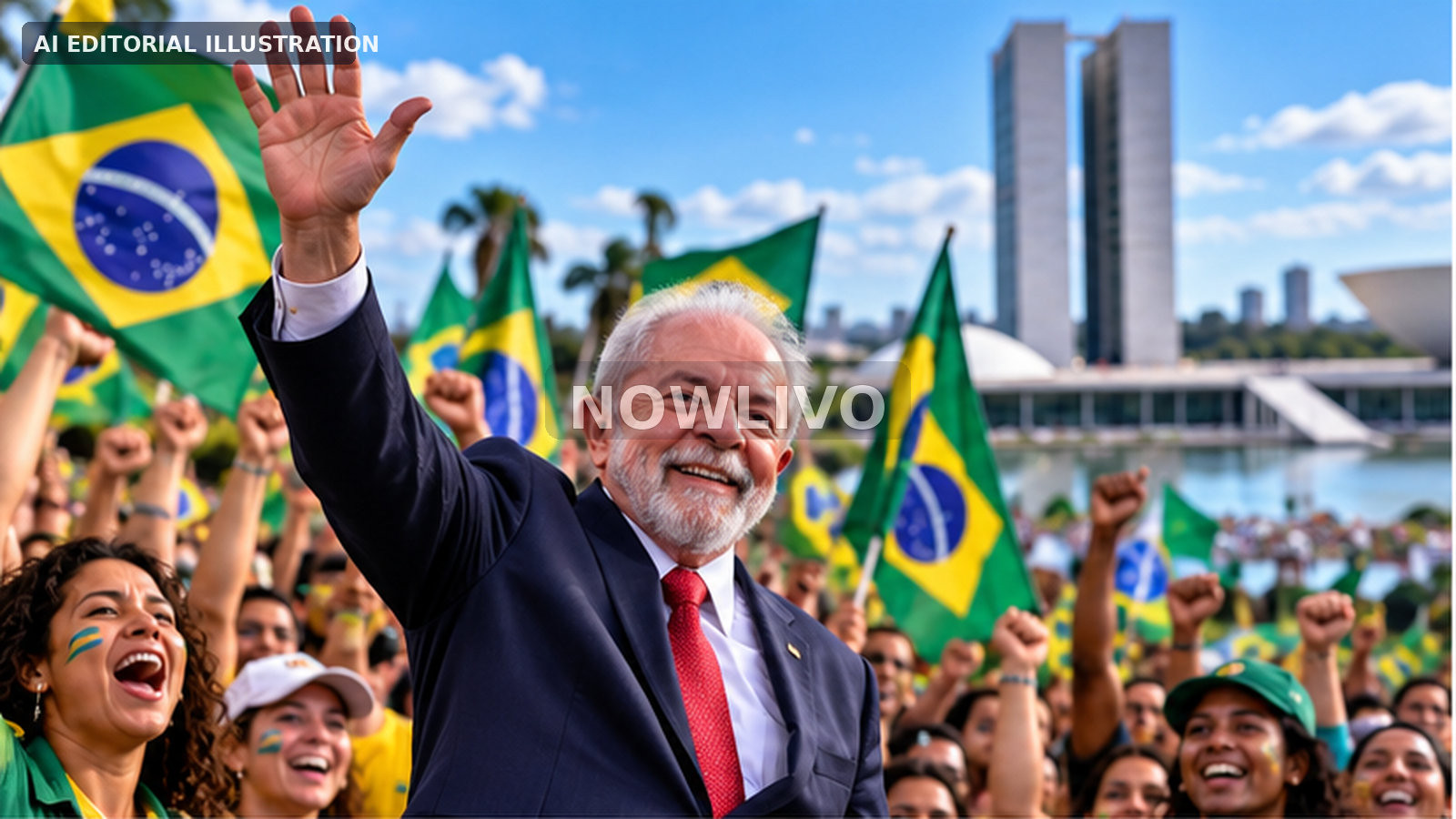
Brazilian President Luiz Inácio Lula da Silva won another term on Sunday, October 25, defeating Flávio Bolsonaro in a closely fought presidential runoff that put the country’s economy, public security and relationship with the United States at the centre of the campaign. The result is a material change from the final-round polling story: the winner is now known, and attention is shifting to how Lula will govern a divided country. The Associated Press reported that Lula received 51.8% of votes against 48.2% for Bolsonaro, with the count complete.
Lula’s victory gives the veteran left-wing leader a fourth, nonconsecutive presidential term. His next term is due to begin in January 2027. The result is politically striking because the challenger, a senator and son of former president Jair Bolsonaro, entered the runoff after a strong first-round performance. It also comes during a period when several governments across Latin America have moved rightward. Brazil, the region’s largest economy, has instead returned its incumbent president to office, though by a margin narrow enough to underline the scale of his opposition.
What the final vote establishes
The reported national count puts Lula ahead by nearly 4.4 million votes. That is a decisive electoral outcome, but not an indication that the underlying disputes have disappeared. Bolsonaro’s campaign drew support from voters frustrated by living costs, crime and the pace of economic change. Lula’s coalition emphasised social programmes, protection for lower-income households and the continuity of public services. Both campaigns faced scrutiny over their records and their political allies, and neither can plausibly treat the result as a mandate to ignore the other half of the electorate.
Election-day procedures also became part of the story. AP reported that voting hours were extended by two hours after transport problems and heavy rain affected access in some areas. The extension followed judicial intervention and generated confusion in parts of the country. Bolsonaro allies may seek to challenge aspects of the process, but a possible legal challenge is not the same as a finding that the final tally is invalid. The official result remains the governing fact unless a competent authority changes it through an established process.
Why the campaign became a referendum on daily costs
Brazilian voters went into the runoff with competing assessments of Lula’s economic record. His supporters pointed to improvements in poverty, employment and social protection. Critics argued that households were still struggling with expensive essentials and borrowing costs, and that promised gains were uneven. The campaign therefore involved more than a contest between familiar political names. It asked whether the country should continue with Lula’s approach to public spending and social programmes or move toward a more conservative policy agenda.
The incoming government will have to confront those arguments immediately. Higher public debt, interest-rate pressure and expectations for growth limit the room for new promises. A campaign pledge can be popular and still prove difficult to fund. The key question for markets and voters will be whether the president can balance social commitments with fiscal credibility while keeping investment and jobs moving. Specific budget decisions, not victory-night rhetoric, will provide the first serious test.
A difficult relationship with Congress
Winning the presidency does not give Lula automatic control of Brazil’s legislature. Reuters described the incoming Congress as unusually conservative, raising the prospect of prolonged negotiations over spending, labour measures and other reforms. That matters because the executive may need support from parties whose priorities differ sharply from those of the president’s core coalition. Coalition-building will be central to whether the new term produces major legislation or a sequence of political standoffs.
A conservative Congress could also intensify scrutiny of ministers and government programmes. Supporters may view that as necessary accountability; the administration may see some challenges as obstruction. Neither interpretation alone captures the institutional reality. Brazil’s system requires bargaining among parties, regional interests and legislative blocs. The election settles who occupies the presidency, but it does not settle how easily that president can govern.
The United States and the wider region
The runoff attracted international attention because Lula and Flávio Bolsonaro represented different approaches to Washington. US President Donald Trump has maintained political affinity with right-wing figures in Latin America, while Lula has repeatedly emphasised Brazil’s independence in trade and diplomacy. Tariffs and the terms of commercial cooperation have already complicated the bilateral relationship. The result therefore carries significance beyond the domestic balance of power, even though Brazilian voters were choosing their own president rather than voting on US politics.
Lula will also face decisions on regional diplomacy, environmental policy and the pace of energy development. Brazil’s influence in South America gives those decisions weight, but there is no basis to assume that the election alone will produce immediate changes in trade rules or diplomatic arrangements. Each requires a separate decision and, in many cases, negotiation. The near-term evidence will come from appointments, meetings and concrete policy proposals after the transition.
What happens after the celebration
The most useful next developments to watch are the certification and handling of any formal electoral complaints, the composition of the next cabinet, the first economic-policy announcements and the president’s approach to Congress. The winner has been determined, but the governing coalition still has to be assembled. Any challenge should be reported according to its actual legal status rather than treated as proof of wrongdoing or dismissed before it is examined.
For Brazilians, the immediate significance is straightforward: Lula has secured another term, and the contest was close. The wider consequences will depend on decisions that follow the vote. A dramatic campaign has ended with a clear winner and a divided electorate, setting up a demanding new chapter for the president and his opponents alike.