Jamia Student Union Protest Escalates as Police Register FIR Against Two Congress MPs
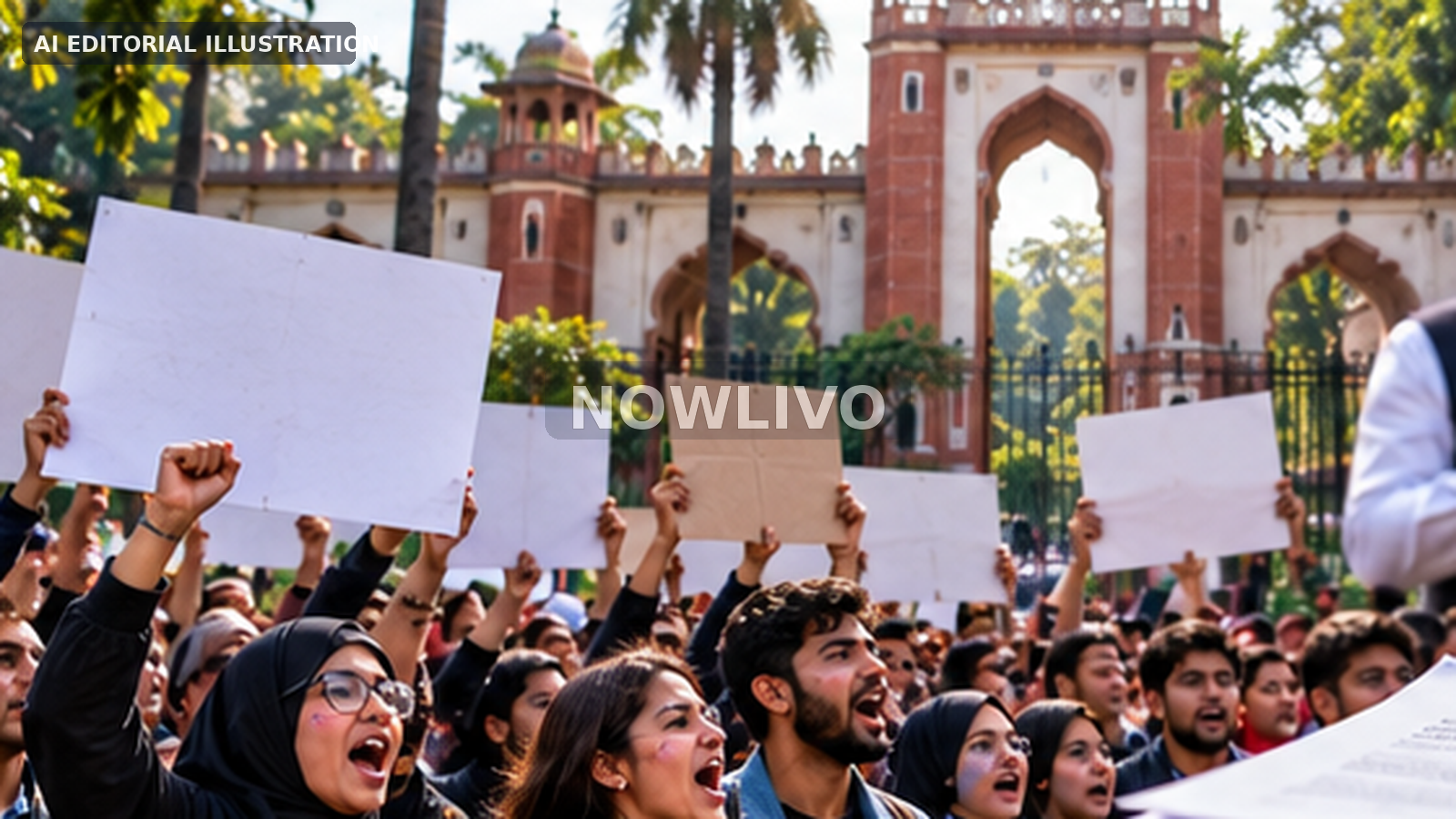
The campaign to restore student-union elections at Jamia Millia Islamia has entered a new phase after Delhi Police registered a first information report over the campus visits of two Congress members of Parliament. The university administration complained that the lawmakers entered without authorisation while students were protesting, according to reporting published on October 25. The FIR adds a legal and political dimension to a dispute that began with student demands for representation, a timetable for elections and the withdrawal of disciplinary measures linked to the agitation.
The lawmakers named in reporting are Imran Masood and Imran Pratapgarhi. The university registrar alleged that the two entered the premises improperly, including claims concerning a wall and a lock. These are allegations made in a complaint, not findings of guilt. The MPs’ public position and any eventual police evidence must be assessed separately from the fact that an FIR has been filed. The case has attracted attention because elected representatives were attempting to engage with a campus protest that was already politically sensitive.
Why students have been protesting
The agitation began on October 12, with students demanding the restoration of the Jamia Millia Islamia Students’ Union and a definite election schedule. The demands also cover disciplinary action against participants and issues affecting campus life. According to PTI reporting cited by the Times of India, the university’s last student-union election took place in 2005, and the union was dissolved the following year. That history helps explain why the current protest is not simply a dispute about a single administrative announcement.
Student representation can affect how grievances about hostels, attendance, scholarships and research stipends are raised. Supporters of a union argue that an elected body provides a predictable channel for dialogue. University administrators may emphasise the need for a constitution and rules before restarting elections. Both questions are relevant: students want a credible date, while an election process requires a framework that can be implemented and defended if challenged.
What the administration says about elections
The university has said a committee is preparing a draft constitution for the proposed students’ union and that an election schedule will follow once the draft is submitted. It has also indicated that disciplinary cases involving students will be reviewed. Those statements represent an administrative process, not a completed restoration of elections. The practical test will be whether the committee finishes its work, whether students can examine the proposed rules and whether a timetable is published.
A promise to consider elections is different from a scheduled vote. For students who have continued demonstrations, the distinction is likely to matter more than broad statements of principle. If a date and rules are announced, that would be a material development. Until then, the central demand remains unresolved. It is also important not to assume that all students support every protest tactic or that every university official opposes representation.
How the MPs became involved
Opposition politicians have visited or attempted to visit the campus as the dispute gained attention. The complaint leading to the FIR concerns the manner in which two Congress MPs allegedly entered. The registrar’s account includes specific claims about unauthorised access. Police will have to examine the complaint and any available evidence, while the MPs are entitled to respond. The existence of an FIR does not establish the truth of every allegation recorded in it.
Other opposition figures have also become involved. Reports said Samajwadi Party MP Mohibbullah Nadvi was detained while travelling to meet protesters and later released. The growing political interest may increase public pressure on the university to clarify its plans, but it can also sharpen tensions over campus security and outside involvement. A productive resolution would require attention to the students’ original demands rather than only to the identities of visiting politicians.
Separate controversy over campus graffiti
The administration has condemned graffiti that reportedly appeared on campus walls, including a slogan concerning Kashmir. Masood said he had rejected that slogan and affirmed Kashmir’s place in India, according to reporting. The graffiti dispute should not be used to attribute a view to every student or to conflate all protest demands with a separate act of vandalism. Authorities can investigate particular incidents while still addressing the question of student-union elections.
Campus protests often become difficult to report when unrelated controversies are folded into a single narrative. The central verified developments here are the students’ ongoing campaign, the administration’s stated committee process, and the police FIR following the MPs’ visit. Each has a different evidentiary status and a different potential next step. Combining them without those distinctions would make the dispute harder for readers to understand.
What happens next
The immediate legal question is what police do after registering the FIR, including whether statements are taken or further action follows. Separately, students will watch for the draft union constitution, a firm election calendar and decisions on disciplinary cases. Those administrative steps could reduce the dispute’s intensity more directly than a political exchange between parties. No arrest, conviction or completed election process should be inferred from the present reporting.
For now, the FIR marks a clear escalation, but it has not displaced the original issue: students are seeking an elected representative body after a long gap. The university’s next concrete announcement, and the handling of the allegations against the visiting MPs, will determine how this story develops.