Ishan Kishan Ruled Out of Third India–New Zealand T20I as Adductor Strain Lingers
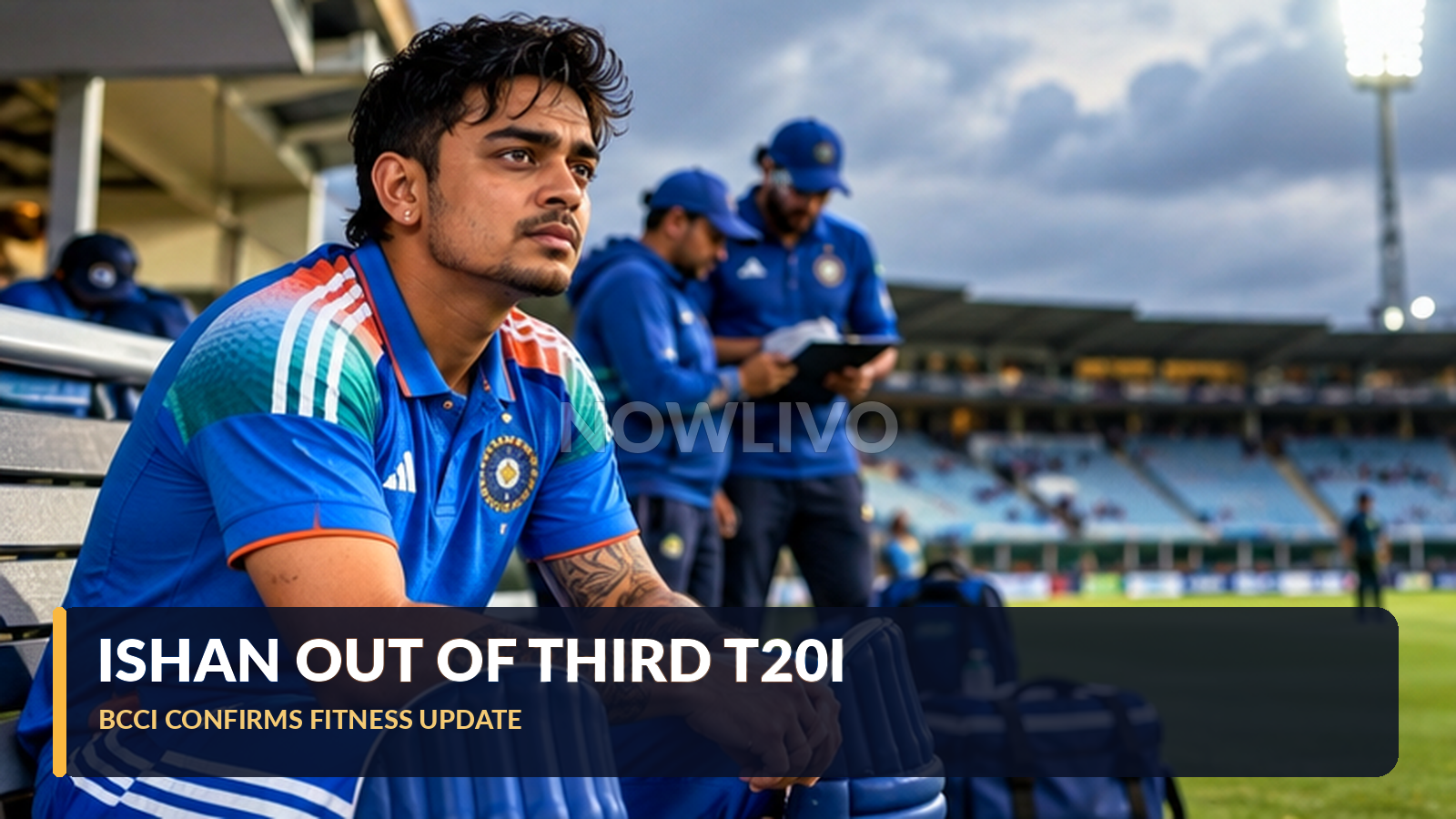
India wicketkeeper-batter Ishan Kishan will miss the third T20 International against New Zealand in Wellington on October 27 after failing to regain full match fitness from a right adductor strain. The Board of Control for Cricket in India confirmed the decision on Monday, October 26, removing the uncertainty that had surrounded his availability for the next game. Kishan had already missed the second match, but the new medical update establishes that the recovery period will extend into the third fixture of the five-match series.
The BCCI described the injury as a low-grade strain sustained during the first T20I and said its medical team continues to monitor his progress. It did not announce a return date or say that Kishan would miss the remainder of the tour. Kumar Kushagra will continue with the squad as cover, according to the board's update. The immediate sporting question is how India will arrange its batting order and wicketkeeping options for the Wellington match, rather than whether a long-term absence has been established.
How the injury has already affected India
Kishan's discomfort emerged during the opening match, when the team altered its batting order. India's batting coach Sitanshu Kotak later explained that the adjustment was driven by the groin problem rather than a permanent tactical decision. Kishan subsequently missed the second T20I, and the board's latest statement rules him out again. That sequence is important because the latest exclusion is a new confirmed team decision, not merely a repetition of the initial injury report.
The first T20I had been a high-scoring contest in Christchurch. India successfully chased 226, with Sanju Samson contributing a rapid half-century, and the series moved on with the selectors already balancing form and availability. The situation has opened discussion around 15-year-old Vaibhav Sooryavanshi and where he fits in a side containing established top-order players. His potential place in the batting order should not be presented as a confirmed selection until India announces its XI at the toss.
What the BCCI has and has not said
The phrase low-grade strain indicates how the board has described the injury, but it is not a public medical timetable. Cricket teams often distinguish between a player feeling better in rehabilitation and being able to meet the demands of an international match. Running between wickets, sudden changes of direction and wicketkeeping movements can all matter to readiness. The BCCI has said Kishan is recovering well while also stating that he has not yet regained match fitness. Those two statements are compatible: progress does not automatically mean clearance to play.
The board's decision also avoids forcing a return for a player whose fitness has not met the team's threshold. It does not establish that he has suffered a setback or a fresh injury. There was no announcement of surgery, an extended rehabilitation programme or a replacement for the whole series. Readers should be wary of social-media claims that turn a one-match exclusion into a definitive prediction about his season without further medical information.
The selection possibilities for Wellington
Sooryavanshi's emergence has made the batting-order debate unusually visible. The teenager has attracted attention for his aggressive approach, but India's management must consider roles as well as individual talent. Abhishek Sharma and Sanju Samson have been important at the top, while the No. 3 position can change the balance between attacking options and stability after an early wicket. The squad's options depend on the precise combination the captain and coaches choose for the conditions.
Kumar Kushagra remaining with the touring party provides another selection resource, though being retained as cover does not guarantee a place in the playing XI. The official team sheet, not pre-match speculation, will settle the question. The game is scheduled for October 27 in Wellington, and a further fitness bulletin could clarify whether Kishan is in contention for subsequent matches. Until then, the only confirmed selection change is that he will not play the third T20I.
Why this update has immediate relevance
For fans looking ahead to the match, the injury affects both the likely batting order and how India approaches a series in which momentum can change quickly. A player missing a second consecutive fixture is more consequential than a pre-match training doubt, especially when the squad includes a teenager whose selection draws significant interest. It also changes the information that preview articles and predicted XIs should use: any lineup listing Kishan as available for Wellington is now outdated.
For viewers following the October 27 game, the pre-match squad announcement and the playing XI serve different purposes. The squad update confirms who is unavailable; the XI reveals how the captain has chosen to use the available players in actual conditions. A predicted team circulated hours before the toss may be useful discussion, but it is not an official selection. The distinction is especially relevant when a young player is attracting attention and fans are looking for a definitive answer about his role.
There is no need to overstate the uncertainty. The BCCI has supplied a clear reason for his absence and a clear statement that the medical team is monitoring recovery. The next meaningful update will be the actual XI, a subsequent medical clearance or a further absence. For October 27, the confirmed news is that Kishan remains unavailable and India must play without him, while the precise reshuffle is still a decision for the team management.