Bigg Boss Telugu 10: BB Hotel Task Puts Red Zone at Risk as Mukesh’s Stars Go Missing
BB Hotel opens a new contest for survival
Bigg Boss Telugu Season 10 has moved from the previous nomination arguments into a new BB Hotel challenge, where contestants play workers, owners and elite guests in a competition that can affect their position in the house. A detailed recap published by Telugu360 at 8:53 am IST on October 29 describes the setup, the early deals between participants and an unusual prank involving Mukesh’s allotted stars.
The fresh development is the task format and the choices it forces, not another retelling of Thrigun’s nomination of Varshini or the earlier eight-person danger list. Housemates now have to earn tips, collect stars and negotiate with competitors who may also be their allies. The result has not yet been presented in the source as a final eviction or an official voting verdict.
Three zones, three different kinds of power
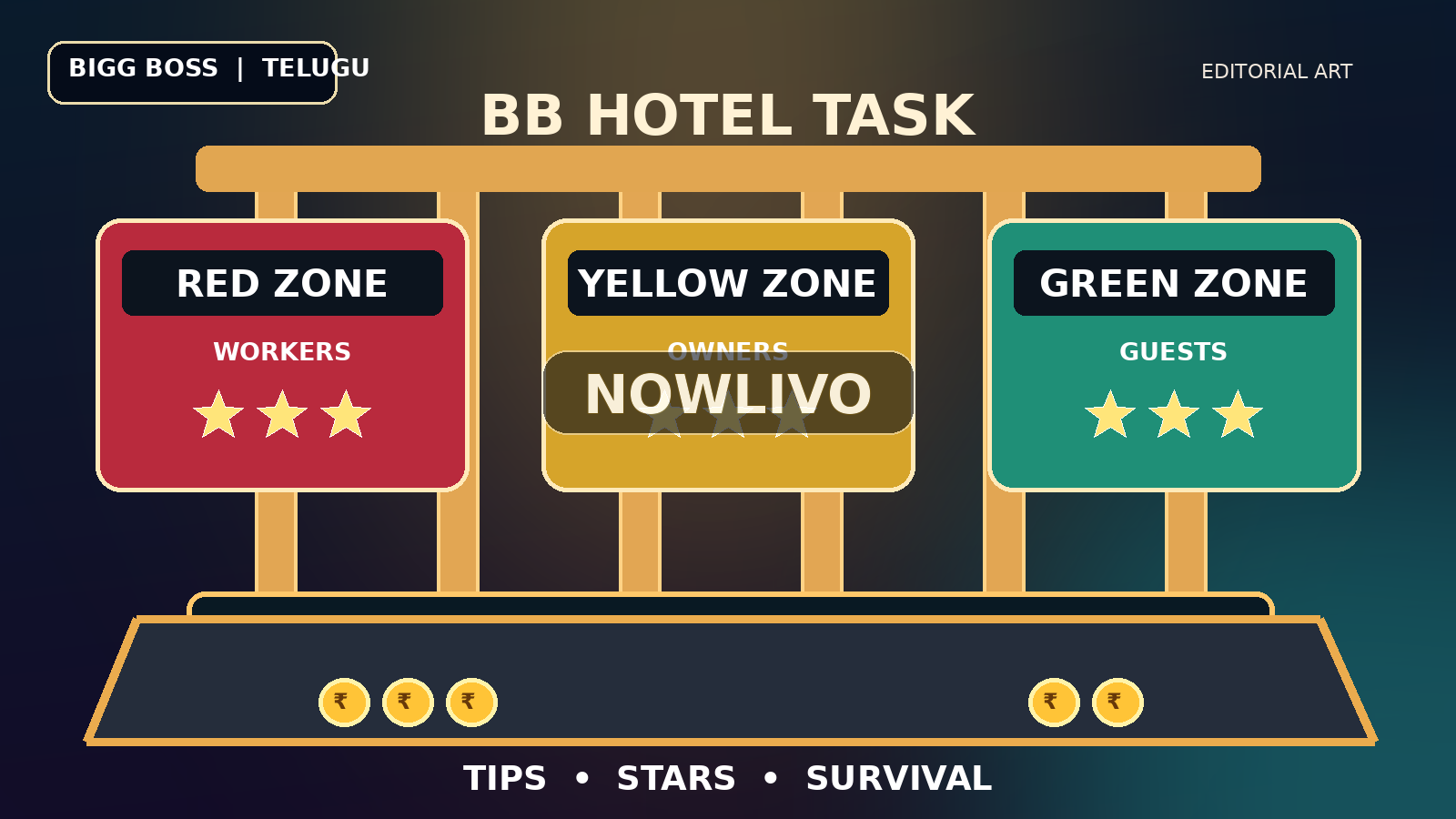
The task presents BB Hotel as an establishment whose reputation must be rebuilt. Red Zone contestants work in the hotel, Yellow Zone participants act as owners, and Green Zone housemates are elite guests. Workers can earn wages and tips, while owners try to impress guests and accumulate stars. Those are separate resources, so the most talkative contestant does not necessarily become the most successful player.
Telugu360 reports that the highest-earning Red Zone worker can move into Yellow Zone and that the Yellow Zone contestant with the most stars can enter Green Zone. The rules therefore give money and stars a practical purpose beyond decoration. A contestant’s performance may change their access to the safer or more influential parts of the game.
Why the Red Zone carries a bigger risk
One detail makes the hotel theme more than a comedy exercise. According to the recap, contestants still in Red Zone after the tasks must face public voting as well as the possibility of a sudden elimination. That is a reported rule of the challenge, not an announcement that a particular person has already been evicted.
The risk changes the incentive for every worker. A small tip may matter if it moves someone closer to promotion, while a generous guest can influence the ranking of people who are supposed to serve them. The format rewards persuasion, attentiveness and bargaining, creating tension even when no physical contest is taking place.
Contestants choose exaggerated hotel characters
The new roles also gave participants room to perform. Debjani appeared as a wealthy customer accompanied by her fiancé, Mukesh, who played a vlogger planning a wedding. Thrigun took on a don-like persona with Aman as his assistant, while Neetu adopted a gossip-focused character. These are task roles described in the recap, not statements about the contestants’ real private lives.
On the working side, Rohit, Swetha and Sudhir served as waiters, RK and Jhansi played chefs, and Vamsi acted as a fitness trainer. Naresh and Varshini participated as hotel owners. The combination could have produced a light entertainment episode, but the recap says the bargaining began almost immediately and often overtook the role-play.
Deals begin before the service does
According to Telugu360, contestants started discussing money and stars even before the hotel had properly opened. That early negotiation became the defining feature of the round. Rather than waiting to see who delivered the best service or entertained the guests, players sought commitments that might help them climb from one zone to another.
Varshini reportedly appealed to Green Zone contestants for help, hoping that a challenge built around conversation and service might suit her better than recent physical contests. That is an episode detail with clear strategic significance: the new format gives housemates a different route to improve their standing, but only if they can persuade others to support them.
Mukesh’s missing stars add a prank to the strategy
The recap also describes Mukesh briefly panicking after discovering that his allotted stars were missing. The immediate worry made sense because stars are central to the Yellow Zone advancement system. The twist was that Thrigun had hidden them as a prank, turning a potentially serious loss of game resources into a lighter moment.
That does not establish that the prank permanently altered anyone’s score. The account presents the stars as found and the incident as a joke. It does, however, show how easily a contest built around scarce tokens can create uncertainty. When every star appears valuable, even a temporary disappearance can produce a disproportionate reaction.
Entertainment versus calculation becomes the episode’s argument
Telugu360’s writer takes the view that the episode offered less spontaneous entertainment than the hotel premise promised, because participants were more concerned with deals and alliances. That is an editorial assessment by the outlet, not an established audience consensus. The same scenes could appeal to viewers who prefer strategic gameplay over improvisational comedy.
The contrast is still useful for understanding the task. A hotel game invites jokes, role-play and interactions across teams, yet the promotion rules encourage players to treat every conversation as a transaction. The show is testing whether contestants can balance entertaining guests with protecting their own position.
What is confirmed and what remains open
The new hotel zones, role assignments, early negotiations and missing-star prank are reported episode developments from October 29. The source does not establish a final hotel champion, an official sudden eviction, a completed audience vote or a verified public ranking. Those outcomes should not be filled in from unofficial voting pages or guesses about who has the strongest fanbase.
For Telugu viewers, the next significant result will be who earns the money and stars needed to move zones, and whether the Red Zone danger leads to an actual elimination decision. Until then, the strongest current story is a game of negotiation in which even a playful hidden token has consequences for how housemates interpret one another’s intentions.