Bigg Boss 20: Abhijeet Sawant Backs Qazi Touqeer, Recalls “One-Show Wonder” Taunts
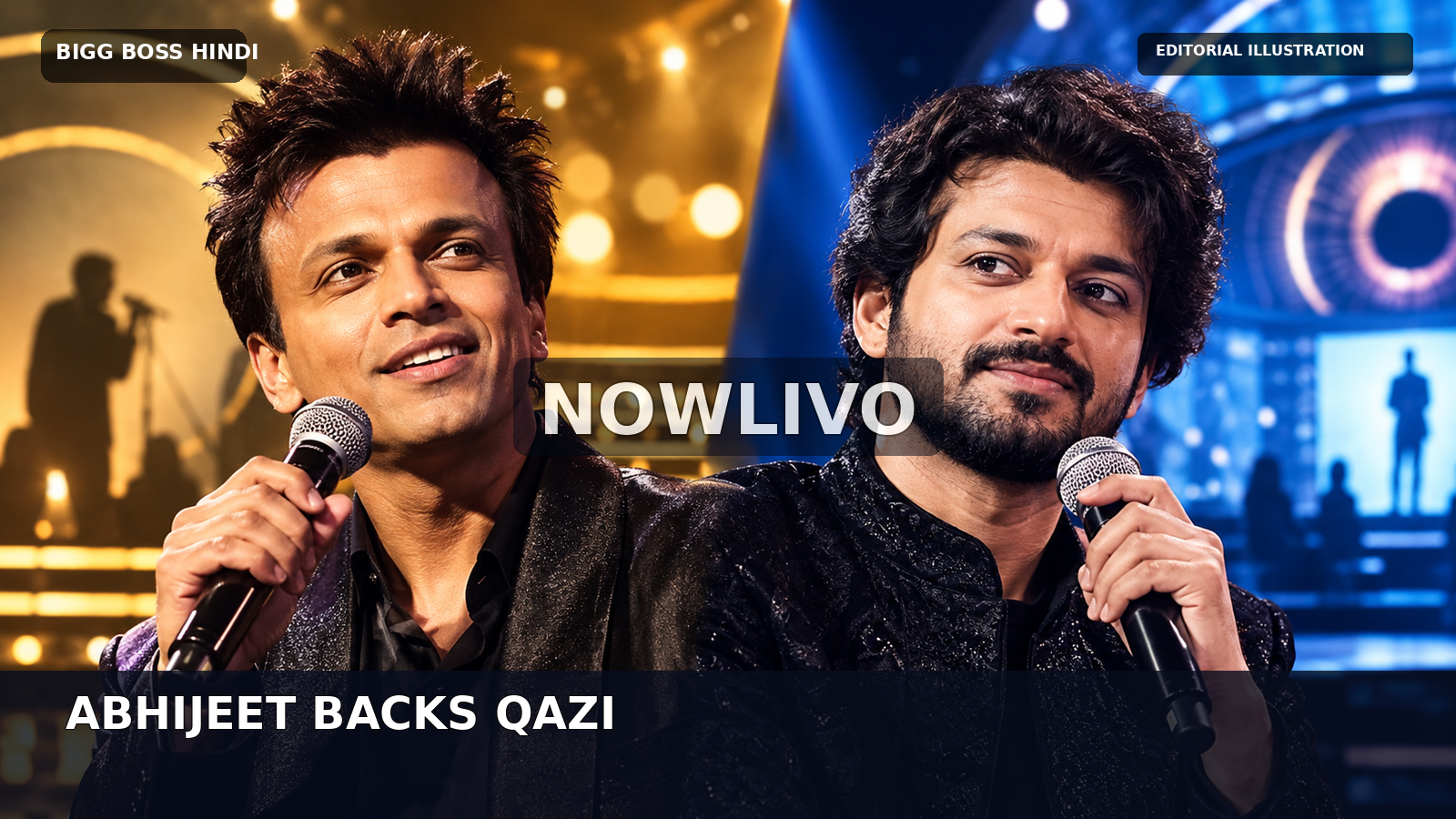
Abhijeet Sawant adds a new voice to the Qazi Touqeer conversation
Bigg Boss 20 contestant Qazi Touqeer has received a public message of support from another familiar face of India’s early singing-reality-show era. In an interview published on October 28, Indian Idol’s inaugural-season winner Abhijeet Sawant praised Qazi’s return to television and spoke about the criticism that followed both men’s original victories. The comments bring a new outside reaction to Qazi’s current run, rather than another account of an argument inside the Bigg Boss house.
Sawant’s response is striking because it is not framed as a prediction that Qazi will win the current competition. Instead, he focuses on the difficult stretch after a reality-show breakthrough, when former winners can find themselves judged by whether they remain constantly visible. He described the dismissive attitude that once surrounded both of their careers and said he was glad to see Qazi in front of a large television audience again.
Why Sawant says he understands Qazi’s journey
Qazi won Fame Gurukul more than two decades ago, while Sawant became the first Indian Idol winner. Their paths were not identical, but both became widely known through televised singing competitions at a time when that format was helping create household names. In the new interview, Sawant drew on that shared experience to explain why he feels a connection to Qazi’s return.
He recalled that critics had questioned what became of singers after their initial victories. Sawant said the label “one-show wonder” could be attached to a performer when the next phase of a career was less visible than the television breakthrough. His point was not that every winner faces the same opportunities, but that the public often sees only a small part of the work an artist does between major appearances.
The singer also complimented Qazi’s steadiness and focus. He suggested that remaining grounded after years of praise, disappointment and changing circumstances takes effort. That is Sawant’s personal assessment of a fellow performer, not an objective ranking of Bigg Boss contestants or proof of a particular level of audience support.
A remembered friendship beyond the television stage
One detail gave the interview a more personal dimension. Sawant recalled that Qazi once contacted him while organising a performance in Kashmir and asked for a video message encouraging people to attend. Sawant presented the request as an example of the bond that has continued between them, even when their professional schedules have followed different routes.
That recollection matters to the current story because it places Qazi’s Bigg Boss appearance within a much longer career. A contestant’s identity inside the house can become dominated by a few heated exchanges, a task result or an argument that circulates online. Sawant’s account is about a different Qazi: a working singer who kept connections with people from the same era of reality television.
It also adds context without pretending that the friendship decides anything in the game. Sawant did not announce a voting campaign, reveal confidential show information or claim to know the outcome of a future eviction. He offered encouragement and a perspective shaped by his own experience.
The latest reaction follows Qazi’s Fame Gurukul recollections
The timing gives Sawant’s remarks a separate news angle. Earlier coverage had focused on Qazi talking inside the Bigg Boss house about his Fame Gurukul days and his recollection of sharing a room with Arijit Singh. That was a contestant’s own memory. The October 28 interview is different: it is an outside public figure responding to Qazi’s present television visibility and describing the pressures associated with early fame.
Readers following Qazi’s story therefore have two distinct developments to consider. His on-air memories show how he talks about his past; Sawant’s new comments show how a contemporary from the same generation views that career arc. Neither development establishes how the public will vote, and neither should be used to declare that one contestant is universally popular.
Bigg Boss discussions can easily turn a compliment into a claim about likely results. That would go further than the interview supports. Sawant’s remarks show support from one identifiable singer. They do not represent a survey of viewers, an official popularity chart or a statement from the show’s producers.
What the response means for Qazi’s current public image
For Qazi, the new interview broadens the conversation beyond the familiar cycle of house disagreements and weekly nomination talk. Sawant is speaking about endurance in the entertainment business: what happens when a contestant leaves a celebrated first show and must build a career outside its intense spotlight. It is a subject with obvious resonance now that Qazi is again appearing in a daily television format.
There is also a useful distinction between television success and career success. A reality-show winner can be remembered by millions without appearing in the news every month. A singer can continue to perform and maintain professional relationships while receiving far less mainstream coverage than during a televised contest. Sawant’s recollection challenges the idea that absence from a particular screen necessarily means absence from the industry.
At the same time, the interview is not an argument that criticism of Qazi’s current conduct should be dismissed. Viewers can assess what happens inside the house on its own merits. Sawant’s praise relates to the person and professional journey he knows, and it can coexist with different reactions to Qazi’s gameplay.
What remains to be seen
The immediate development is the October 28 interview itself. Qazi remains part of the Bigg Boss 20 conversation, and Sawant has publicly wished him well. No new elimination, nomination outcome or official voting figure follows from those comments. The next meaningful update will come from an actual episode decision or a further identifiable public response, not from guessing how much influence a supportive interview might carry.
For now, Sawant’s remarks offer a rare look at the long afterlife of a singing-reality-show win. They connect the excitement of Qazi’s current television return with the less visible years that came before it, while leaving the Bigg Boss result exactly where it belongs: undecided.