Jio Shares Jump About 27% on Debut, Giving Ambani’s Telecom Business a $137 Billion Valuation
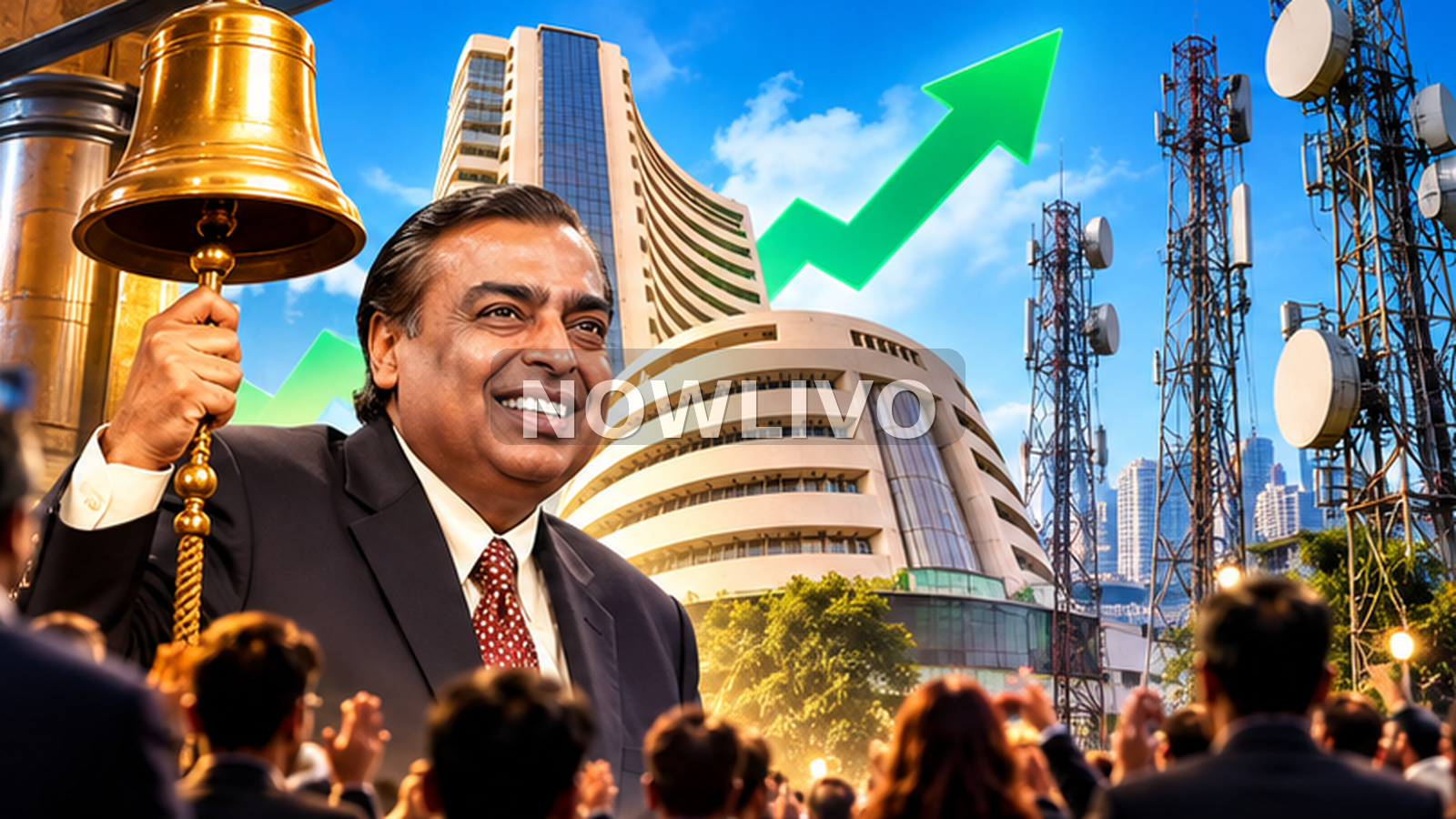
Reliance Jio Platforms ended its first day on the Indian stock market with a gain of about 27% over its initial public offering price, giving the telecom and digital-services business a valuation of roughly $137 billion. The October 28 debut converted months of anticipation about the Reliance group’s biggest listing into a traded market price. Reuters reported that the shares finished near ₹1,418, compared with the ₹1,119 IPO offer price. That closing outcome is a new development beyond the earlier announcement of when Jio would list.
The company’s debut followed an approximately $3.2 billion share sale, described by Reuters as India’s largest IPO. Jio became the country’s second-largest listed company by market value, behind parent Reliance Industries. The ranking reflects what investors were prepared to pay for its shares on the opening day; it does not mean that the telecom business suddenly earned that amount of revenue or profit. Market capitalisation is the value of the shares at the prevailing market price, and it can change significantly as trading continues.
A listing day watched across Indian markets
The opening price on the National Stock Exchange was reported at ₹1,358, a premium of roughly 21% to the offer price. Buyers then pushed the stock higher during the session. The Indian Express reported a closing quote near ₹1,419, while Reuters gave ₹1,417.50; both place the day’s advance at about 27% from the offer price. The small difference between published market quotations does not alter the main story: investors priced Jio well above the level set for the IPO.
That performance matters because Jio is not a small speculative listing. It is a major telecommunications and digital platform with more than 530 million customers in its telecom business, according to Reuters. Its backers include Meta and Google, and its services touch mobile connectivity, broadband, devices and digital infrastructure. A company with that scale joining the market gives investors another large stock through which to express a view on Indian consumer spending, data use and the future of connectivity.
Why the Ambani family’s presence drew attention
Mukesh Ambani and members of his family attended the bell-ringing ceremony in Mumbai. Akash Ambani, Jio Platforms’ managing director, spoke about making services such as artificial intelligence, cloud computing and connected technologies accessible to more Indians. Reuters described an emotional moment for Mukesh Ambani as his children addressed the event. The ceremony also underscored the family’s long-term plan to move Reliance beyond its traditional oil-and-chemicals base into consumer and technology businesses.
The listing is significant in another way: it is the first stock-market debut by a Reliance group company in about two decades. Investors already familiar with Reliance Industries can now examine Jio as a separately traded business rather than assessing it only as one component of a larger conglomerate. That separation can make its performance easier to follow, although the parent company’s large shareholding means the two remain closely connected.
What the first-day surge does not establish
A strong debut is evidence of investor demand at that moment, not a guarantee of continuing returns. Reuters reported that analysts see potential in the company’s scale but also highlighted the cost of building networks and digital infrastructure, intense competition and the risk of changes in telecom rules. Those factors can influence future earnings even if the first day of trading looks impressive. A large market valuation can also create demanding expectations for growth.
Jio has said it may use up to about $2.89 billion of the net proceeds to repay borrowings at its telecom unit. Debt reduction could improve financial flexibility, but investors will still need to assess cash generation, capital spending and the profitability of newer services. The balance between a large established subscriber base and spending on future products will be central to judging whether the market’s early optimism is justified.
What investors should watch next
The next meaningful evidence will come from ordinary trading sessions and company disclosures rather than another ceremonial milestone. Volatility after a major IPO is common because investors who received shares in the offering, institutions and new buyers may have different time horizons. Trading volume, price stability and any updates on the use of proceeds will show how the market digests the first-day premium. A high opening price should not be mistaken for a recommendation to buy.
For readers following the broader Indian market, Jio’s arrival also changes the relative size of the country’s largest listed companies. Reuters said the combined value of Reliance group businesses rose to about $320 billion, exceeding the comparable total for the Tata group. Those comparisons are useful snapshots, but the underlying companies operate in different sectors and structures. The durable question is whether Jio can turn its customer reach into earnings that support the valuation investors assigned on October 28.
The story therefore moves from speculation about the IPO to a measurable result: a record offering, a sharply higher debut and a market value that immediately placed Jio near the top of India’s listed companies. The next phase will be less about the excitement of the listing ceremony and more about performance under the scrutiny of public shareholders.
Reporting sources
Reporting consulted: www.reuters.com, indianexpress.com.