Electricity Bill Too High? How to Check Meter Readings and Dispute Errors in India
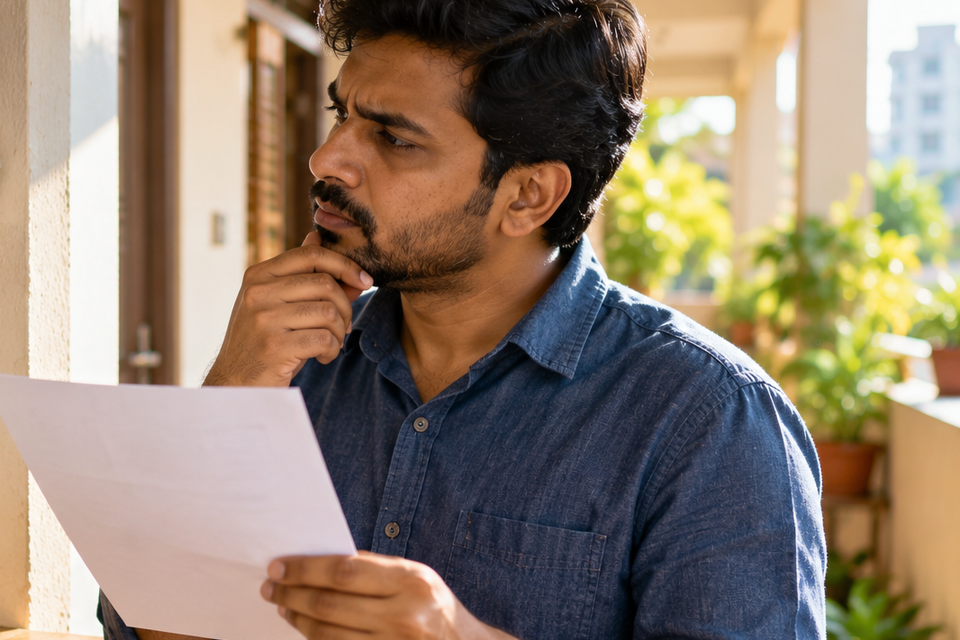
An electricity bill can rise sharply even when a household feels that nothing has changed. Sometimes the explanation is real consumption: a longer billing period, heavier air-conditioner use or an appliance running for more hours. Sometimes it is an estimated reading, an adjustment from a previous month, an incorrect tariff category or a meter-reading error. The useful response is not to assume that every high bill is wrong. It is to separate the units consumed from the charges applied, then ask the distribution company to explain the specific discrepancy.
This guide explains a practical checking method for households in India. Electricity tariffs, slabs, subsidies, fixed charges, meter types and complaint portals vary by state and distribution company, often called a DISCOM. The method below is deliberately portable: it helps you identify the question to ask without pretending that one state’s bill format applies across the country.
Start with the billing period, not the amount due
Find the current bill’s start and end dates, the consumer or account number, the tariff category, the sanctioned or connected load if displayed, and the meter number. Compare them with the previous bill. A bill covering more days than usual can show more units even if average daily use is unchanged. Likewise, a bill that includes an earlier unpaid amount may look like a sudden consumption spike when the new energy charge is ordinary.
Write down four figures: previous meter reading, current meter reading, billed units and total amount due. Also look for labels such as actual, provisional, average, estimated or adjustment. These words may appear in different places or abbreviations. A bill can include a corrected reading from an earlier estimated period, which is why a single month’s total should not be read in isolation.
Understand the difference between units and rupees
Most ordinary household energy consumption is billed in kilowatt-hours, commonly called units. For a straightforward postpaid meter, the difference between the present and previous reading generally gives the units for that interval, subject to any meter multiplier, rollover, replacement or special adjustment stated on the bill.
Consider a fictional illustration, not a tariff quotation: if a meter previously read 5,410 and now reads 5,550, the difference is 140 units. That does not mean the bill should be 140 rupees. The amount payable may include slab-based energy charges, fixed charges, electricity duty, taxes or levies where applicable, fuel or power-purchase adjustments, rebates, subsidies, late fees, arrears or credits. Which items are lawful and how they are calculated depend on the applicable tariff order and regulations.
Read three bills together
Place the latest bill next to the previous two. Record the reading date, number of days in the cycle, billed units, type of reading and each major charge. Divide units by days to estimate average daily consumption for comparison. For example, 150 units over 30 days is five units a day; 180 units over 45 days is four units a day. The larger monthly total in the second case does not indicate higher daily use.
Compare the meter number and current reading
Check that the meter number on the bill corresponds to the meter assigned to your home. In apartment buildings with many meters, do not assume the nearest meter is yours. Ask the building manager or DISCOM to help identify it. Once identified, photograph the visible reading from a safe position, ideally with the date recorded in your notes. Do not break a seal, open a meter box, touch wiring or enter an unsafe electrical area to get a better photo.
The reading visible today will normally be later than the reading used to prepare an earlier bill. That is not automatically a discrepancy. Compare the bill’s reading date with the photo date and the usage since then. If a meter has several displays, use the DISCOM’s instructions to identify the correct import-energy or billing register. Smart meters can cycle through multiple measurements; guessing from the first number on the screen can create a false complaint.
Was the bill estimated or provisional?
An estimated or provisional bill is not necessarily evidence of wrongdoing. It may be used when an actual reading was not obtained, subject to the governing rules. But it matters because a later actual reading may produce an adjustment. If you receive two unusually low provisional bills followed by one high actual bill, part of the spike may represent earlier consumption that had not yet been fully billed.
India’s Electricity (Rights of Consumers) Rules, 2020, as amended, establish a national framework for metering, billing and grievance redressal. The Ministry of Power’s official rules discuss actual readings, provisional billing and the consumer’s ability to complain. State electricity regulatory commissions and DISCOM supply codes add operational detail. Check the current state-specific rules before claiming that a particular provisional bill must be cancelled or that a certain refund is automatic.
Identify the most likely explanation before complaining
For a consumption question, make a short list of equipment that may have run longer: air-conditioning, water heaters, pumps, refrigeration or temporary high-power appliances. For a measurement question, preserve photos and request the reading log. For pricing, compare the applicable tariff schedule on the DISCOM or state regulator website. For accounting, collect payment receipts and the previous bills. A well-classified complaint is easier for an agent to route correctly.
Raise a complaint that can be investigated
Use the complaint channel shown on the bill or the DISCOM’s verified website or app. Give the account number privately, the bill date, the disputed amount or units, and a concise description of the suspected error. Attach the relevant bill, earlier bills, meter photo where safely available, and payment receipt if the dispute concerns an uncredited payment. Ask for a written explanation or corrected bill, not simply a waiver without evidence.
A clear complaint might say: ‘My bill for the period shown records 320 units, compared with 145 and 151 units in the previous two comparable cycles. Please confirm the reading type, meter number, reading dates and whether any prior estimated consumption was adjusted. I have attached the three bills and a dated meter photograph.’ These figures are illustrative; use your own records.
Save the complaint number, submission time and any promised response date. If an agent gives an oral explanation, ask for it in writing or record the exact details in your notes. Follow up through the official channel rather than submitting many unrelated complaints that make the history harder to trace.
What if the DISCOM does not resolve it?
Electricity complaints in India have a sector-specific escalation path. The 2020 consumer-rights framework provides for a Consumer Grievance Redressal Forum (CGRF) and an Electricity Ombudsman under the relevant regulatory arrangements. The exact forum levels, forms, deadlines and eligibility requirements vary, so use the state regulator’s or DISCOM’s current grievance page. The national rules describe escalation after the appropriate company-level forum does not resolve a complaint or the consumer remains dissatisfied.
You can also use the government’s National Consumer Helpline for general consumer assistance, but it is not a replacement for the prescribed electricity grievance process. Its official portal explains that it is a pre-litigation mechanism and does not guarantee a remedy. For an electricity-specific meter or tariff dispute, start by preserving the DISCOM complaint trail and checking the regulator’s designated route.
Should you stop paying while the dispute is open?
Do not assume that filing a complaint automatically suspends the payment deadline, late charges or disconnection procedures. Ask the DISCOM in writing what amount, if any, must be paid while the dispute is investigated, and whether an interim arrangement is available under your state’s rules. If you pay a disputed amount to avoid an immediate problem, keep the receipt and clearly state that you are seeking review. The appropriate choice depends on the local rules and your circumstances.
Likewise, do not accept a caller’s offer to ‘cancel the bill’ if you transfer money to a personal UPI ID or install a remote-access app. Verify the caller through the number printed on an authentic bill or the official DISCOM website. Billing disputes can create an opening for impersonation scams precisely because the consumer is worried and wants quick resolution.
If the meter may be defective
A meter-testing request is different from a simple bill correction. Describe the specific symptom: stopped display, unexplained jumps, reading inconsistent with documented consumption, damage or another observable fault. Ask for the testing process, charges if any, appointment procedure and copy of the report under the applicable regulations. The Ministry of Power’s consumer rules provide a framework for meter testing and consumer complaints, while the state regulator’s supply code controls many details.
Do not tamper with the meter or invite an unauthorized person to alter it. A qualified inspection and documented report are more useful than speculation. If a test finds no defect, you may still need to investigate appliances, billing adjustments or the tariff category; if it finds a defect, ask how the revised bill will be calculated and when it will appear.
A reusable household bill-check routine
Each billing cycle, save the bill, record units and dates, check the account and meter number, note whether the reading was actual or estimated, and confirm that your last payment was credited. Once every few months, compare average daily units and scan for changes in tariff, arrears or subsidy. This takes far less time than reconstructing six months of bills after a surprise charge.
Common questions
Why is my electricity bill high when units are almost unchanged?
Check fixed charges, tariff category, fuel adjustments, taxes or duties, arrears, subsidy changes and late fees. Compare the itemized lines, not just the final amount.
Can I use a photograph of the meter as proof?
A safely taken, dated photo can support a complaint, but it may not prove the reading on an earlier billing date. Pair it with the bill’s reading date and the DISCOM’s meter log.
Does an estimated bill mean I can ignore it?
No. Provisional billing is governed by rules, and a complaint does not automatically suspend payment. Request the basis of the estimate and follow the official dispute procedure.
Where do I complain if customer care does not help?
Use the DISCOM’s grievance escalation procedure, then the appropriate Consumer Grievance Redressal Forum and Electricity Ombudsman under your state’s regulatory framework.
Sources and maintenance note
Reviewed 29 October 2026 using the Ministry of Power’s Electricity (Rights of Consumers) Rules, 2020, its 2024 amendment, the Ministry’s 2024 parliamentary answer on applicability and the National Consumer Helpline’s official explanation. Verify state-specific tariffs, complaint portals, meter-testing rules and any later amendments before publishing an update.