Piyush Goyal Says US Trade Deal Will Protect Indian Farmers as Farm Unions Plan Protests
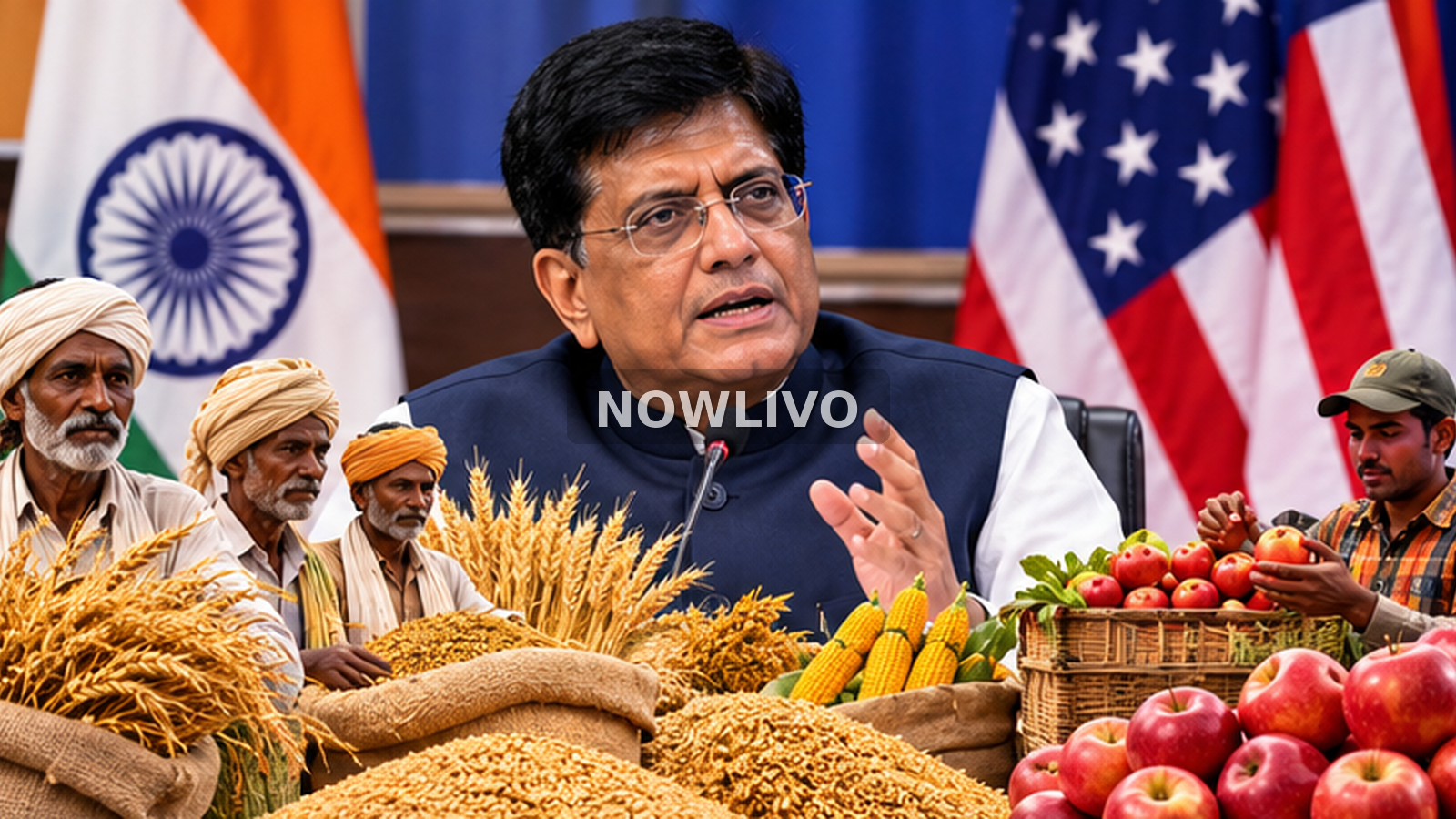
India’s trade negotiations with the United States entered a fresh round of public debate on Thursday, October 29, after Commerce and Industry Minister Piyush Goyal said the eventual agreement would not compromise the interests of Indian farmers. The assurance came while the two governments worked toward the first phase of a trade arrangement that has not yet been signed. For farmers’ organisations demanding disclosure of the terms, the minister’s remarks were significant but did not settle the central question: exactly which agricultural products, if any, would receive greater access to the Indian market.
Reuters reported that Goyal, speaking at an event in New Delhi, expressed confidence that the public would welcome the deal once its provisions became available. His statement was a political and negotiating assurance, not the publication of a final tariff schedule. No definitive list of new farm import concessions was released with the remarks. That distinction matters because the fears expressed by farming groups concern details that cannot be established from a general promise of protection.
Why agricultural products have become the flashpoint
India maintains protections around several farm and food markets because agricultural incomes depend on far more than the prices paid by urban consumers. Many producers work on small holdings, face uncertain weather and have limited bargaining power. A reduction in import duties can help some consumers or manufacturers, but it can also expose domestic growers to competition from overseas suppliers with different production costs, subsidies and logistics networks. The outcome depends on the product, the duty, the size of the concession and any safeguards included.
The Samyukt Kisan Morcha, an umbrella grouping of more than 100 farmer organisations, has criticised the talks and demanded the government make the agreement’s terms public. Its concerns include possible concessions on maize, almonds, walnuts, apples and soybean oil. Those are not interchangeable products: apples and nuts affect orchard growers, maize is used across food and animal-feed supply chains, and soybean oil is part of the edible-oils market. Each would require a separate assessment of likely effects on domestic production and prices.
The union has described the negotiations in strongly critical terms and said it intends to organise further demonstrations in November. That is a declared protest plan, not proof that a harmful agreement has already been signed. The government, for its part, says sensitive interests will be defended. Both positions are now part of the public dispute, and the eventual text will be the decisive document for assessing them.
What the governments have and have not agreed
India and the United States announced a framework in February that reduced punitive American tariffs on most Indian goods, according to Reuters. Negotiators have continued working through unresolved issues since then. The first phase is said to be close to completion, but the countries have not signed the final pact. The distinction between a framework, a negotiated draft and a signed, operative agreement is essential: a framework may describe broad goals while leaving precise tariff lines, exclusions and implementation dates unsettled.
Trade negotiations involve demands on both sides. India wants better conditions for its exporters in the large US market, while Washington has sought expanded access for American products. An agreement could influence manufacturers, consumers, exporters and farmers simultaneously. Gains in one sector do not automatically erase costs in another. That is why farming groups are seeking product-level information instead of relying on broad statements that the country will benefit overall.
The immediate political challenge for Goyal is credibility. A government can argue that negotiations require confidentiality until the text is ready, but producers who may face new competition want advance notice of the consequences. The farm groups’ request for transparency is therefore also a request for time to evaluate proposed concessions and organise a response before the rules take effect. The minister’s assurance will be tested against whatever tariff schedules and safeguards are eventually disclosed.
What farmers and consumers should watch next
The most consequential next developments would be an official agreement text, an announcement of excluded sensitive products, published tariff-rate quotas or transitional periods, and the dates on which any changes would begin. A tariff-rate quota, for example, can permit a limited amount of lower-duty imports without opening the entire market at that rate. A phased reduction may also have a different impact from an immediate removal of duties. None of those mechanisms should be assumed to exist in the unfinished deal without documentary confirmation.
Consumers should also be wary of instant claims that the agreement will make imported foods dramatically cheaper or destroy a particular crop market. Retail prices depend on exchange rates, freight, domestic supply, distribution and tax rules, not only customs duties. Farmers’ incomes depend on procurement arrangements, weather, crop yields and demand. A headline about a potential tariff concession is not a reliable forecast of next season’s farmgate prices.
For now, the new development is clear: Goyal has publicly promised that farmers’ sensitive interests will be protected, while a major coalition of farm groups remains opposed and is preparing November protests. The two sides are arguing over an agreement whose final terms are still unavailable. Whether those assurances hold will become clearer only when the governments disclose the negotiated provisions and a timetable for implementation.
Sources consulted: Reuters.