Israel Election Dispute Deepens as Netanyahu Alleges Interference and Arab Parties Reject Claims
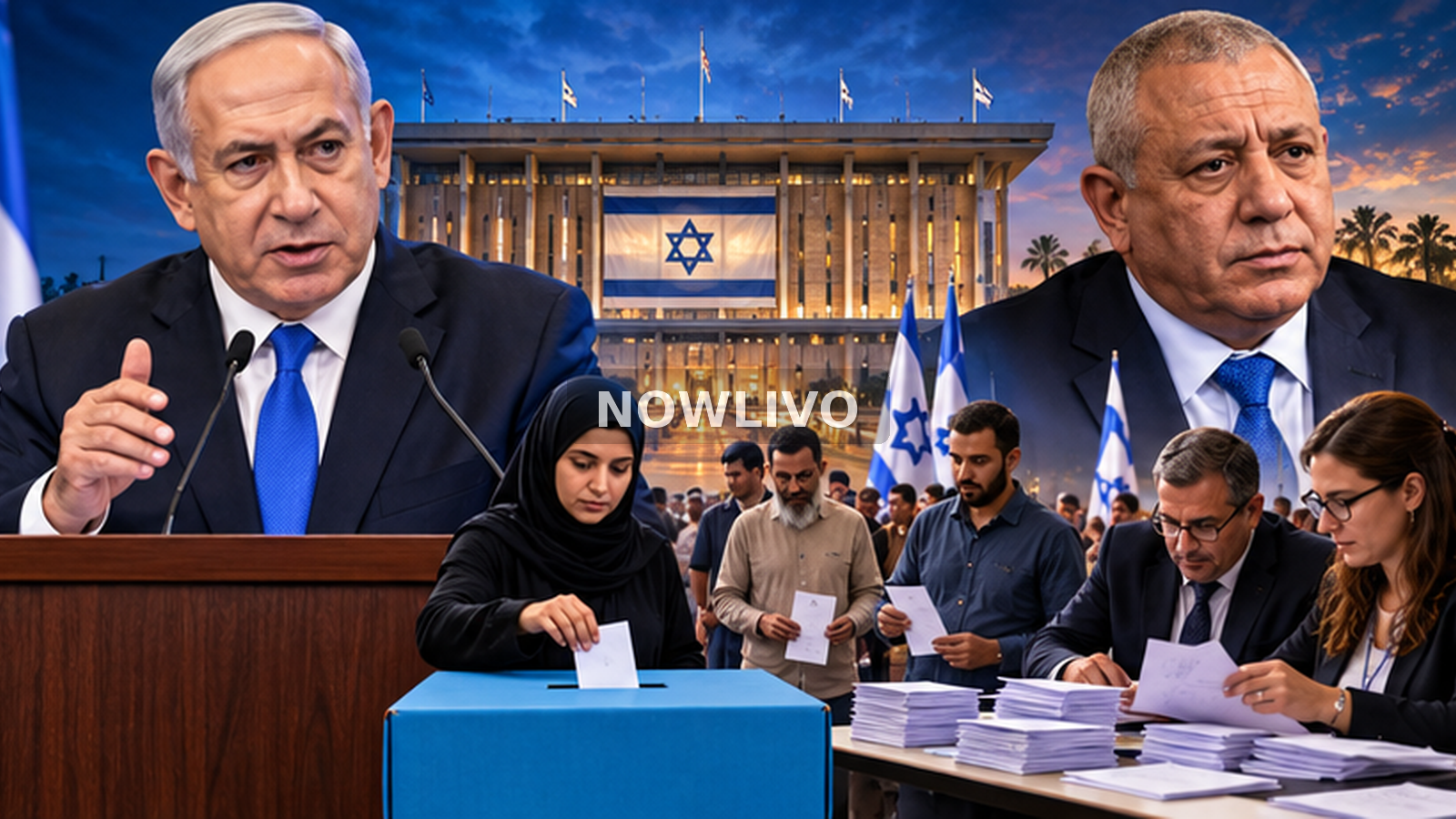
Israel’s unresolved election produced a new confrontation on Thursday, October 29, as Prime Minister Benjamin Netanyahu and his Likud party amplified claims that the vote had been stolen. The allegations emerged alongside a request by the national elections committee for the Shin Bet security service to examine possible interference by unspecified foreign actors. The committee’s request did not identify Arab-led parties as responsible, and its acting director general said there was no known basis for claims of systematic violations of election integrity, according to the Associated Press.
The distinction between an inquiry request and proof of wrongdoing is central to the story. An election authority can ask investigators to examine a concern without concluding that fraud occurred. Likud’s more sweeping public allegation goes further than the information disclosed by the committee. Qatar denied allegations that it had interfered in Israel’s vote or funded attempts to influence the result. The allegations and denials are politically consequential, but they do not amount to a verified finding that the election was manipulated.
Why the dispute erupted as results approached
The parliamentary arithmetic has left Netanyahu facing a difficult route to another government. Local projections cited by AP placed his bloc on 53 seats, opposition parties on 48 and Arab-led parties on 19. Israel’s 120-member Knesset requires a majority of 61 for a governing coalition. Those figures were projections as final results were awaited, and a projected seat distribution is not the same as a certified outcome or an agreed governing alliance.
Arab-led parties therefore hold unusual leverage. If Jewish opposition parties could reach an arrangement with enough Arab-led lawmakers, they might assemble an alternative majority or cooperate on parliamentary leadership. Such a coalition would face serious political obstacles because many of the parties have disagreed sharply over national security, Palestinian rights and the role of Arab citizens in the state. But the possibility alone has changed the incentives of every negotiating camp.
Likud’s criticism of Arab-led parties has drawn strong responses from opposition politicians, who accuse Netanyahu of trying to discredit a section of the electorate rather than accepting the parliamentary outcome. Arab-led politicians rejected suggestions that their voters were illegitimate participants in the process. President Isaac Herzog urged that any investigation be conducted without tarnishing an entire community that exercised its right to vote.
What the election authority actually requested
The elections committee asked Shin Bet to investigate possible interference by foreign entities and sought findings within a week. AP reported that the request did not explain who had made the allegations or present a public account of the supposed activity. The committee’s acting director general separately cautioned that it knew of no basis for systemic election-integrity claims. That combination leaves investigators with questions to examine, not a public evidentiary record on which sweeping accusations can responsibly rest.
Qatar’s denial became part of the dispute because the country’s name was raised in the surrounding political argument. It is important not to conflate that denial with a finding that Qatar had been formally accused by the elections committee. The committee’s disclosed request referred to unspecified foreign entities. Any later report that names a person, organisation or state would need to be evaluated on its own terms.
Israel’s election law requires certification by November 4, AP reported. Certification is a formal step, while coalition formation is a separate political process. Even once the numbers are official, a party leader must still secure enough support to govern. President Herzog will have a role in deciding whom to ask to form a government, and negotiations could continue well beyond the release of final tallies.
Eisenkot, the opposition and the coalition problem
Former military chief Gadi Eisenkot, a leading rival to Netanyahu, warned against exploiting the inquiry to interfere with the parliamentary timetable. His party said he had been briefed by the Shin Bet chief. The opposition is not a single unified party; it is a collection of factions with different ideological positions and priorities. Its ability to replace Netanyahu will depend on whether those factions can agree on governing arrangements, not simply on whether they collectively oppose the incumbent.
Arab-led parties have their own choices to make. Some may seek a formal role in government, while others could offer support on specific parliamentary votes without entering a cabinet. AP reported discussion of cooperating to replace the Knesset speaker, which could influence legislative control even before a new coalition is established. None of those possibilities should be described as an agreement until the parties announce one.
The result matters beyond personalities. Israel faces disputes over military-service exemptions, the legacy of the Gaza war, security failures and Netanyahu’s ongoing corruption cases. A new government could alter the direction of inquiries and policy, while another Netanyahu administration would face a different set of parliamentary constraints. If coalition efforts fail repeatedly, the country could face another election.
The immediate news is not that foreign interference has been proven or that a new coalition has formed. It is that an official request for inquiry has been turned into a fierce political argument at the moment when Arab-led parties may determine who governs. The next decisive events are the publication of final results, any substantiated findings from investigators and concrete coalition commitments.
Sources consulted: Associated Press.