International DigiYatra Trials Begin at Seven Indian Airports for E-Passport Holders
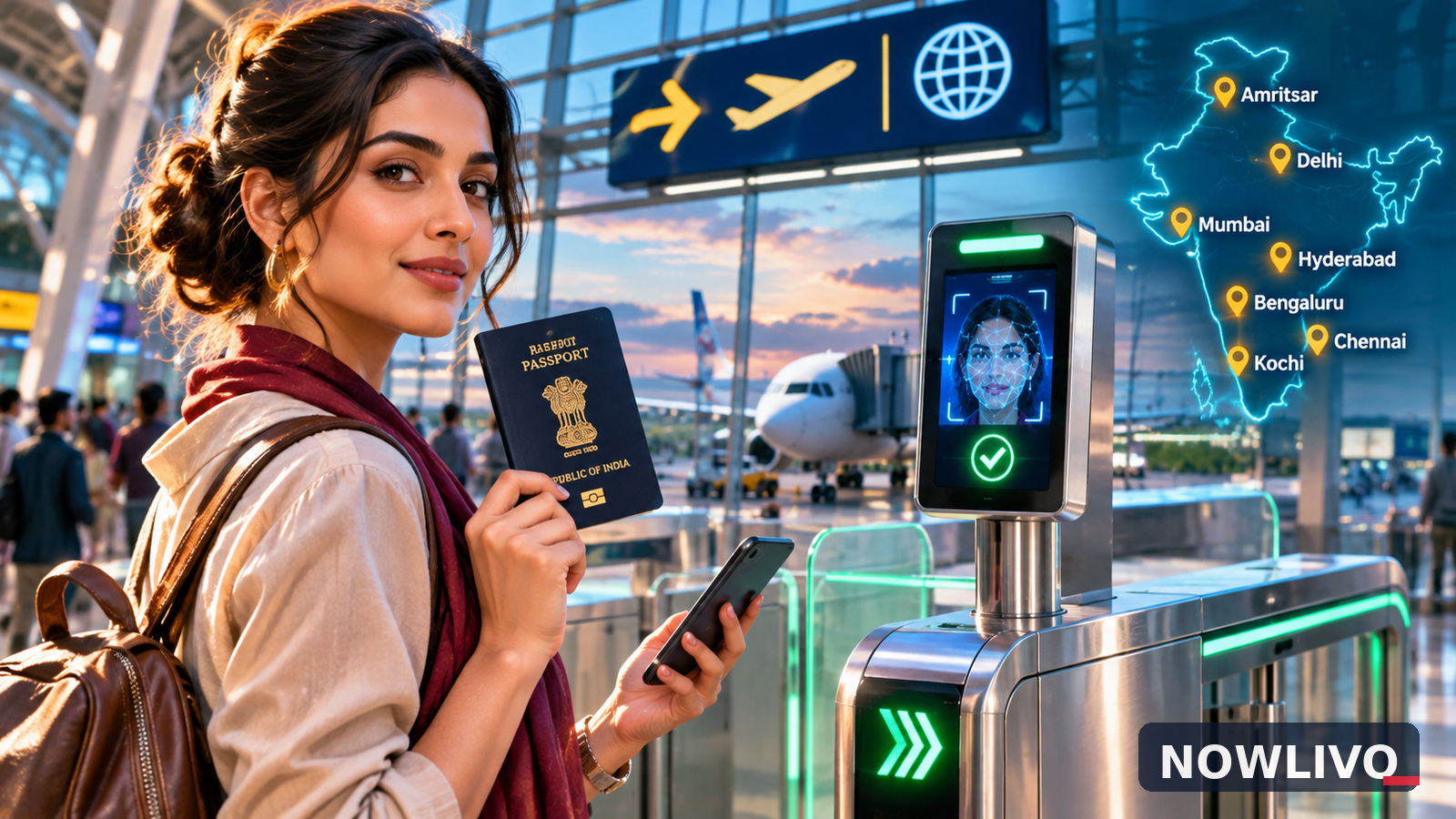
International passengers at seven Indian airports have a new, limited way to try DigiYatra. The Ministry of Civil Aviation said the contactless passenger-processing service has begun pilot operations for eligible Indian nationals carrying e-passports on selected international flights. The seven airports are Delhi, Bengaluru, Hyderabad, Kochi, Mumbai, Chennai and Amritsar. The trial was announced on November 1 and reported on Monday, November 2, giving travellers a concrete service change rather than another proposal for a future rollout.
The qualification is central: this is a pilot, not a nationwide launch for everyone flying abroad. The ministry's announcement describes select Air India and IndiGo flights and only those airport touchpoints where the required infrastructure is installed. Passengers who do not meet the eligibility conditions should continue to follow their airline and airport's normal international-departure procedures.
What is changing at participating airports
DigiYatra already supports biometric processing for domestic passengers at 39 airports. The international trial extends the approach to certain international journeys, allowing eligible travellers to use digital identity checks at terminal entry, security-hold areas and boarding gates where facilities are available. The aim is to reduce repeated manual presentation of travel credentials at those touchpoints while preserving the checks required for international travel.
That does not mean an e-passport or the DigiYatra app replaces every travel document or border-control requirement. Airlines and immigration authorities may still require a physical passport, visa or other evidence under their rules. The ministry's statement concerns the trial of biometric passenger processing at specified airport locations, not an exemption from immigration procedures.
E-passport and NFC phone are part of the setup
The trial uses an e-passport-based verifiable credential created through the DigiYatra mobile application. According to the ministry's explanation, a traveller scans the machine-readable zone of the passport, reads the embedded electronic chip with a compatible smartphone's near-field communication feature, captures a selfie and verifies the information. Those steps create the credential used in the pilot.
The NFC requirement is easy to overlook. A phone may be able to photograph a passport but still lack the capability needed to read its chip. Equally, an older passport without the relevant electronic feature may not qualify for this particular trial. Travellers should check their passport and device before assuming they can use the new service, and they should rely on the official app rather than a third-party download link.
Seven cities, but not every flight
The participating airports span major hubs and regional gateways: Delhi, Bengaluru, Hyderabad, Kochi, Mumbai, Chennai and Amritsar. The announcement identifies select international flights operated by Air India and IndiGo, not every departure by those carriers. A passenger travelling from a listed airport should not interpret the airport's inclusion as proof that the trial is available on a particular itinerary.
The most practical next step is to look for the airport or airline's current instructions for the specific flight. A pilot can be expanded, paused or adjusted as operators gather feedback. Any availability claim should therefore refer to the actual route, terminal and participating service rather than a generic promise that international DigiYatra is now universally active.
The new international pilot also changes the information travellers should check before leaving home. Domestic DigiYatra familiarity does not establish international eligibility: the passport type, smartphone compatibility, participating airline and supported flight all matter. Families travelling together may have different passport or device capabilities, so they should plan for the standard document-checking process rather than assuming that one person's successful enrolment extends to everyone in the group.
Trials run through December, wider deployment planned for 2027
The government expects the trial period to continue through the end of December 2026, with feedback used to shape a broader 2027 rollout. Those dates are planning milestones. They do not establish a guaranteed launch date for every international airport or airline, and they do not remove the need for further operational testing.
The domestic programme provides the scale behind the move. The ministry cited more than 2.65 crore users and over 11 crore journeys facilitated across the 39 domestic airports already using DigiYatra. It also referred to plans to equip 25 additional domestic airports in 2027. International expansion adds a different set of document and border-control considerations, so the pilot should be assessed separately from the established domestic experience.
What travellers should take from the announcement
For eligible e-passport holders on participating flights, the trial may offer a more streamlined airport journey. For everyone else, normal check-in, security and immigration arrangements remain the reliable default. The headline development is the start of actual testing in seven cities, not the completion of a national system. Whether the pilot becomes broadly useful will depend on supported flights, consistent airport equipment and clear passenger instructions during the November–December test period.
Sources reviewed: www.newindianexpress.com, timesofindia.indiatimes.com. Reporting reflects information available on the morning of 2 November 2026 (IST).