Virender Sehwag Reprimands Shehzad Poonawalla Over Priyanka Chahar Choudhary Remark on Rise and Fall 2
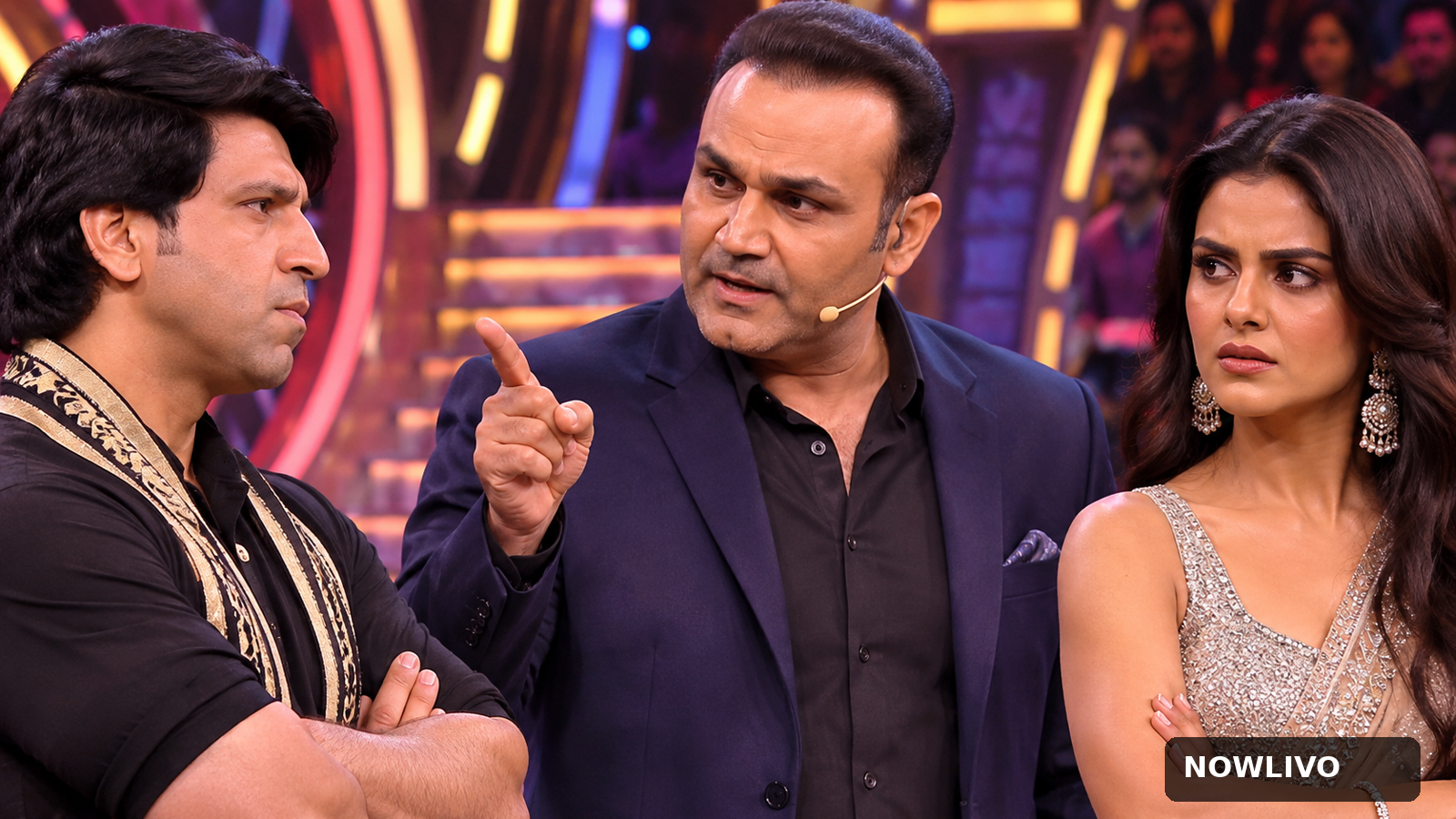
Host steps into a contestant dispute
A disagreement on the Hindi reality programme Rise and Fall 2 has moved beyond the usual back-and-forth between contestants after host Virender Sehwag intervened over a remark directed at Priyanka Chahar Choudhary. According to a report published by The Times of India on November 5, Sehwag reprimanded Shehzad Poonawalla for describing Priyanka as a ‘vamp’ and asked him to withdraw the description. The exchange is a fresh episode-level development rather than a general recap of tensions inside the show.
What the report says happened
The reported confrontation centred on Shehzad’s choice of words about a fellow participant. Sehwag challenged that language in his role as host and told him to take it back. The account establishes that the remark was questioned on the programme; it does not, by itself, establish what motivated Shehzad to use it, how other contestants privately interpreted it, or whether a longer dispute was resolved after the exchange. Those distinctions matter when an argument is reduced to a short viral clip or headline.
Why one word became the issue
In popular Hindi entertainment, ‘vamp’ has a long association with a scheming or antagonistic female character. Used in a competitive reality show, the label can carry a sharper personal implication than an ordinary criticism of a strategy or task performance. That is why the host’s reported objection is notable: the intervention was not simply about who had won an argument, but about the way one contestant publicly characterised another. Viewers can disagree about the seriousness of the remark without assuming a finding of misconduct beyond what the episode report describes.
Priyanka and Shehzad at the centre
Priyanka Chahar Choudhary and Shehzad Poonawalla are both recognisable public personalities, which gives their on-screen exchanges a reach beyond the programme’s regular audience. A disagreement involving either could circulate through fan accounts, reaction videos and entertainment discussions. The strongest verifiable news point at this stage, however, is the host’s intervention and the request for a retraction. There is no basis in the cited report to invent a further apology, punishment, eviction or official complaint.
Sehwag’s role in the moment
Sehwag is known to a large Indian audience through his cricket career, making his involvement in a television argument especially conspicuous. On a reality programme, a host can interrupt a dispute, ask for clarification or challenge the language contestants use. Here, the report specifically describes a reprimand and a request that Shehzad take back his words. It does not establish that Sehwag imposed a disciplinary penalty or that producers changed competition rules. The distinction keeps the account focused on the actual development rather than a presumed consequence.
The difference between a clash and a confirmed sanction
Reality-show coverage frequently blurs three different things: a remark made during an episode, the reaction to that remark and an official action by the programme. The first two are evident in the published account. The third would require a separate announcement or a clearly documented on-air decision. Until such a development is reported, viewers should not read the host’s criticism as proof that a contestant was disqualified or formally censured. A request to retract a statement is significant on its own, without adding an outcome that has not been confirmed.
Questions about fairness need separate evidence
Arguments of this kind can also prompt viewers to ask whether contestants are treated consistently. It is legitimate to examine whether hosts challenge comparable comments from different participants, including celebrities and less-established contestants. But one exchange does not demonstrate selective enforcement, preferential editing or manipulation of voting. Those are distinct claims that would need concrete examples or an attributable response. No such broader finding is established by the report on this incident, and the episode should not be presented as proof of production bias.
Why the story has immediate audience interest
The dispute combines a recognisable host, two public figures and a sharply worded intervention on an active television programme. It is the kind of moment audiences may seek out after encountering a short clip or hearing about the argument from other viewers. Its news value comes from a specific on-air response, not from a speculative theory about behind-the-scenes decisions. That also makes it distinct from a generic contestant profile or an older account of the show’s rivalries.
What remains to be established
The available report does not supply a verified, complete transcript of the entire episode or a separate statement from every person involved. It should therefore not be used to reconstruct additional dialogue or claim a particular private reaction. Any later on-air clarification, direct response from Priyanka or Shehzad, or announced consequence could warrant a fresh update if it materially changes the story. A recycled version of the same reprimand, without new facts, would not.
The development so far
As of the November 5 report, the central development is straightforward: Sehwag challenged Shehzad’s description of Priyanka and asked him to withdraw it during Rise and Fall 2. The episode has an identifiable controversy and a reported host reaction, while the wider questions about intent, fallout and consistency remain open. Keeping those boundaries clear gives readers the essential news without turning an on-screen disagreement into an unsupported allegation.