AR Rahman Responds to Ramayana Song Backlash as November Release Nears
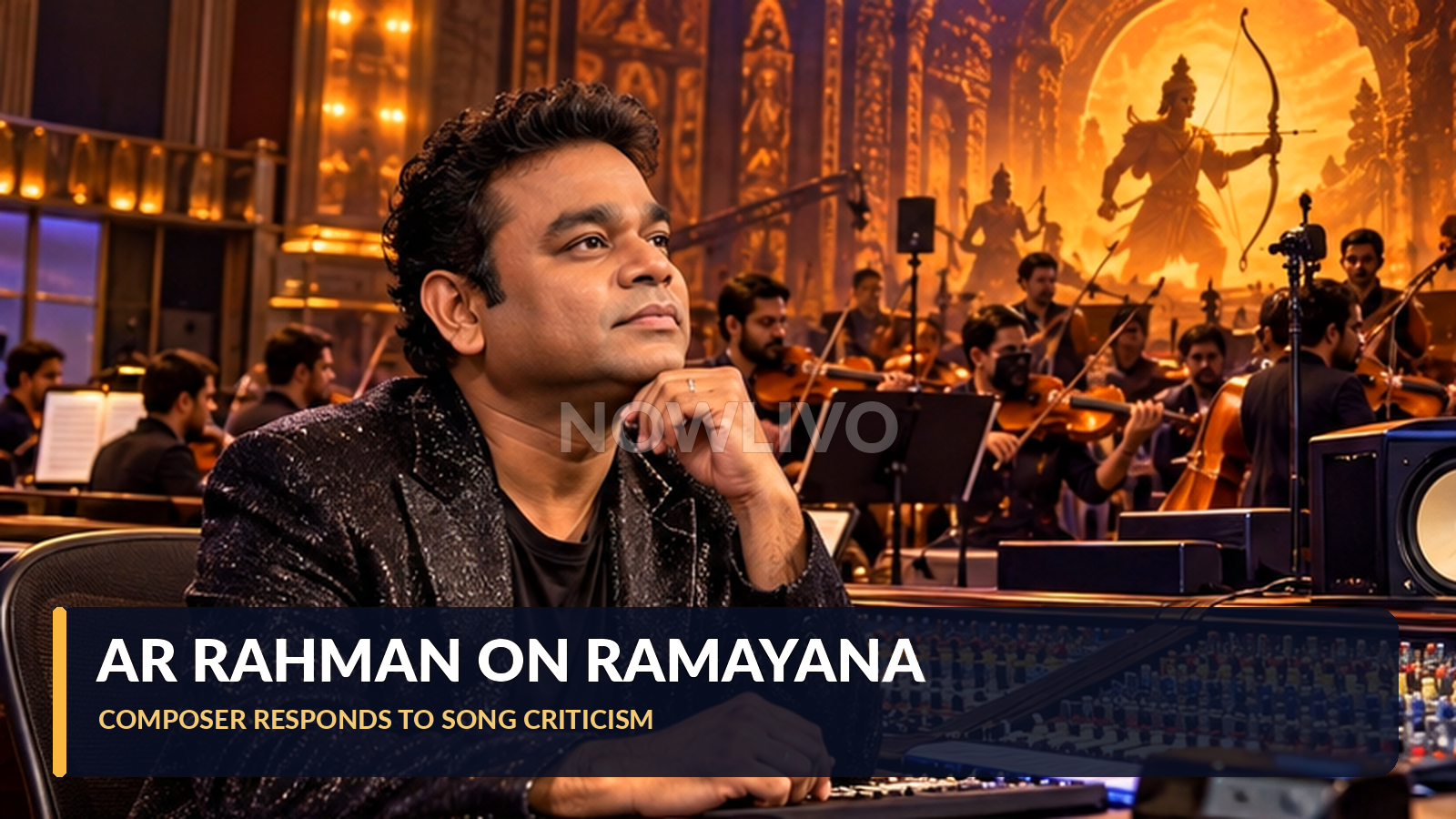
AR Rahman has addressed the criticism surrounding songs from the forthcoming film Ramayana, saying the scale of work involved leaves him little inclination to follow every online reaction. His comments, reported on October 26, add a new voice to a debate that had largely been driven by viewers discussing the sound of two released tracks. With the film scheduled to open in cinemas on November 5, the exchange is unfolding during the final stretch of a high-profile promotional campaign rather than after audiences have seen the complete film.
The composer described a process of repeated experimentation, review and refinement before music is released. He said his son sometimes tells him that people who criticised a track have subsequently changed their minds. That is Rahman's account of the feedback he hears, not independent evidence that all critics have withdrawn their objections. His broader point was that a composer must eventually stand behind work that has already gone through extensive creative testing. The comments were reported in an interview with Hindustan Times and subsequently covered by The Indian Express.
Why the songs have become a flashpoint
The discussion initially gathered around Ravana Tandav, a track associated with the film's portrayal of the Ramayana story. A second song, Mangal Rang, drew another wave of argument about its musical character. Some online listeners questioned whether the sound suited their expectations for a cinematic adaptation of an epic with deep religious and cultural significance. Others defended the decision to bring a contemporary musical vocabulary to material that has been retold across regions and generations. These are reactions by different viewers, not a single verdict on the score.
That distinction matters because the songs have been encountered as standalone promotional releases. A track heard on a phone, separated from the scene it accompanies, may be judged differently once the film supplies performances, editing, dialogue and dramatic context. The producers have chosen to release music before the theatrical opening, so public debate is naturally taking place with incomplete knowledge of how each piece functions in the finished narrative. The argument is as much about expectations for Ramayana as it is about notes, instruments or vocal arrangements.
Rahman's answer puts the focus on creative choices
Rahman said he does not want to repeat his earlier successes indefinitely. His career has included very different styles of film music, and his response stressed the need to keep exploring rather than simply reproducing what audiences associate with a previous hit. That does not mean criticism is irrelevant. It explains why he regards experimentation as part of the assignment, especially on a film attempting to reach viewers across language markets. He described working on songs in five languages as a substantial responsibility and an opportunity to take part in a story familiar to much of India.
The film's music has also attracted attention because Rahman is collaborating with Hans Zimmer, bringing together two composers with established international reputations. Such a partnership can create anticipation, but it also raises the standard by which every teaser and song is judged. Audiences expecting a particular kind of grandeur may respond sharply when a released track takes an unexpected turn. There is no objective way to turn those competing preferences into a definitive pre-release assessment of the entire soundtrack.
What the debate means for the film's opening
The immediate commercial question is whether the music conversation increases curiosity about the November 5 release or changes the expectations of ticket buyers. A visible online argument can make a song more discoverable without proving that it is either broadly loved or broadly rejected. Social-media clips and comment sections also tend to reward emphatic reactions. They should not be mistaken for a representative survey of everyone planning to see the film. Ticket sales, reviews and the reception of the complete sequences will provide different kinds of information once screenings begin.
For viewers, the practical distinction is between a composer's explanation and a change to the production. Rahman's remarks are a public response to criticism; they are not an announcement that songs have been withdrawn, rewritten or replaced. The reporting available on October 26 did not establish any such change. It also did not establish that every listener who objected to Ravana Tandav or Mangal Rang has reversed position. Describing the story as a total retreat by critics would overstate what was said.
A familiar argument with unusually high visibility
Film music has long prompted disagreements between audiences who want a familiar treatment of historical or mythological subjects and artists who see room for reinterpretation. Ramayana places that disagreement on a particularly prominent stage because of the cultural importance of the source material and the attention surrounding the cast, scale and soundtrack. Rahman's remarks do not settle the aesthetic question. They do clarify that the team is presenting the music as a deliberate creative choice rather than a rushed response to internet trends.
The next meaningful development will be the release of further official material, a production announcement about the music, or the response to the completed film after November 5. Until then, the news is Rahman's newly reported defence of his process and his refusal to let the loudest comments dictate the work. That is a concrete update in an active entertainment story, without requiring a prediction about the box office or the public's eventual verdict.