Commercial LPG Cylinder Price Rises ₹10 as Aviation Fuel Gets Costlier From November 1
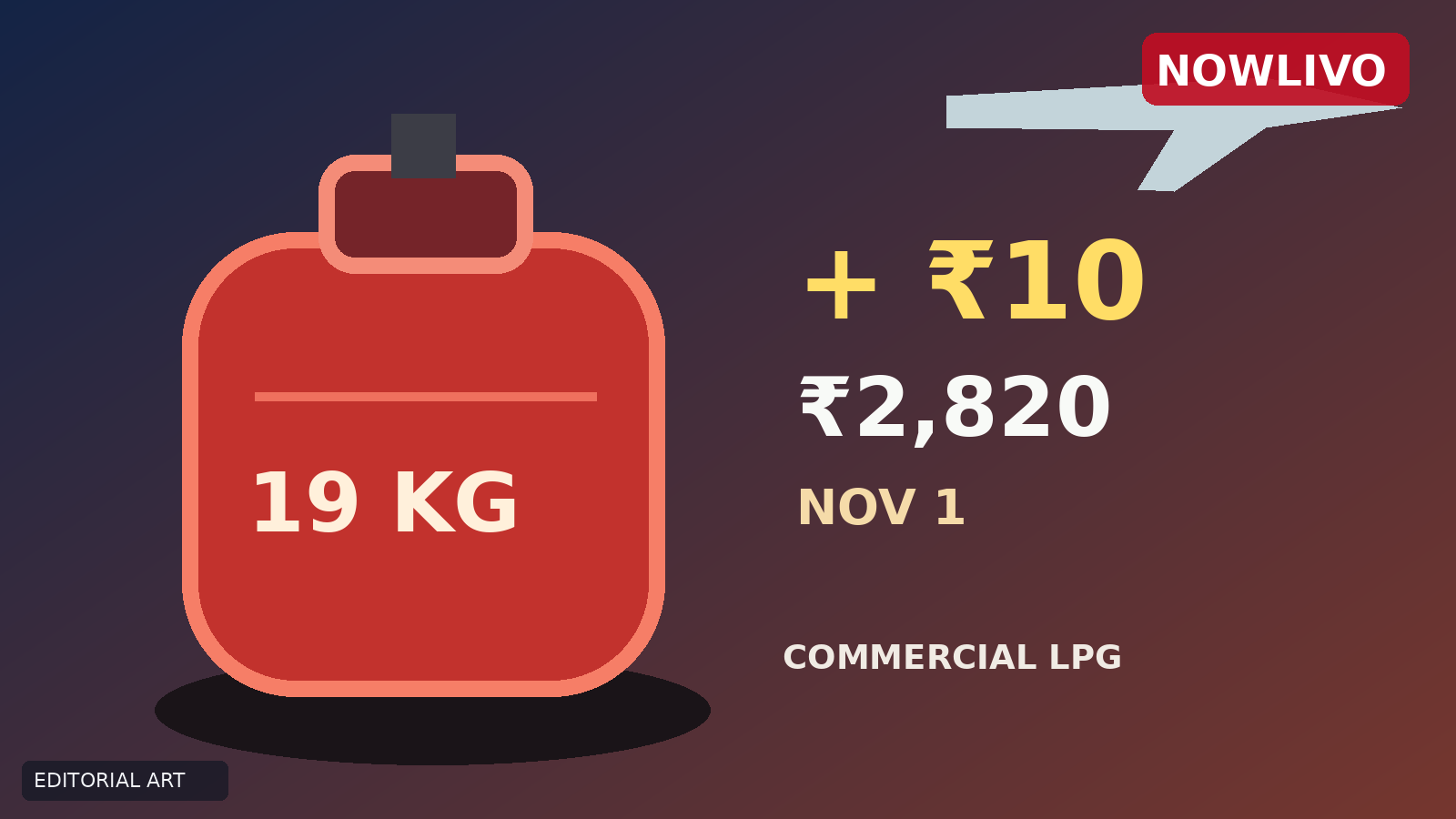
The price of a 19-kilogram commercial liquefied petroleum gas cylinder rose by ₹10 to ₹2,820 on Sunday, November 1, as state-run oil marketing companies implemented their latest monthly revision. Aviation turbine fuel also became costlier, rising by about ₹1.37 per litre to ₹138.50, according to published price updates. The changes affect businesses that rely on commercial cooking gas and airlines that buy jet fuel, while the price of domestic household LPG cylinders was reported to be unchanged.
The distinction between commercial and domestic cylinders is the first thing readers should understand. The ₹10 increase applies to the 19-kilogram commercial product commonly used by hotels, restaurants and other businesses. It is not an announcement that every household's 14.2-kilogram cooking-gas refill has risen by the same amount. Mixing those categories can create unnecessary confusion when price updates spread through messaging apps.
A third month of pressure on commercial cooking gas
The November increase follows a ₹62.50 rise in October and a smaller increase in September, according to reporting on the monthly price changes. The new rate of ₹2,820 therefore extends a period of higher costs for businesses that use commercial LPG regularly. The effect on any individual restaurant depends on how many cylinders it consumes, the share of fuel in its total expenses and whether it can absorb the change.
A ₹10 rise on a single cylinder may look modest compared with the overall price. For a large kitchen buying many cylinders, repeated monthly changes can nevertheless become part of a broader cost problem involving food ingredients, rent, wages and delivery. Businesses may respond in different ways, and the increase does not automatically mean every menu will become more expensive immediately.
Jet fuel also rises from November 1
Oil companies raised aviation turbine fuel prices by approximately ₹1.37 per litre, taking the reported rate to about ₹138.50 per litre. The revision followed a sequence of earlier increases and added to airlines' operating-cost pressures. Fuel is one of the largest variable costs in commercial aviation, so a sustained upward trend can influence the economics of routes and ticket pricing.
That does not mean a specific flight ticket has increased because of Sunday's change. Airlines set fares using demand, competition, advance-booking patterns and other costs as well as fuel. A higher fuel price may create pressure on margins, but the effect on any particular passenger is not immediate or uniform. Travellers should check actual quoted fares rather than assume a fixed surcharge has been introduced.
What stayed unchanged
Reporting on the November 1 revision said household LPG prices were unchanged. Petrol and diesel prices were also reported to be steady in the same update. Those details are important because the headline 'LPG prices rise' can be interpreted too broadly. A consumer buying a household refill and a restaurant purchasing a commercial cylinder are not necessarily paying prices that move together.
Price lists can also vary by city because of taxes, transportation and distribution arrangements. The ₹2,820 figure was reported for the relevant benchmark commercial cylinder, but readers should consult the current price quoted by their authorised distributor for the location and product they actually purchase. A single national headline is not a substitute for a local invoice.
Why oil benchmarks matter
Oil marketing companies revise commercial LPG and aviation fuel rates in response to a range of international and domestic cost factors. Reports on the latest increase pointed to firm global energy benchmarks and the impact of continuing conflict in West Asia. The link between global prices and local bills is real, but the precise calculation for a particular month is not established by one day's crude-oil movement alone.
For businesses, the practical significance lies in the pattern. Commercial LPG has seen multiple monthly adjustments, and aviation fuel has also risen repeatedly. Companies operating with tight margins may monitor those trends closely when preparing budgets and deciding how much price volatility they can absorb.
Businesses should use the correct comparison
A useful way to assess the new rate is to compare the current commercial-cylinder invoice with the previous month's invoice for the same product and location. Comparing a 19-kilogram commercial cylinder with a household refill, or comparing rates from different cities without noting the difference, can produce a misleading percentage change. Airlines face a similar issue when analysts compare fuel costs: the relevant question is how much fuel a carrier buys at the revised rate, not simply whether the headline number rose. The November revision is measurable, but its effect on individual bills and fares depends on consumption and pricing decisions.
The confirmed November 1 development is a ₹10 increase for the 19-kilogram commercial LPG cylinder and a fresh aviation-fuel rise. Household LPG rates were unchanged in the reporting reviewed. The story is a new price announcement with immediate commercial relevance, not a generic list of monthly rule changes.
Reporting reviewed: indianexpress.com, www.livemint.com.