
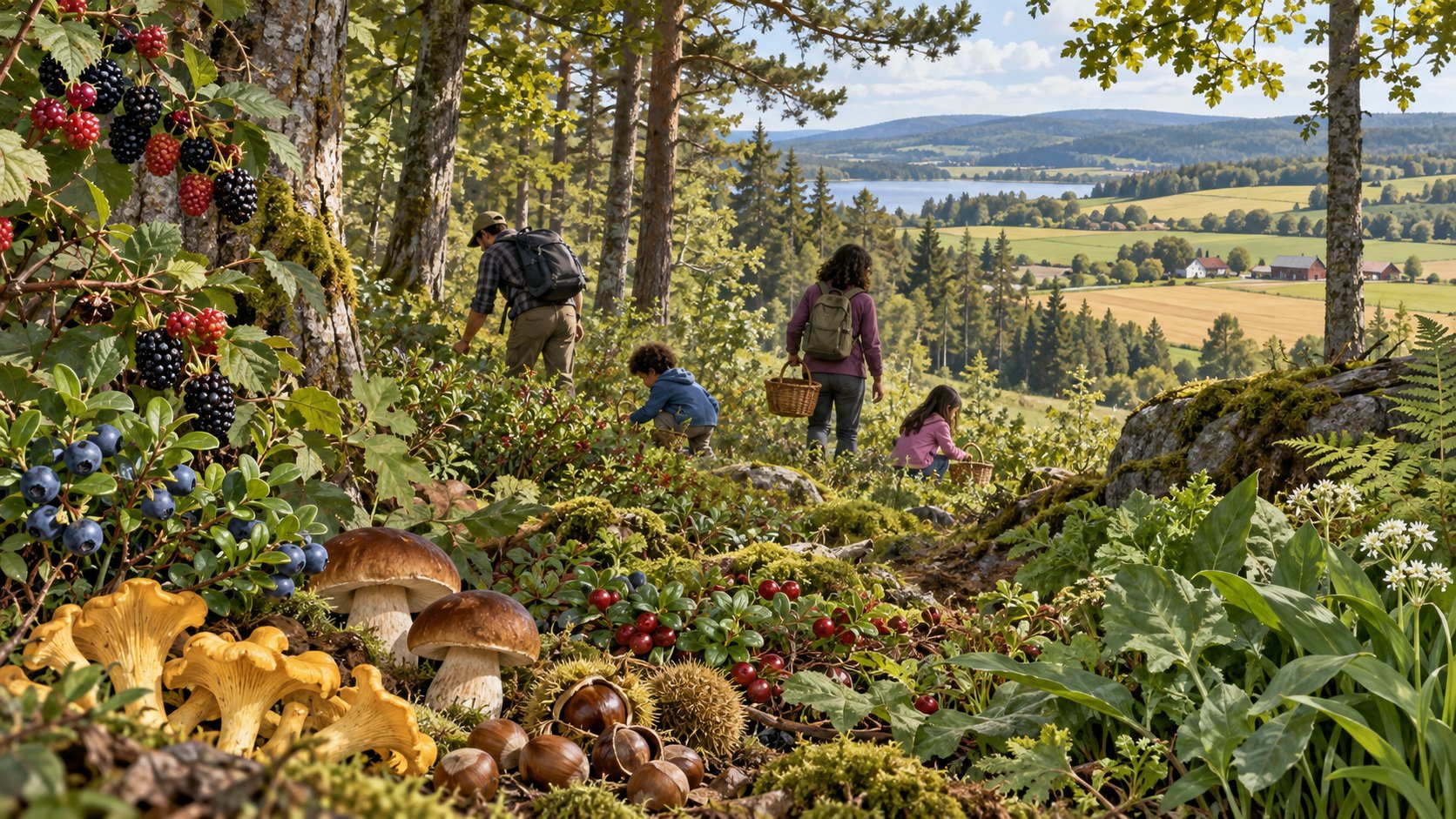
FAO Report Puts Forest Foods Back in the Nutrition Picture
Forests supply more than timber and carbon storage: they also provide food and income that conventional agricultural measures often miss. A September 15 report from the UN Food and Agriculture Organization says at least 10,000 wild species are consumed directly as food, from fruits and nuts to leaves, mushrooms and tubers. It urges countries to account for those contributions in food and nutrition policy.

The report says more than five billion people rely on forests to some extent for livelihoods, a broad measure that should not be confused with five billion people eating wild foods every day. The degree of reliance varies sharply by place. In some forest-dependent communities, wild foods can supply a large share of dietary protein, while elsewhere forests support farmers indirectly through water, pollination and soil protection.
This distinction matters when governments plan food systems. A crop yield statistic may show the harvest from a field but miss the seasonal food or income that households obtain nearby. If a forest is degraded, the effect can appear in household diets and resilience before it is obvious in aggregate farm output. The FAO says fragmented definitions and data have kept these contributions undercounted.
The report proposes integrated, locally tailored policy, sustainable management, stronger data and public investment. Those recommendations face a real trade-off: food gathering must remain viable without depleting the ecosystem that supplies it. The practical next step for policymakers is to measure what local communities actually use and protect the conditions for continued access, rather than treating a forest as empty land outside the food system.