
Google Cloud expands India agentic AI drive with boAt, Cropin and Pine Labs
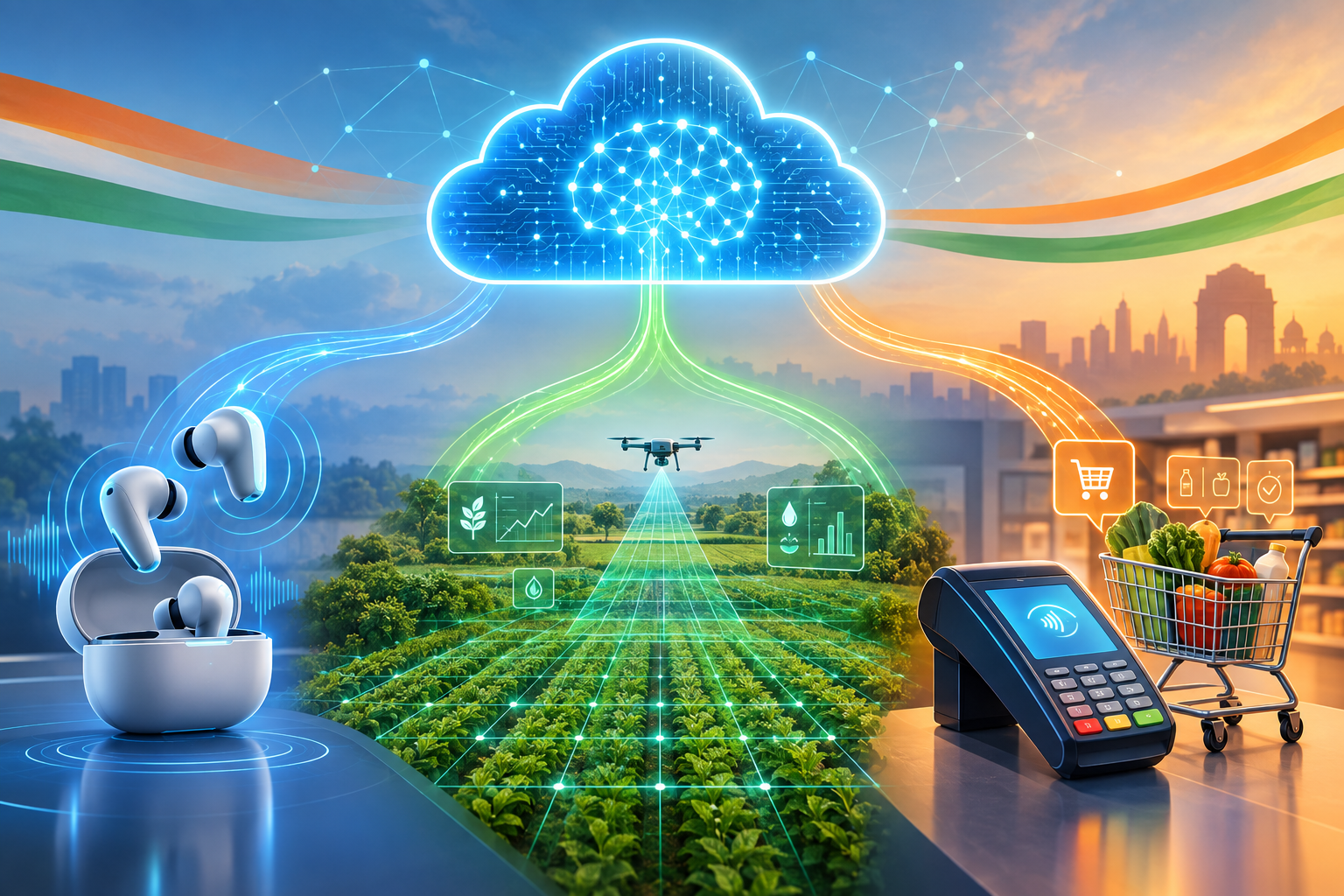
Google Cloud is widening its agentic artificial intelligence push in India through collaborations with consumer electronics company boAt, agricultural technology firm Cropin and payments platform Pine Labs.
The companies presented their work at a Google Cloud event in Bengaluru on September 24, positioning India as a production market for AI agents that can execute multistep tasks rather than simply generate answers. The projects combine Google’s Gemini models and cloud infrastructure with industry-specific devices, datasets and transaction systems.
However, the event brought together a mixture of new plans, existing products and claimed operational improvements. No aggregate investment figure, contract value or revenue forecast was disclosed.
boAt brings Gemini into audio devices
Imagine Marketing, the parent company of boAt, is using Gemini for Crest AI, a voice-first platform available with selected audio products. Its functions include conversational questions, device controls, music discovery, troubleshooting, brainstorming and translation. Supported Google services can also provide access to tasks involving email, calendars and reminders.
boAt lists a 12-month standalone Crest AI pack priced at ₹399, providing the partnership with a visible subscription model beyond hardware sales. The company also lists compatible earbuds, though the experience depends on an Android phone and an internet connection for cloud-based conversational processing.
The confirmed deployment is narrower than the broad idea of a universally multilingual AI companion. At launch, voice recognition is limited to English, including Indian accents, while translated output can be provided in other languages. The quality of conversations, response speed and reliability under everyday network conditions have not been independently established.
Cropin applies AI to agricultural decisions
Cropin’s partnership uses Gemini and Google Cloud infrastructure to make complex agricultural information accessible through natural-language questions. Cropin Sage, launched in 2024, translates user requests into database queries and presents information about crops, weather, acreage, soil conditions and expected yields.
The company has since expanded its agentic approach through OrbitAI, which is designed to coordinate agricultural data and models for farmers, food companies, sourcing teams and governments. Potential applications include predicting regional harvests, identifying disease risks, planning irrigation responses and guiding supply-chain decisions.
Cropin says its migration to Google Cloud lowered infrastructure costs, accelerated analytics and allowed a relatively small technical team to increase its output. Those figures are company-reported rather than independently audited. Agricultural recommendations also carry higher consequences than routine office automation: inaccurate weather, disease or yield assessments could affect planting decisions, procurement and farmer income. Human agronomic review therefore remains important, particularly when local field data are incomplete.
Pine Labs targets AI-led commerce
The newest and most commercially ambitious collaboration is with Pine Labs, which wants Indian merchants to participate in purchases initiated or completed by AI agents.
Pine Labs plans to use the Gemini Enterprise Agent Platform for catalogue enrichment, search and custom commerce agents. An advertising agent is intended to create and place campaigns across services including Search, YouTube and Pine Labs point-of-sale devices. A separate multi-agent system called Jarvis is being developed to assist merchants with programme creation, diagnostics and customer support on the Woohoo platform.
For transactions, Pine Labs says its P3P payment layer will initially support UPI inside agent-driven purchasing flows. Its Grantex system is intended to provide records that make transactions auditable, while support for Universal Commerce Protocol and Agent-to-Agent frameworks is designed to connect merchants with external AI services.
These elements are confirmed development plans, but claims that they will give smaller merchants enterprise-level reach remain promotional. Adoption will depend on pricing, catalogue quality, payment dispute handling, consumer consent and whether merchants retain meaningful control over automated advertising and sales decisions.
Commercial opportunity meets governance questions
The three partnerships give Google Cloud multiple routes into India’s AI market: consumer subscriptions through boAt, enterprise and government agricultural workloads through Cropin, and payment-linked commerce through Pine Labs. They can also drive demand for cloud computing, Gemini usage, data storage and implementation services.
Google is recruiting forward-deployed AI engineers in Indian cities to work directly with customers on production systems. That creates specialised engineering roles, but wider automation could change work performed by customer-support staff, marketers, analysts and merchant operations teams. None of the companies announced layoffs connected to these projects.
Data governance will be central to deployment. Voice requests may contain personal information, agricultural platforms can hold commercially sensitive farm and supply data, and commerce agents may process identity and payment records. Businesses will need clear consent controls, access limits, retention policies, audit logs and human approval for consequential actions as India phases in its digital personal-data framework.
The partnerships demonstrate genuine products and infrastructure, but not yet proof that autonomous agents can operate reliably at national scale. Their commercial impact will depend less on demonstrations and more on measurable accuracy, transparent costs, regulatory compliance and the ability to correct an agent before an automated mistake becomes a financial or operational one.