Gwalior Temple Truck Tragedy Raises Questions Over Traffic Controls
The disaster and the investigation
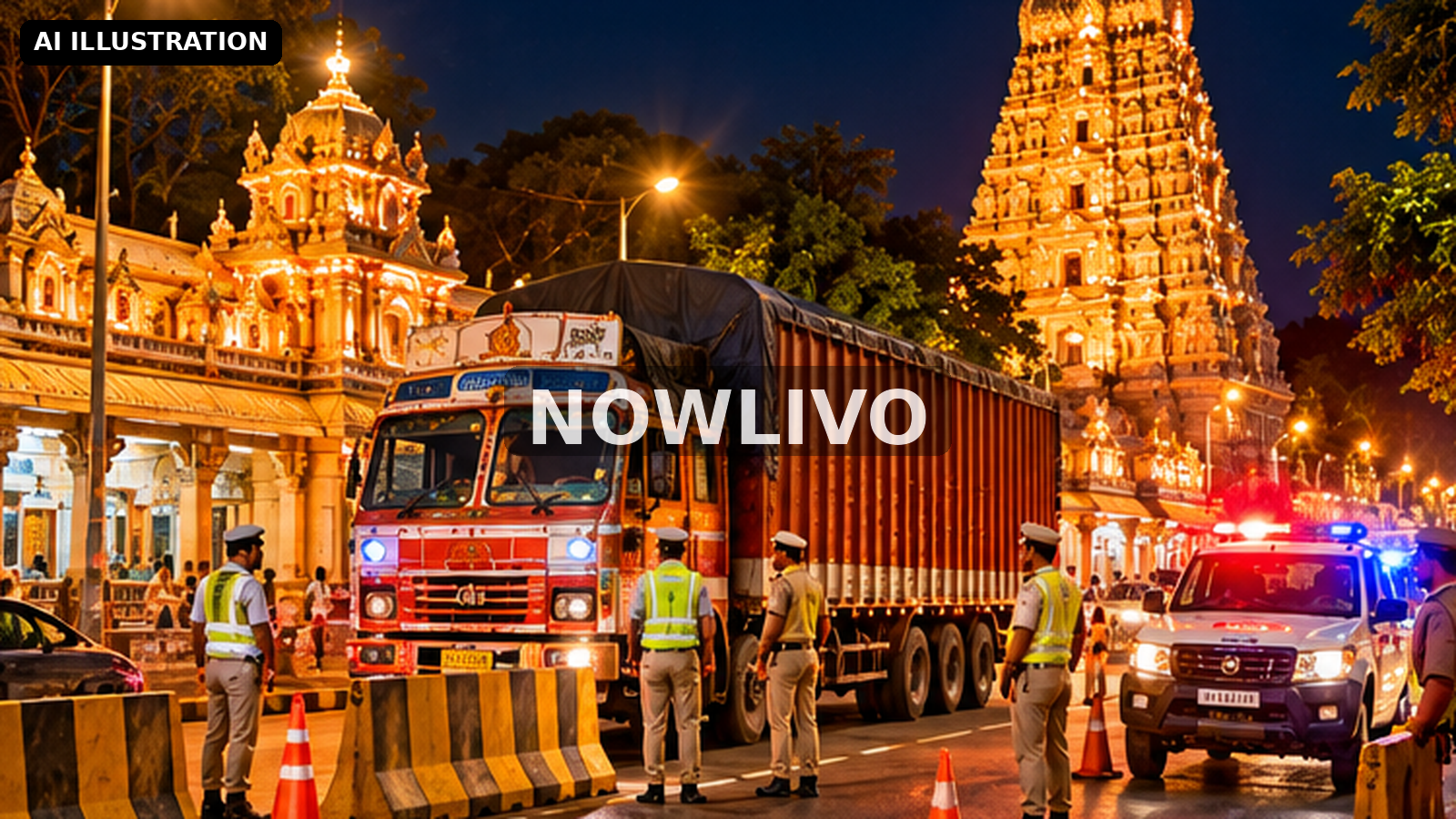
Fifteen people were reported killed and at least 29 injured after a loaded truck lost control near the Sheetla Mata temple in Gwalior, Madhya Pradesh. The vehicle struck devotees gathered on a route used during Navratri celebrations, according to The Indian Express reporting updated around October 19. The crash happened in the early hours of Sunday, when families were visiting the temple. Authorities have ordered an inquiry into how the truck reached a restricted stretch and what caused the driver to lose control.
The number of people affected is central to the story, but it is not the only question. Families have asked why a heavy vehicle could enter an area where special restrictions were expected. Reports say the truck was carrying paddy and was moving downhill before it struck people and a wall. Investigators will need to determine whether route guidance, road design, vehicle condition, driver decisions or failures at checkpoints contributed. These are distinct possibilities, and none should be declared the cause before the evidence is examined.
Families demand answers
Relatives interviewed after the crash described the confusion of searching for loved ones and the shock of learning that several members of a family had died. Their accounts reveal why the issue has become a public-safety controversy rather than only a traffic incident. When crowds are invited or permitted to gather at a religious site, authorities must anticipate vehicle movement, pedestrian bottlenecks and the possibility of an unexpected approach. Families want to know who was responsible for enforcing restrictions and whether the arrangements were adequate.
Grief and anger do not establish negligence by a particular official, but they do identify questions the inquiry must answer. The public needs a clear timeline showing when barriers were placed, who staffed checkpoints, whether any warnings were issued and how emergency services reached the victims. Witness statements may differ because the event unfolded quickly. Investigators should preserve traffic records, available video and vehicle inspection findings rather than relying on a single explanation circulating online.
Government response and compensation
Madhya Pradesh officials announced action involving police personnel and financial assistance for affected families, while a magisterial inquiry and vehicle examination were reported. Those responses acknowledge the seriousness of the incident but should not be mistaken for a completed finding of fault. Administrative suspensions, criminal charges and compensation address different issues. One concerns immediate accountability, another possible offences and a third the needs of survivors. Each requires its own process and clear public communication.
Compensation can help with urgent costs, but it cannot replace long-term medical support for people who suffered serious injuries. Survivors may need rehabilitation, income support and assistance with documentation. The public response should also consider the safety of witnesses and families as investigators reconstruct the scene. An effective inquiry ought to recommend specific changes that can be tested before the next major gathering rather than issuing only broad appeals for caution.
Preventing another crowd-road disaster
Large religious events often combine narrow approaches, temporary stalls, pedestrians and vehicles that are unfamiliar with local restrictions. A prevention plan needs physical barriers capable of stopping an inappropriate vehicle, clear diversion signs well before the crowd and coordination among police, transport authorities and event organisers. Digital navigation instructions can be helpful, but they are not a substitute for visible road controls. A driver approaching a prohibited route should encounter multiple opportunities to turn away safely.
The next meaningful updates will be the findings of the inquiry, the vehicle inspection and a detailed account of checkpoint decisions. Readers should distinguish confirmed measures from proposals and watch whether recommendations are implemented. The tragedy has already shown the human cost of a failure in a crowded environment. The central accountability question is whether officials can explain how that failure occurred and change the system before another festival brings thousands of people onto the same roads.
Further context and unresolved questions
The crash also raises a question about how temporary festival restrictions are communicated to drivers who may not live in the area. A road closure is effective only if warning signs and diversion routes are placed far enough in advance for a heavy vehicle to turn safely. Barriers close to a crowded entrance may prevent access but can create another hazard if a truck has already entered a steep approach. Organisers and traffic engineers should examine the full route rather than only the final checkpoint. If a navigation app directed the vehicle toward a restricted road, that may explain part of the journey, but it would not by itself establish the legal responsibility of the driver or the adequacy of police controls. Vehicle condition, braking performance and driver decisions remain separate lines of inquiry.
After a mass-casualty incident, officials often announce compensation and disciplinary action quickly because families need immediate support and the public expects a response. Those measures can be appropriate while a formal inquiry continues, but they should not replace a transparent final report. The inquiry should explain why restrictions existed, whether staff were assigned, how the truck crossed the boundary and which preventive steps are technically feasible. It should also examine ambulance access and crowd evacuation after the collision. The families’ demand for answers is not satisfied by a general promise of improved safety. Specific changes, such as better signage, robust vehicle barriers and a documented traffic plan for future festival dates, can be independently checked. Accountability is strongest when the public can see whether recommendations have actually been implemented.
Further practical considerations
A separate safety audit could examine whether emergency vehicles had clear access to the site and whether crowds could be moved away from the road once the truck entered. Those details affect survival and response time. They also help distinguish measures that would have prevented the collision from measures that might have reduced injuries after it occurred.