Haryana Paddy Procurement Delay Sparks Shahabad Protest: What Farmers and Officials Say
Farmers seeking an earlier start to government paddy purchases blocked a stretch of National Highway 44 near Shahabad in Haryana’s Kurukshetra district on Tuesday, 22 September. Police used tear gas and water cannons during the confrontation. The central question behind the protest is the gap between crop arrivals in grain markets and the scheduled opening of purchases at the minimum support price (MSP).

How the dates diverged
The Union government’s stated procurement window for Haryana runs from 1 October to 15 November for the 2026–27 kharif marketing season. Haryana had asked the Centre on 15 September to move the opening to 20 September, citing early arrivals and farmers’ difficulty selling their produce. The farmers’ organisation Bharatiya Kisan Union (Charuni) pressed for purchases to begin sooner and called the 22 September blockade after that had not happened.
Its president, Gurnam Singh Charuni, said produce was already lying in mandis and growers risked having to wait or sell below MSP. Police and local officials held talks before the highway action. Reports from the scene agree that traffic was interrupted and police deployed water cannons and tear gas; the duration and any detention totals should not be inferred from those accounts.
Why an early harvest does not automatically enter the MSP system
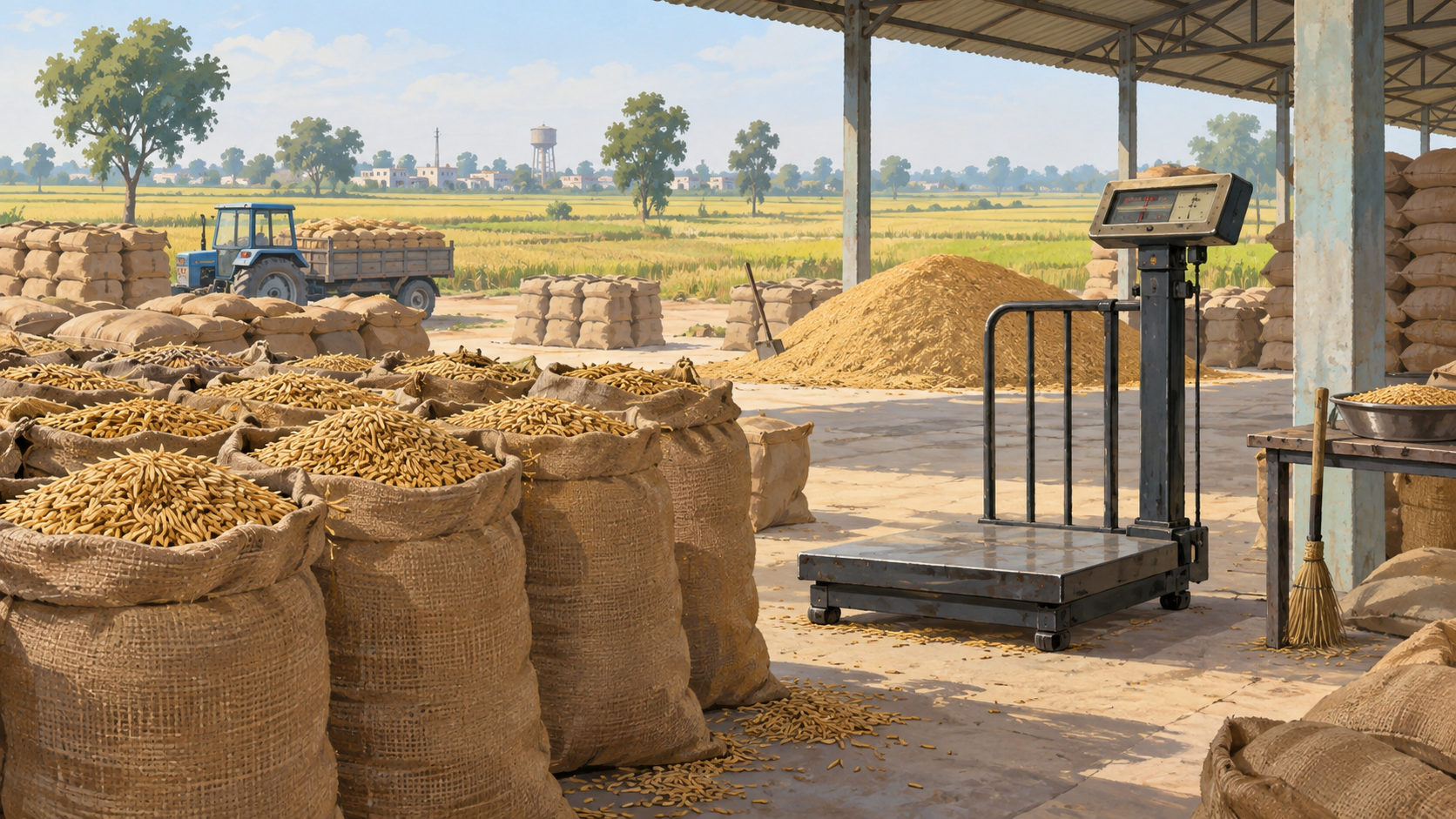
The MSP for common paddy this season is ₹2,441 per quintal, and ₹2,461 for Grade A. Those announced prices matter only where a crop meets procurement conditions and an authorised buyer actually purchases it. Officials have pointed to a 17% moisture ceiling and crop verification requirements; freshly harvested grain can exceed that moisture threshold. Farmers say their immediate demand concerns dry paddy already delivered to markets.
Haryana agriculture minister Shyam Singh Rana has said that a substantial share of arrivals is basmati, which is also bought privately, and that official procurement will begin after field verification. That distinction does not resolve the concern of growers bringing eligible non-basmati paddy early. It helps explain why the parties can describe the same market arrivals differently.
The issue to watch is a formal revised start date or an operational purchasing order, followed by actual procurement at mandis. A request from the state to the Centre is not itself such an order. Farmers also need clear information on quality testing and verified crop registration so that an earlier calendar date translates into sales.