Jio Platforms Set for October 28 Stock-Market Debut After Record $3.2 Billion IPO
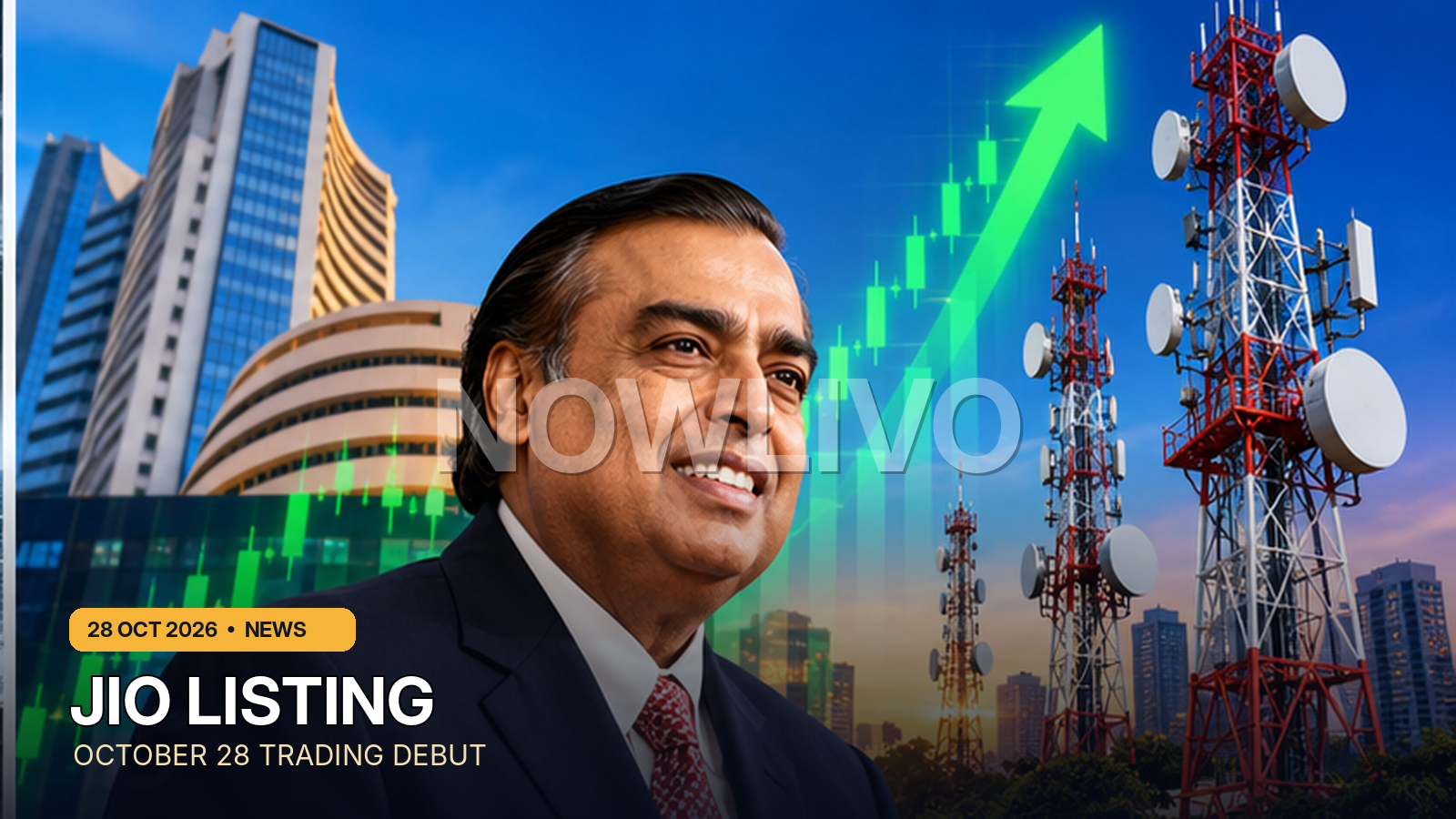
Jio Platforms is scheduled to make its Mumbai stock-market debut on Wednesday, October 28, after an initial public offering that attracted extraordinary demand from investors. The telecom and digital-services business controlled by Mukesh Ambani raised about $3.2 billion and drew roughly $77 billion in bids, Reuters reported. Its listing is a new milestone beyond the earlier subscription story: investors who applied for shares will now watch how the market values the company once regular trading begins.
The distinction between an IPO's subscription figures and its first trading price is important. Oversubscription tells investors how many shares people requested relative to the amount offered; it does not guarantee a particular listing-day return. Jio's offer was subscribed more than 22 times, making it India's most subscribed IPO by the measure reported by Reuters. That extraordinary demand sets expectations, but the actual opening and closing prices will be established by transactions on the exchange, not by pre-listing predictions.
What makes the listing so closely watched
Jio is one of India's largest consumer-facing digital businesses, serving more than 530 million customers. Its activities extend from mobile connectivity into broadband and other digital services, giving investors exposure to a company that many households interact with every day. The business is backed by investors including Meta and Google's parent Alphabet. Reuters said the IPO valued Jio at up to $108.3 billion, putting it on course to rank among India's most valuable listed companies if trading begins near that valuation.
The stock-market debut is also a test of Reliance Industries' longer-term strategy. Mukesh Ambani has been repositioning the group beyond its traditional oil-and-chemicals operations into consumer and technology businesses. A separately traded Jio share gives investors a more direct way to value the digital unit rather than assessing it only as part of the larger conglomerate. It also creates a visible market benchmark for future capital allocation and business performance.
The grey-market premium is a signal, not a result
Ahead of the listing, Reuters reported that unregulated grey-market trading suggested a premium of roughly 22 percent for Jio shares. That is an indication of sentiment among participants in a market outside the official exchanges. It is not an exchange opening price, a company forecast or a promise that allotted investors will make a 22 percent gain. Grey-market quotations can change quickly and may not represent the wider pool of buyers and sellers when formal trading starts.
Readers checking listing-day updates should separate three numbers: the IPO offer price, the first traded market price and the price at the close of the session. They answer different questions. The opening shows where initial buyers and sellers met; the closing reflects the day's later balance of demand and supply. A stock can open strongly and still fall later, or begin cautiously and attract buyers. Until exchange data is available, any claimed listing gain remains a projection.
A record offering in a crowded IPO year
India has been unusually active in new listings in 2026. Reuters cited LSEG data showing 246 listings so far this year, the highest number globally, while India ranked fourth by money raised at about $13.5 billion. Jio's offering stands out within that broader market because of its scale and the breadth of institutional interest. The record subscription is a major capital-market event, but investors will still judge the business by future revenue, margins, investment requirements and its ability to grow without sacrificing profitability.
Large technology and telecommunications companies often require substantial spending on networks, data centres and customer acquisition. Jio's subscriber base is an advantage, yet it also creates expectations for reliable service and continuing investment. Its relationships with major global technology groups may support new offerings, but they do not remove competitive pressures or regulatory uncertainty. A listing changes ownership and market visibility; it does not automatically change the economics of running the network.
Who may appear at the listing ceremony
Akash Ambani, who has taken a leading role in the group's telecom and digital operations, was expected to attend the listing ceremony, an industry source told Reuters. The company had not responded to Reuters' request for comment on that detail at the time of publication. Attendance expectations should therefore not be written as a confirmed appearance. Investors are likely to focus more closely on the exchange's first price and trading volumes than on the ceremony itself.
The offering also comes as competition in India's connectivity market expands beyond traditional mobile services. Satellite broadband, enterprise technology and cloud computing are potential growth areas, but the timing and commercial returns from those businesses remain uncertain. Earlier public disputes involving Starlink and Indian telecom rules do not establish what Jio's newly listed shares should be worth. The company will be assessed on its own disclosures and results.
What happens next for investors
The most useful listing-day information will be the official trading symbol, opening price, first-session range and volume as published by the exchanges. Investors should verify those details through the exchange or their broker instead of relying on forwarded screenshots or unverified messages promising guaranteed gains. At the time of this early-morning report, Jio was set to list; its actual debut price had not yet been established. That is the key line between a verified scheduled event and a result still to come.