Kavach Rollout Has Several Milestones: Approval, Installation and Commissioning Are Different
Indian Railways made two Kavach 4.0 announcements in September 2026 that sound similar but mark very different progress. It approved a ₹252 crore project covering 607.7 route kilometres of Lucknow Division on September 19. Four days later, it reported commissioning an upgraded 108 route kilometres between Malkajgiri and Kamareddi in Telangana. The first is permission and funding for work; the second is a section brought into use. Neither figure should be casually added to a national total of operational Kavach 4.0.

Why the milestones differ
Approval identifies a section and authorises a project, but the necessary equipment still has to be installed, integrated and tested. Installation in turn is not the same as commissioning, the point at which the system is accepted for operation on a particular stretch. Even commissioned trackside equipment does not, by itself, mean every train using that stretch carries compatible onboard equipment.
The Telangana section is particularly instructive because Indian Railways described it as an upgrade from Kavach version 3.2 to 4.0. It said experience from 1,465 route kilometres of version 3.2 on South Central Railway informed the newer version. That earlier distance is not an additional claim of 4.0 coverage. Version, route and operating status need to be stated together for a meaningful comparison.
What has to connect
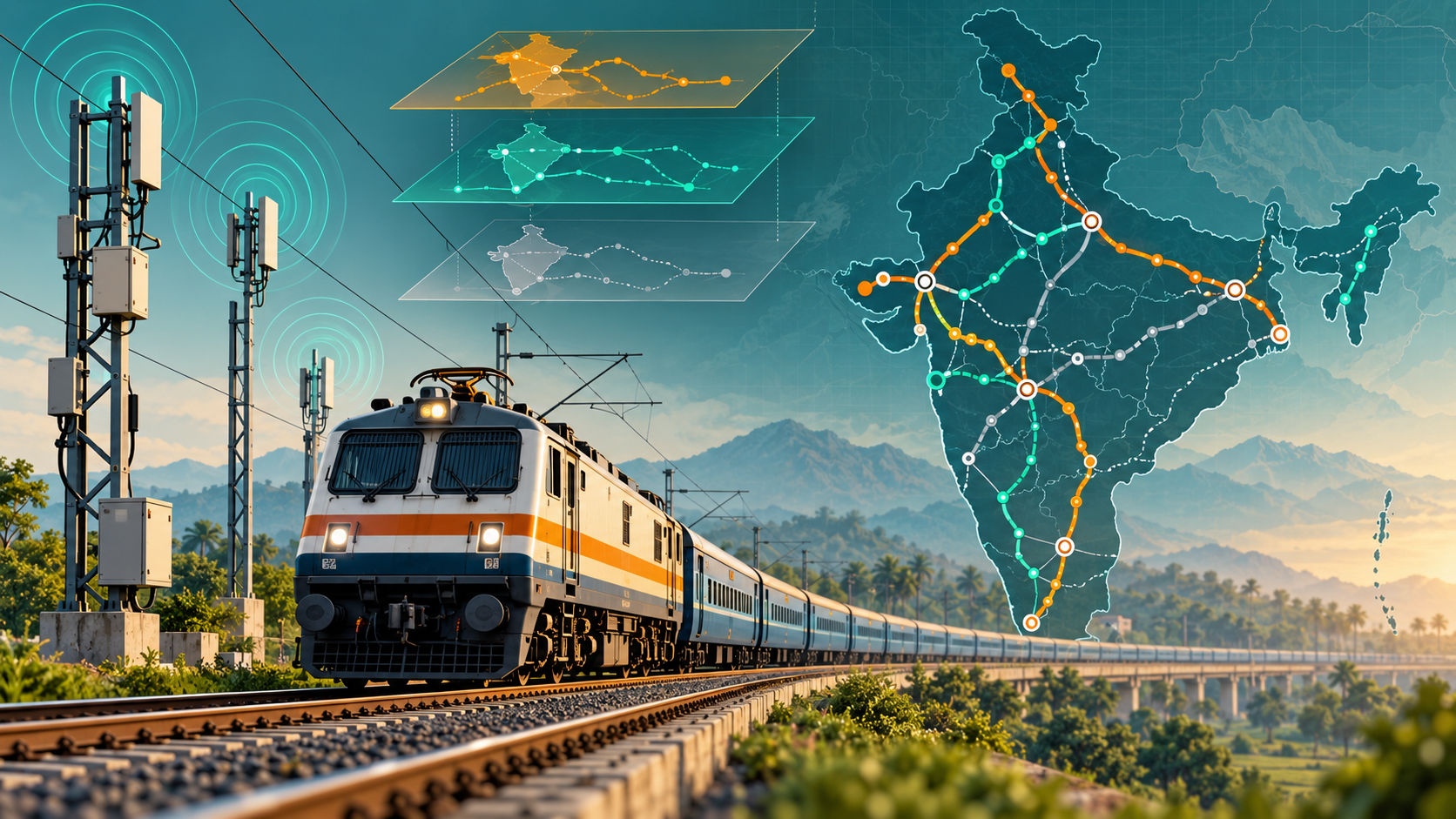
Kavach is an automatic train protection system intended to assist the driver with speed compliance and apply brakes in specified circumstances. The railway says a deployment involves station and block equipment, RFID tags along the track, telecommunications towers, optical fibre and onboard units in locomotives. Each part has to exchange reliable information with the others and with existing signalling.
Version 4.0 introduces more precise location information, better signal-aspect information in larger yards, station-to-station optical-fibre interfaces and direct interfaces with electronic interlocking systems, according to Indian Railways. These are practical integration questions, not merely software version labels. A busy yard, a locomotive fleet and a long open section may create different installation and testing demands.
How to read the next announcement
A reader can ask five questions when a new Kavach project is announced: Is the route approved, being installed, tested or commissioned? Which version is involved? What is the route length, rather than total track length? Are compatible locomotives equipped? What evidence is given about operational use? A funding approval answers only the first of these.
The distinction also prevents two opposite mistakes. Calling an approved route protected today gives readers a false sense of completion. Dismissing a commissioned section because a wider network plan remains unfinished ignores a real milestone. Progress is better measured as a sequence of verifiable sections moving from approval through integration to use.
What the system can and cannot promise
Automatic train protection is a safety layer, not a guarantee that accidents cannot occur. Its stated functions address risks such as passing a signal at danger and overspeeding in relevant conditions. Safe railway operation also depends on track condition, maintenance, human procedures and other systems. Indian Railways says Kavach requires a high level of safety certification, underscoring the need for careful testing before deployment.
The September developments therefore show a programme at different points on its delivery chain: a new approved Lucknow project and a commissioned 4.0 upgrade in Telangana. Keeping those milestones separate is the clearest way to track how a national plan becomes working protection on specific routes.