Orionid Meteor Shower 2026: When to Look and Why the Moon Matters
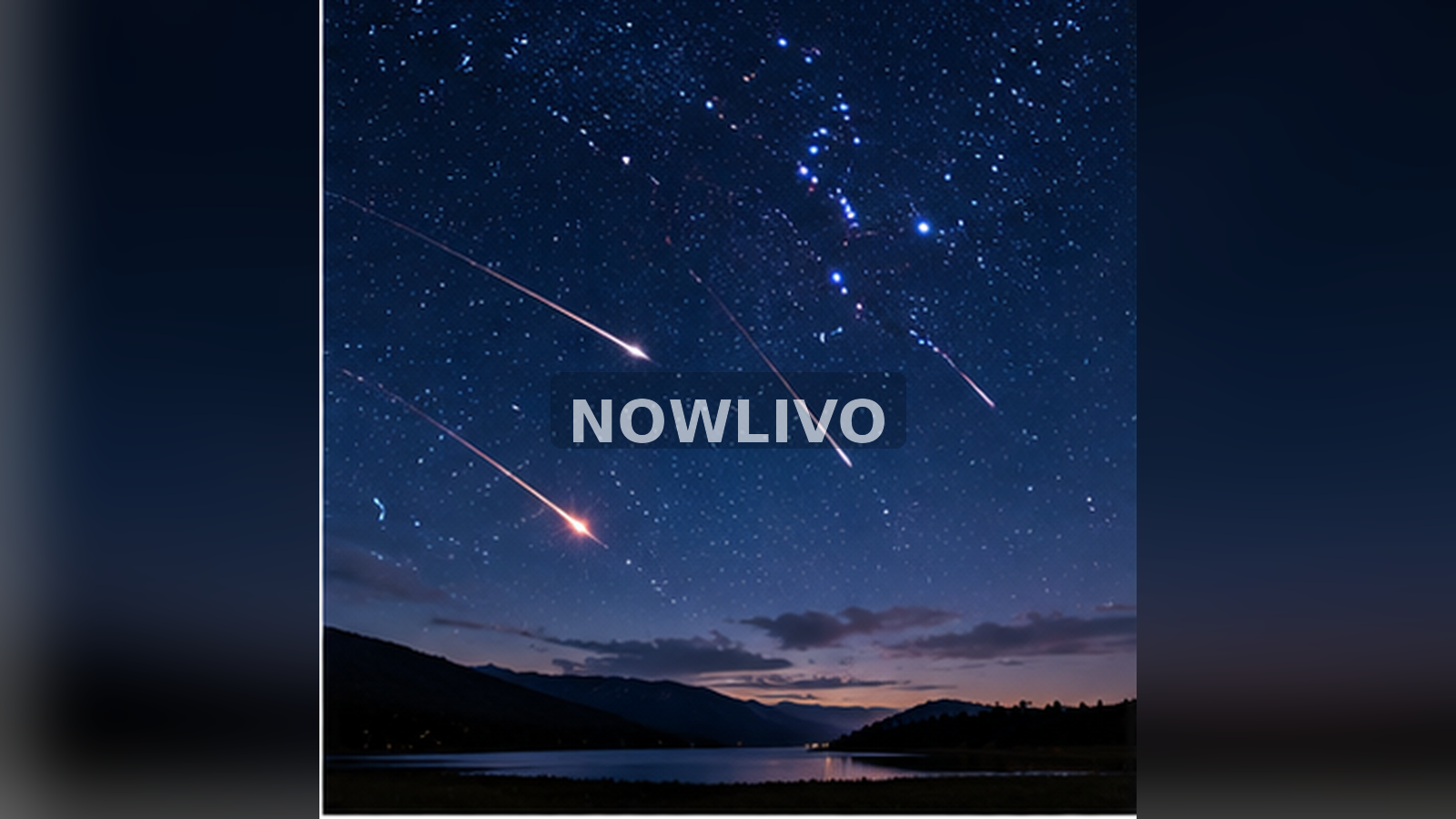
The Orionid meteor shower is attracting search interest as its 2026 peak approaches. NASA puts the best activity around the night of October 21 into the early morning of October 22, with meteors produced by fragments left behind by Halley’s Comet. A bright waxing gibbous Moon will hide some faint streaks. NASA says the period after the Moon sets, in the hours before dawn, may offer a better view. This is an event that can be enjoyed without a telescope, but clear skies and realistic expectations matter more than the headline number of meteors.
Where the Orionids come from
Comets shed dust as they travel around the Sun. Over many orbits, tiny particles remain along parts of the comet’s path. When Earth crosses this stream, bits of material enter the atmosphere at high speed and briefly glow. The light streak is a meteor; most are not large objects reaching the ground. The Orionids are associated with comet 1P/Halley. Their apparent origin near Orion is called a radiant. A radiant is a perspective effect, not a point where the pieces are actually sitting in the sky.
The specific 2026 peak window
NASA lists activity from October 2 through November 7 and a peak around October 21–22. The best viewing hour will vary with latitude, weather and the Moon’s position. The constellation Orion climbs higher as the night advances, so activity commonly becomes easier to see in the early hours. The shower does not switch on for exactly one hour. Someone who has clear skies on a nearby night can still see meteors, although the rate may be different.
Why the Moon can spoil the show
A bright Moon raises the sky’s background brightness, reducing contrast. The fainter meteors then disappear against the glow even when they are physically entering the atmosphere. The 2026 Moon is waxing gibbous around the peak, so NASA recommends a window after moonset, around the predawn hours in many locations. Do not assume one moonset clock time applies across India and the United States; check local astronomy information. Cloud cover can block the display entirely regardless of lunar conditions.
What to do before going outside
Pick a safe location with as little artificial light as practical. A courtyard away from direct lamps may be better than a brightly lit balcony. Allow roughly twenty to thirty minutes for your eyes to adjust, and avoid constantly looking at a bright phone. Take a reclining chair or mat, water and clothing suitable for the temperature. The recommendation is simple because elaborate equipment is unnecessary: your field of view and patience are more important than magnification.
How many meteors should you expect?
NASA’s general Orionids guide mentions a higher theoretical rate under dark skies, while its October 2026 skywatching note cautions that suburban observers might see only a few meteors per hour. These figures are not contradictory; they assume different sky brightness, weather and viewing conditions. A meteor shower is not fireworks on a schedule. There can be long pauses followed by several quick streaks. A single bright meteor is worth enjoying even if the overall count is modest.
Where to face and how to watch
You do not need to stare only at Orion. Meteors appear to trace back toward the radiant, but streaks can cross many parts of the sky. Looking at a broad, dark patch away from the brightest Moon and artificial lights can be more comfortable. Avoid binoculars and telescopes for general meteor watching because their narrow field of view makes it easier to miss brief streaks. A night-sky map helps you identify Orion, but it is optional.
The science behind meteor colours and speed
Meteor streaks vary in brightness, colour and apparent length depending on their speed, composition and how they interact with the atmosphere. NASA notes the Orionids are particularly fast, travelling around 66 kilometres per second. That speed contributes to striking trails in some cases. It does not mean every streak will be green or leave a persistent glow. A camera can record colours differently from the eye, especially with a long exposure, so photographs should not be treated as a perfect preview of what viewers will see.
How to report what you saw
If you count meteors, record the observation start and end time, approximate location, cloud cover, Moon conditions and interruptions. Five meteors seen in ten minutes is not equivalent to five seen across three hours. Such context makes an informal observation more meaningful. If you take photographs, use a stable tripod, wide lens and a shutter technique suited to your equipment. Never wander into an isolated location just for a darker sky; choose safe access, companions and reliable transport over an extra increment of darkness.
How to photograph a meteor responsibly
A standard phone may capture a bright meteor by chance, but consistent results are easier with a camera on a sturdy tripod and a wide lens. A long exposure can show a streak and background stars, although bright skyglow limits detail. Before shooting, test focus on a distant bright star and avoid leaving a strong flashlight switched on near other observers. Keep the foreground safe and accessible, and never set up on a roadside shoulder to chase a darker location. When sharing a photograph, include the time and place; this helps distinguish an actual October 2026 meteor image from a file circulated from a previous year.
Why reports sometimes disagree on meteor counts
Different publications can report ten to twenty meteors per hour under very dark skies, while a particular forecast predicts only a handful for suburban observers. The numbers refer to differing assumptions. A dark location removes light pollution, but a bright Moon can still wash out faint meteors; haze and thin clouds add another layer. The radiant’s height affects how much of the meteor stream can be seen. If somebody views for only ten minutes, multiplying their count by six does not guarantee a representative hourly rate. This variability is part of meteor observing, not proof the astronomy was wrong.
Reader questions
When do the Orionids peak in 2026?
Around October 21–22, according to NASA.
Do I need a telescope?
No. A wide view of the sky is better for catching fast meteors.
Why might I see fewer meteors than a forecast?
Moonlight, clouds, city lighting and viewing time strongly affect what is visible.